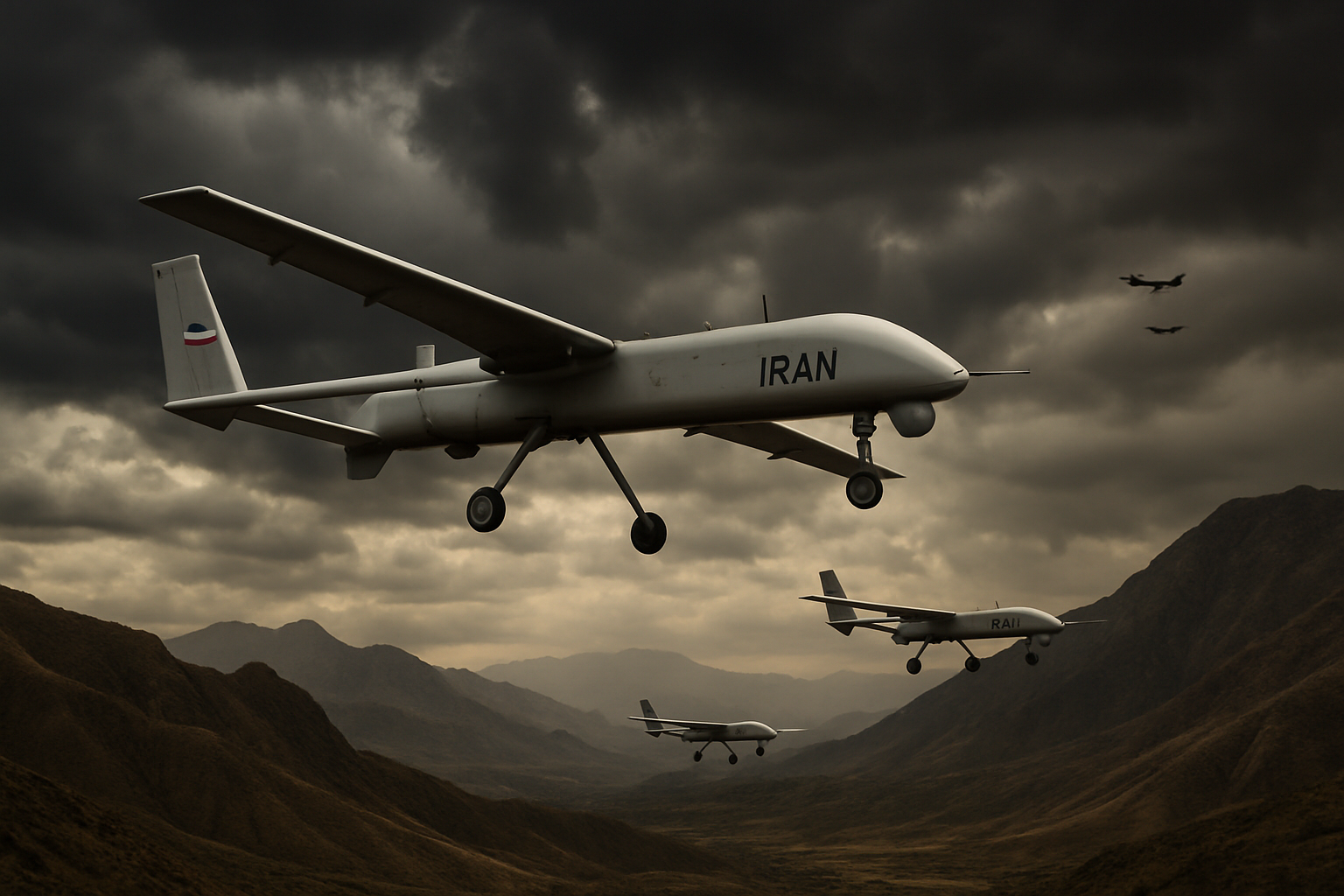
Iranian drones struck Azerbaijan's Nakhchivan Autonomous Republic on March 5, 2026, injuring several civilians and triggering a wave of international condemnation that threatens to destabilize the South Caucasus region amid an already escalating Middle East crisis.
The attack on Nakhchivan's airport injured at least two people according to initial reports, marking a dangerous expansion of Iran's ongoing military confrontation with the United States and Israel. The strike represents Iran's first direct military action against Azerbaijani territory, fundamentally altering the regional security dynamic in the South Caucasus.
International Diplomatic Backlash
The assault drew swift condemnation from multiple international partners, with Israel and Georgia leading the diplomatic response. Israeli Foreign Minister Gideon Sa'ar held urgent phone conversations with Azerbaijan's Foreign Minister Jeyhun Bayramov on March 5, expressing strong condemnation of the drone attacks on Nakhchivan.
Georgia's Foreign Ministry issued an equally forceful statement, declaring that "any act that blatantly violates international principles and norms and escalates regional tensions is unacceptable." The ministry emphasized Georgia's solidarity with Azerbaijan, citing the "strong friendship and strategic partnership between Georgia and the Republic of Azerbaijan."
The timing of the attack is particularly significant, occurring amid the sixth day of what has become known as the most dangerous international crisis since the Cold War ended. Iran's "Operation True Promise 4" has seen systematic targeting of U.S. facilities and regional allies across the Middle East, but the extension to Azerbaijan represents a concerning geographic expansion of the conflict.
Azerbaijan's Strategic Response
In immediate response to the attack, Azerbaijan implemented decisive security measures. The country closed its airspace on the southern border with Iran for 12 hours, according to NOTAM aviation notifications reported by Al-Arabiya. Additionally, the Azerbaijani government suspended truck movement across the Azerbaijan-Iran border, effectively sealing off ground transit between the two nations.
President Ilham Aliyev's administration characterized the drone strike as a "heinous terrorist act" and demanded immediate explanations and apologies from Tehran. The Prosecutor General's office opened a criminal investigation into the incident, with Azerbaijani officials rejecting Iran's denials and citing "technical evidence" of Iranian involvement.
The attack creates a particularly complex situation for Azerbaijan, which has maintained a carefully balanced diplomatic position in regional conflicts. As one analysis noted, "if Azerbaijan's policy is neutral and humanitarian, why should the country, particularly Nakhchivan, be subjected to Iranian strikes?"
Historical Context and Regional Implications
The strike occurs against the backdrop of Azerbaijan's recent humanitarian efforts, which included facilitating the evacuation of over 1,200 civilians, including 37 foreign nationals, through the Astara border crossing since February 28. This humanitarian assistance contrasts sharply with Iran's military action, raising questions about Tehran's strategic calculations.
The attack also comes as the region benefits from strengthened U.S.-Azerbaijan relations. In February 2026, Vice President JD Vance signed a historic Strategic Partnership Charter with President Aliyev in Baku, establishing comprehensive bilateral cooperation frameworks including security cooperation and energy partnerships.
Diplomatic history underscores the contradiction inherent in the Iranian attack. Following the death of Iran's former Supreme Leader Ali Khamenei in March 2026, President Aliyev personally visited the Iranian embassy in Baku to offer condolences, demonstrating Azerbaijan's commitment to diplomatic norms even during times of regional crisis.
Broader Middle East Crisis Context
The Nakhchivan attack represents a dangerous escalation within Iran's broader "Operation True Promise 4" retaliation campaign. The Iranian Revolutionary Guard Corps (IRGC) has declared "no red lines remain" following the U.S.-Israeli "Operation Epic Fury" strikes that resulted in the confirmed death of Supreme Leader Ali Khamenei on March 1, 2026.
The current crisis has already resulted in unprecedented global disruptions, including the cancellation of over 18,000 flights worldwide, oil prices surging past $80 per barrel, and the closure of the Strait of Hormuz affecting 40% of global oil transit. Iran's extension of military operations to the South Caucasus suggests an intent to pressure U.S. allies and partners across multiple regions simultaneously.
Iranian Foreign Minister Seyed Abbas Araghchi did speak with his Azerbaijani counterpart on March 5, reportedly to announce that Tehran had launched an investigation into the drone attack. However, this diplomatic gesture came only after the incident had already occurred and international condemnation had mounted.
Regional Security Architecture
The attack on Nakhchivan poses particular challenges for regional security arrangements. The exclave, separated from mainland Azerbaijan by Armenian territory, maintains unique strategic importance as a corridor between Azerbaijan and Turkey. Any military action in the area risks triggering broader regional responses given Turkey's mutual defense commitments with Azerbaijan.
The incident also tests the emerging U.S. strategic partnership with Azerbaijan. The recently signed Strategic Partnership Charter includes provisions for territorial waters protection and security cooperation, raising questions about potential American responses to Iranian aggression against its new partner.
Georgia's immediate condemnation suggests that the attack has broader implications for South Caucasus stability. As a key transit corridor for European energy security and a NATO aspirant, Georgia's solidarity with Azerbaijan reflects concerns that Iranian military actions could destabilize the entire region.
Iran's Strategic Calculations
The targeting of Nakhchivan appears designed to pressure Azerbaijan over its strategic partnerships and humanitarian assistance to civilians fleeing the Middle East crisis. Iran may be attempting to deter other regional states from deepening ties with the United States or providing assistance that Tehran views as supporting its adversaries.
However, the attack risks backfiring by pushing Azerbaijan closer to Western security arrangements. As regional analysts have noted, the strike "may push South Azerbaijanis toward revolt" by demonstrating Iran's willingness to attack civilian infrastructure in neighboring countries.
The incident also highlights Iran's expanding definition of legitimate targets in its confrontation with the United States and allies. By attacking a country that has maintained diplomatic relations with Tehran and provided humanitarian assistance, Iran signals that neutrality may not protect nations from retaliation if they are perceived as supporting Western interests.
Looking Forward
The Iranian drone attack on Nakhchivan represents a concerning escalation that extends the Middle East crisis into the South Caucasus for the first time. The incident tests Azerbaijan's balanced diplomacy while strengthening the case for deeper integration with Western security structures.
International condemnation from Israel, Georgia, and other partners demonstrates the broad concern about Iran's expanding military operations beyond traditional Middle East boundaries. The attack may accelerate Azerbaijan's integration into Western security arrangements while potentially destabilizing a region that has achieved relative stability in recent years.
As this crisis unfolds, the international community faces the challenge of containing Iran's military operations while supporting affected allies and partners across multiple regions simultaneously. The Nakhchivan incident serves as a stark reminder that modern conflicts can rapidly transcend traditional geographic boundaries, requiring coordinated international responses to maintain regional stability.