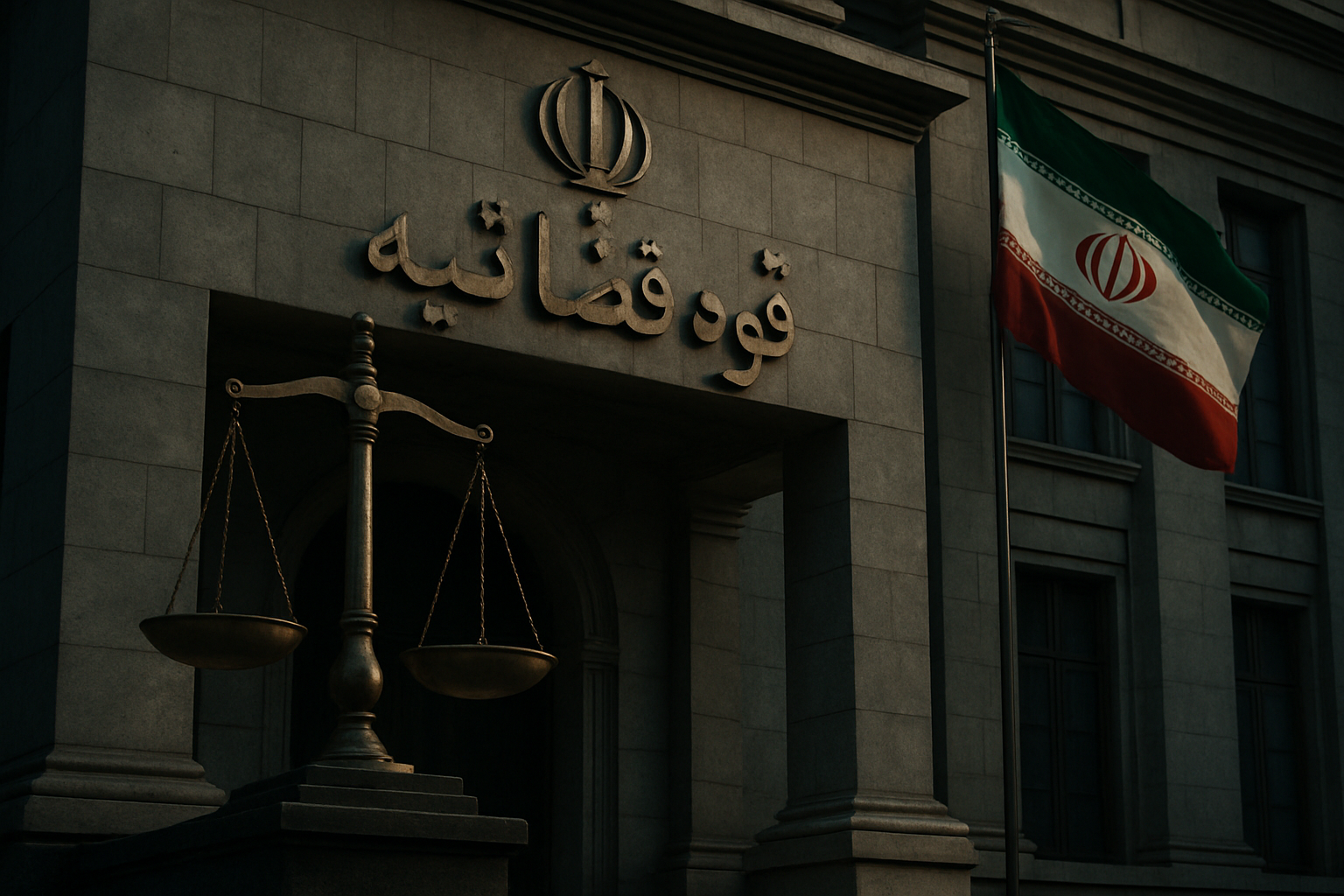
Iran has executed three men convicted of killing police officers during January protests and arrested 97 individuals suspected of collaborating with Israel, marking the regime's most severe domestic crackdown since the collapse of nuclear negotiations and escalating regional tensions.
The executions, announced by Iranian state media on Thursday, represent the first officially confirmed death sentences related to the government's deadly response to nationwide demonstrations that have rocked the Islamic Republic since early 2026. The three men were reportedly hanged for their involvement in violence against security forces during protests that erupted following the breakdown of nuclear talks with the United States.
Historic Context of Repression
The executions come amid an unprecedented wave of domestic repression that has intensified dramatically since Iran's nuclear diplomacy collapsed in February 2026. According to documented reports from our archives, over 42,000 protesters have been arrested since the 2022 uprising began, with thousands killed in violent crackdowns by security forces.
The timing is particularly significant as it follows the death of Supreme Leader Ali Khamenei in March 2026 during Operation Epic Fury, the largest coordinated US-Israeli military operation since the 2003 Iraq invasion. The subsequent succession of his son Mojtaba Khamenei—marking the first hereditary transition in the Islamic Republic's 47-year history—has been accompanied by an intensified domestic security campaign.
Massive Intelligence Operation Against Alleged Israeli Network
Simultaneously, Iran's Ministry of Intelligence announced the arrest of 97 individuals accused of operating as "soldiers of Israel," according to state media reports. This represents one of the largest counterintelligence operations publicly disclosed by Iranian authorities, reflecting the regime's paranoia about foreign infiltration amid ongoing regional conflicts.
The arrests are part of what Iranian officials describe as a comprehensive security operation targeting individuals suspected of espionage and collaboration with Israeli intelligence services. The scope of the operation suggests systematic surveillance and intelligence gathering that has been months in preparation.
"These individuals were operating as part of a network designed to undermine the Islamic Republic's security and stability."
— Iranian Ministry of Intelligence statement
The intelligence operation comes against the backdrop of documented Iranian espionage activities across Europe, including the March 2026 arrests of Iranian agents in London who were surveilling Jewish community centers and prominent individuals.
Regional and International Implications
These dramatic internal security measures occur as Iran continues to grapple with the aftermath of its most serious international crisis since the Cold War ended. The country's leadership transition following Khamenei's death has been accompanied by what the CIA assessed as increasing Revolutionary Guards influence over governance—a shift from traditional clerical authority to military control.
The executions and mass arrests signal the new leadership's determination to maintain internal control through force, despite—or perhaps because of—the regime's weakened position following military confrontations with the United States and Israel. The timing suggests coordination between domestic repression and external pressure management.
Iran's nuclear program remains a critical factor, with the country continuing uranium enrichment at 60% purity—approaching the 90% weapons-grade threshold—despite the complete collapse of Geneva framework negotiations that had achieved "broad agreement on guiding principles" before breaking down over fundamental scope disagreements.
Systematic Targeting of Dissent
The three executed men were reportedly convicted of killing security personnel during January 2026 protests that erupted following the breakdown of nuclear negotiations with Washington. Iranian authorities have consistently portrayed protesters as foreign-backed insurgents rather than citizens expressing legitimate grievances about economic hardship and political repression.
The executions represent an escalation in the judicial system's response to civil unrest. Previous waves of protests saw mass arrests and long prison sentences, but the transition to capital punishment for protest-related violence marks a significant hardening of the regime's position.
Nobel Peace Prize laureate Narges Mohammadi, who was sentenced to an additional 7.5 years in prison during the nuclear talks period, exemplifies the regime's zero-tolerance approach to dissent even during diplomatic engagement periods. Her continued imprisonment despite international pressure demonstrates the leadership's prioritization of domestic control over international opinion.
Energy and Economic Warfare Context
The domestic crackdown occurs as Iran continues to leverage its control over critical energy infrastructure as a geopolitical weapon. The country has threatened to disrupt shipping through the Strait of Hormuz, which handles 40% of global oil transit, leading to significant market volatility and strategic concerns among international partners.
Iran's systematic targeting of regional energy facilities—including attacks on Qatar's Ras Laffan complex that handles 20% of global LNG exports—has demonstrated the regime's willingness to weaponize energy infrastructure despite economic costs to itself and regional partners.
International Response and Implications
The executions and mass arrests have drawn international condemnation from human rights organizations and Western governments, who view them as evidence of the regime's increasing desperation to maintain control through violence and intimidation.
European officials have expressed particular concern about the scope of the spy arrests, viewing them as potentially targeting Iranian diaspora communities and civil society critics rather than genuine security threats. The March arrests in London of suspected Iranian agents highlighted the international dimensions of Tehran's domestic security concerns.
The timing of these actions—during a period when Iran faces unprecedented international isolation and internal pressure—suggests a calculated strategy to project strength while the leadership consolidates power under Mojtaba Khamenei's unprecedented hereditary succession.
Template for Authoritarian Response
Iran's combination of judicial executions and mass security arrests represents what analysts describe as a "template-setting moment" for authoritarian responses to domestic dissent during international crises. The systematic nature of both operations suggests extensive planning and coordination between judicial, intelligence, and security apparatus.
The regime's ability to simultaneously conduct large-scale domestic repression while managing international military confrontations demonstrates the Islamic Republic's institutional resilience despite facing what many observers consider the most serious threats to its survival since the 1979 revolution.
As the international community continues to grapple with Iran's nuclear ambitions and regional destabilization activities, these latest domestic actions underscore the challenges of engaging with a regime that views both internal opposition and external pressure as existential threats requiring maximum force responses.
The coming weeks will test whether this intensified domestic crackdown can maintain stability during the leadership transition, or whether it will further inflame the very dissent it seeks to suppress, potentially creating additional volatility in an already crisis-prone region.