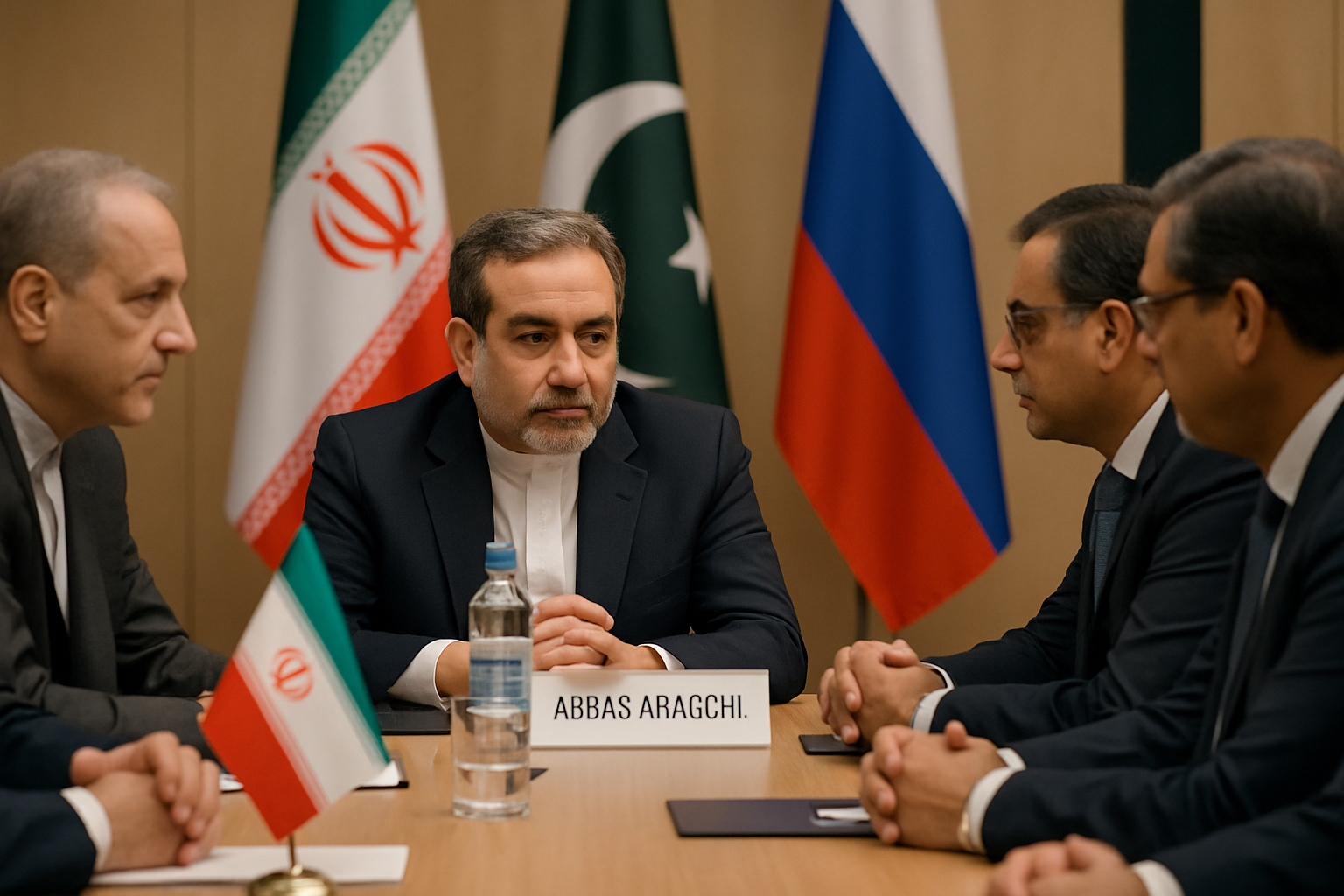
Iranian Foreign Minister Abbas Araghchi departed Pakistan for Moscow on Sunday evening after completing a second diplomatic visit to Islamabad in 48 hours, as international mediators scramble to prevent the collapse of nuclear negotiations with the United States.
The Iranian top diplomat's frantic diplomatic shuttle between Pakistan, Oman, and Russia represents an urgent last-ditch effort to salvage stalled peace talks that were suspended indefinitely in March 2026 due to competing Middle East crises. President Donald Trump cancelled a planned visit by his envoys to Pakistan, declaring that Iran and the US "can talk by phone instead" rather than face-to-face negotiations.
High-Stakes Diplomatic Mission
Araghchi's second visit to Pakistan within two days underscores the critical nature of the diplomatic crisis. According to Pakistani diplomatic sources, the Iranian foreign minister landed at Nur Khan air base in Rawalpindi following a day-long visit to Oman, where he met with senior officials to coordinate regional mediation efforts.
The Iranian envoy to Pakistan, Reza Amiri Moghadam, confirmed the conclusion of Araghchi's mission in a late-night social media post, stating that the trip was undertaken to "discuss regional developments" amid mounting tensions between Tehran and Washington.
"At the end of this round of the visit of the Iranian Foreign Minister to Pakistan, important consultations were held on regional developments and bilateral cooperation."
— Reza Amiri Moghadam, Iranian Ambassador to Pakistan
Failed Pakistan Mediation Framework
Pakistan's mediation efforts represent one of the most significant diplomatic innovations in recent international crisis management. The "Islamabad Accord" framework, spearheaded by Prime Minister Shehbaz Sharif and Field Marshal Asim Munir, previously achieved a temporary ceasefire just 88 minutes before Trump's threatened "whole civilization" deadline on April 8, 2026.
This historic intervention crashed oil prices from $119.50 to $100 per barrel and ended an aviation crisis that had resulted in over 18,000 flight cancellations worldwide. However, the fragile diplomatic progress collapsed when fundamental disagreements over Iran's nuclear program and regional proxy activities proved unbridgeable.
Nuclear Sticking Points Remain Unchanged
The core obstacle to negotiations remains Iran's uranium enrichment program. The United States demands that Iran suspend its 60% uranium enrichment activities and abandon its stockpile of over 400 kilograms of weapons-grade material. Iranian officials, led by Araghchi, maintain that Iran will "never abandon enrichment even if war is imposed."
This represents the same structural disagreement that has prevented breakthrough agreements since the JCPOA collapsed in 2018. Iran insists on nuclear-only compartmentalized talks, while the US demands comprehensive agreements addressing ballistic missiles, regional proxy groups, and human rights concerns.
Russia's Role in Nuclear Diplomacy
Araghchi's planned meetings with senior Russian officials in Moscow add a crucial geopolitical dimension to the crisis. Russia has historically played a complex role in Iranian nuclear negotiations, both as a party to the original JCPOA agreement and as a strategic partner to Iran amid Western sanctions.
The timing of these Moscow talks coincides with an unprecedented nuclear governance crisis, as the New START treaty between the US and Russia expired in February 2026 - marking the first time in over 50 years without bilateral nuclear constraints between the world's two largest nuclear powers.
Energy and Maritime Security Crisis
The diplomatic breakdown occurs against the backdrop of a severe global energy crisis. Iran's Revolutionary Guard maintains "complete control" over the Strait of Hormuz, which handles 40% of global oil transit. Recent closures have stranded over 150 tankers carrying billions of dollars in cargo, while oil prices have surged above $106 per barrel for Brent crude.
Major shipping companies including Maersk and MSC have suspended operations in the Persian Gulf region, creating supply chain disruptions reminiscent of the pandemic era. The International Energy Agency has maintained its largest strategic oil release in 50 years, coordinating 400 million barrels from 32 countries to stabilize global markets.
Regional Coalition Under Strain
The failure of Pakistani mediation threatens an unprecedented regional coalition that included Saudi Arabia, the UAE, Qatar, and Egypt - all backing diplomatic solutions to prevent military confrontation. This Middle Eastern consensus, remarkable for its breadth, is now under severe strain following Iran's retaliatory operations that have resulted in casualties across multiple Gulf states.
Egypt's President Sisi has warned of "comprehensive chaos in sisterly countries" as the diplomatic framework deteriorates. The stakes extend far beyond bilateral US-Iran relations, potentially reshaping the entire Middle Eastern security architecture for decades to come.
International Isolation Deepens
The collapse of negotiations has been accompanied by unprecedented levels of international evacuations. Australia has evacuated 115,000 citizens, Germany 30,000, while the European Union activated its ESTIA crisis mechanism for the first time in bloc history following Iranian drone strikes on RAF Akrotiri in Cyprus - the first attack on European territory since World War II.
Congressional opposition in the United States has reached historic levels, with only 25% of Americans supporting military operations - the lowest level since polling began. The financial cost of Operation Epic Fury has exceeded $11.3 billion in its first week alone, raising questions about the sustainability of military pressure tactics.
Humanitarian Toll Mounting
The Iranian Red Crescent reports over 787 civilian casualties from the ongoing conflict, including a devastating Pentagon strike on an elementary school that killed between 165-185 students due to what officials termed "outdated targeting data." War crimes investigations are now underway, adding legal complications to an already complex crisis.
The humanitarian impact extends across the region, with Lebanon seeing 1.2 million people displaced - representing 25% of the country's population. Netanyahu's explicit exclusion of Lebanon from ceasefire arrangements has created what negotiators describe as an "unbridgeable gap" in comprehensive peace efforts.
Looking Ahead: Uncertain Path
Trump's extension of the Iran ceasefire "indefinitely" at Pakistan's request provides a temporary respite but fails to address fundamental disagreements. The US President characterized the Iranian government as "seriously fractured," requiring a unified response before meaningful negotiations can resume.
However, Iran's categorical rejection of further talks under current conditions, combined with ongoing naval blockades that Tehran considers acts of war under international law, suggests that diplomatic solutions remain elusive. The template-setting significance of this crisis extends far beyond regional boundaries, potentially determining whether 21st-century international disputes are resolved through diplomatic innovation or military confrontation.
"The greatest test of multilateral cooperation in the modern era will determine whether diplomatic solutions can bridge fundamental disagreements or whether military approaches become the dominant template for international crisis resolution."
— UN Secretary-General António Guterres
As Araghchi continues his diplomatic mission in Moscow, the international community watches to see whether innovative compromise solutions can emerge from traditional power centers, or whether the world is entering a more dangerous phase of crisis management that could reshape global governance mechanisms for decades to come.