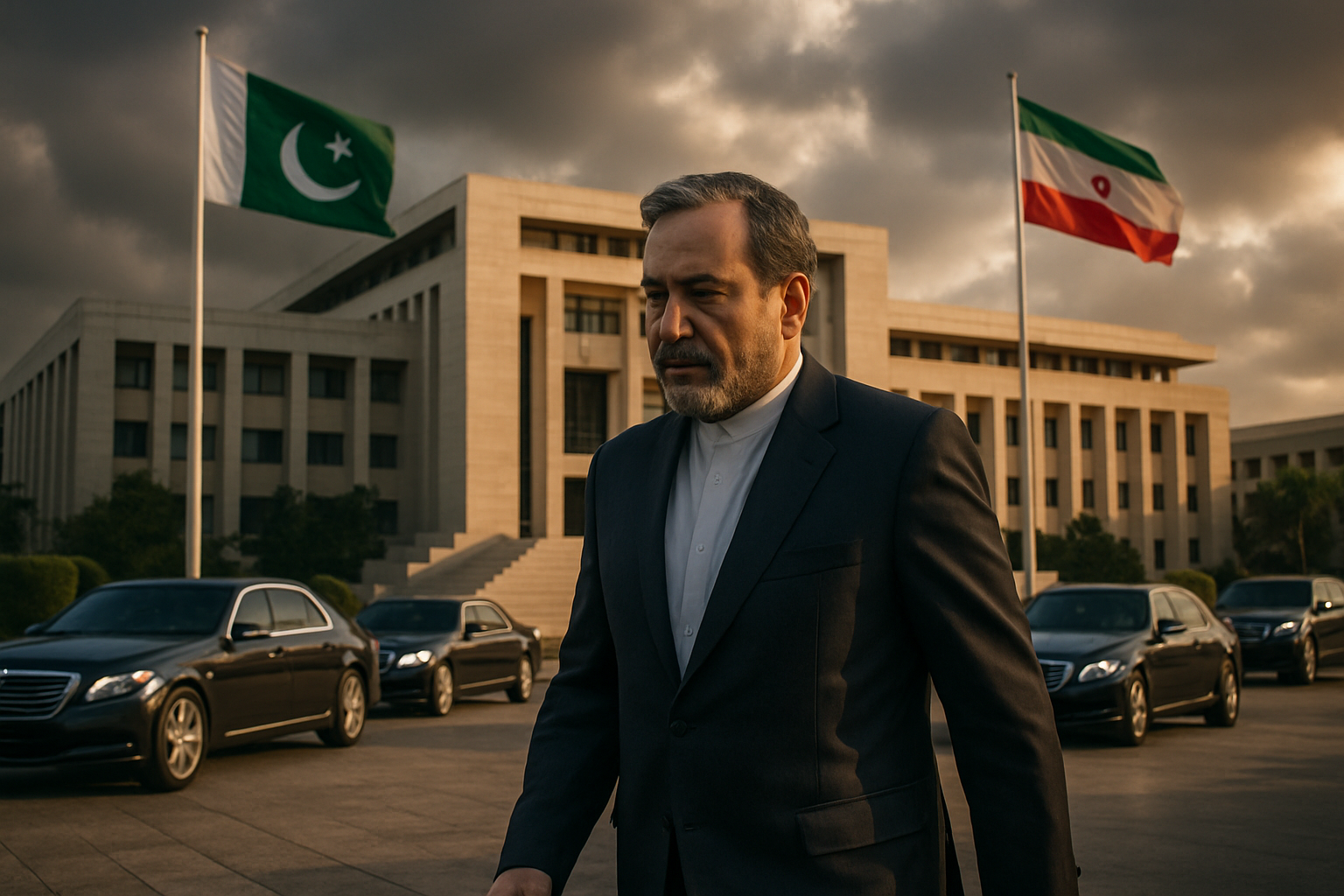
Iranian Foreign Minister Abbas Araghchi arrived in Pakistan Friday evening as part of a critical diplomatic tour aimed at reviving peace negotiations with the United States, marking another crucial chapter in Pakistan's unprecedented role as mediator in the world's most dangerous crisis since the Cold War.
According to Pakistani sources, Araghchi was expected to arrive in Islamabad around 10:00 PM local time accompanied by a small negotiating team. The visit comes as diplomatic momentum builds around the possibility of resuming talks that could determine whether the ongoing Middle East crisis ends through negotiation or escalates into prolonged military confrontation.
Pakistan's Proven Mediation Success
Pakistan has emerged as the key intermediary between Washington and Tehran following its historic achievement in brokering the "Islamabad Accord" ceasefire framework that prevented global catastrophe just 88 minutes before President Trump's April 8 deadline. The innovative "message relay system" developed by Prime Minister Shehbaz Sharif and Field Marshal Asim Munir has become the primary diplomatic channel when direct US-Iran communication proved impossible.
The success of Pakistan's mediation was demonstrated when oil prices crashed 20% from $119.50 Brent to below $100 following the initial ceasefire breakthrough - the steepest decline in six years. The framework temporarily ended the aviation crisis that had cancelled over 18,000 flights worldwide and allowed partial reopening of the Strait of Hormuz, which handles 40% of global oil transit.
"US-Iran indirect talks taking place through messages relayed by Pakistan. United States shared 15 points, being deliberated by Iran."
— Deputy PM Ishaq Dar, Pakistan Foreign Minister
Regional Tour and Strategic Diplomacy
Araghchi's Pakistan visit is part of a broader regional diplomatic tour that will also include stops in Muscat and Moscow, according to Iran's state news agency IRNA. The tour represents Iran's most comprehensive diplomatic outreach since the crisis began, signaling potential flexibility in Tehran's position regarding negotiations.
China has expressed "full support" for Pakistan's mediation initiative, while Germany noted "positive signs" that direct US-Iran talks could resume "very soon" with Pakistan as the venue. This international backing strengthens Pakistan's position as a neutral mediator capable of bridging major power divides.
The timing is critical as both sides have indicated willingness to return to negotiations despite recent setbacks. Pakistani sources suggest a US logistics and security team is already in place in the federal capital, preparing for potential high-level talks.
Current Obstacles and Challenges
Despite the diplomatic momentum, significant obstacles remain that have prevented breakthrough for decades. The fundamental scope disagreement persists: Iran maintains that ballistic missiles and regional proxy activities are "red lines" that must be excluded from nuclear-only talks, while the US demands a comprehensive agreement addressing missiles, armed groups, and human rights violations.
The nuclear program remains the core sticking point. The United States demands Iran commit to not pursuing nuclear weapons development and suspend its uranium enrichment to 60% purity - dangerously close to the 90% weapons-grade threshold. Iran, which possesses over 400kg of weapons-grade material sufficient for multiple nuclear weapons, has refused to abandon enrichment entirely.
Lebanon Crisis Complicates Framework
A critical complication emerged from what Vice President JD Vance acknowledged as Iran's "legitimate misunderstanding" regarding Lebanon. Israeli Prime Minister Netanyahu explicitly excluded Lebanon from the Pakistan-mediated ceasefire, leading to continued Israeli strikes that killed over 254 people in a single day during previous negotiations. With 1.2 million Lebanese displaced and systematic targeting of medical personnel, Iran demands comprehensive enforcement across all fronts.
This "Lebanon loophole" has become a major obstacle, as Iran threatens to withdraw from talks unless there is comprehensive ceasefire enforcement, while Israel maintains operations against Hezbollah fall outside any bilateral US-Iran agreement.
Economic and Energy Implications
The stakes extend far beyond regional security. Iran's control of the Strait of Hormuz through mining operations and a cryptocurrency payment system requiring $1 per barrel from oil tankers has created the most severe energy crisis since the 1970s. Major shipping companies Maersk and MSC have suspended operations, leaving over 150 tankers stranded with billions in cargo value.
The International Energy Agency maintains the largest strategic reserve release in 50-year history - 400 million barrels from 32 countries - to offset supply disruptions. Consumer impacts include fuel rationing for 170 million people in Bangladesh, wartime austerity measures in Pakistan, and significant energy cost increases across Europe.
Recent Naval Incidents Raise Tensions
Diplomatic progress faces new complications following Sunday's seizure of Iranian cargo vessel M/V Touska by US forces in the Gulf of Oman. The USS Spruance fired on the ship's engine room after the crew refused stop orders, prompting Iran to threaten "swift retaliation against armed piracy." This incident has added tension to the diplomatic efforts, with Iran citing the ongoing US naval blockade of Iranian ports as a major obstacle to renewed negotiations.
Iran's Revolutionary Guard maintains "complete control" of the Strait of Hormuz and threatens to create a "deadly whirlpool" for any vessels challenging their sovereignty over the waterway.
International Context and Nuclear Governance
The current crisis unfolds against a broader nuclear governance breakdown. The New START treaty expired in February 2026, marking the first time in over 50 years that the world lacks US-Russia nuclear constraints. Combined with China's nuclear expansion and Iran's advanced uranium enrichment, UN Secretary-General António Guterres warns nuclear risks are at their "highest in decades."
Previous diplomatic efforts achieved what Araghchi described as "broad agreement on guiding principles" - the most progress since the JCPOA collapse in 2018. However, the Geneva talks ultimately failed due to the same structural disagreements that have prevented breakthrough for over a decade.
Congressional and International Pressure
The urgency for diplomatic solutions has intensified as Operation Epic Fury faces unprecedented domestic opposition, with only 25% American support - described as "almost unprecedented" for early-stage military operations. Senator Richard Blumenthal expressed being "more concerned than ever" about potential ground troop deployment, while Pentagon operations are now projected through September 2026, far beyond initial timelines.
International allies have shown resistance to expanded military involvement. The UK's Prime Minister Starmer declared Britain "will not be dragged into Iran war," while France and Germany emphasize diplomatic approaches. Australia and Japan have declined to provide naval support, representing the most significant rejection of American military leadership since the Iraq War in 2003.
Template for 21st-Century Crisis Management
Pakistan's mediation represents what experts describe as "template-setting" innovation in 21st-century crisis management. The success of middle-power diplomacy in bridging major adversaries when traditional great power mechanisms failed demonstrates new possibilities for international conflict resolution.
UN Secretary-General Guterres has described the situation as the "greatest test of multilateral cooperation in the modern era." The outcome will establish precedents for diplomatic versus military solutions in territorial and nuclear disputes worldwide, with implications extending decades beyond current events.
Path Forward Uncertain
As Araghchi arrived in Islamabad, uncertainty remains over whether Iran will commit to renewed negotiations. Recent statements by Iranian officials have sent mixed signals, with some suggesting willingness to engage while others cite lack of trust in US intentions and the ongoing naval blockade as insurmountable obstacles.
President Trump has indicated VP JD Vance and the American delegation are en route to Islamabad, expected to land within hours, suggesting the administration remains committed to the diplomatic track despite recent setbacks.
The coming days will determine whether Pakistan's innovative mediation framework can overcome the fundamental disagreements that have prevented US-Iran breakthrough for decades, or whether the world returns to the most dangerous crisis since the end of the Cold War. The stakes encompass regional war prevention, global energy security, nuclear governance credibility, and the effectiveness of international law enforcement mechanisms in an increasingly multipolar world.