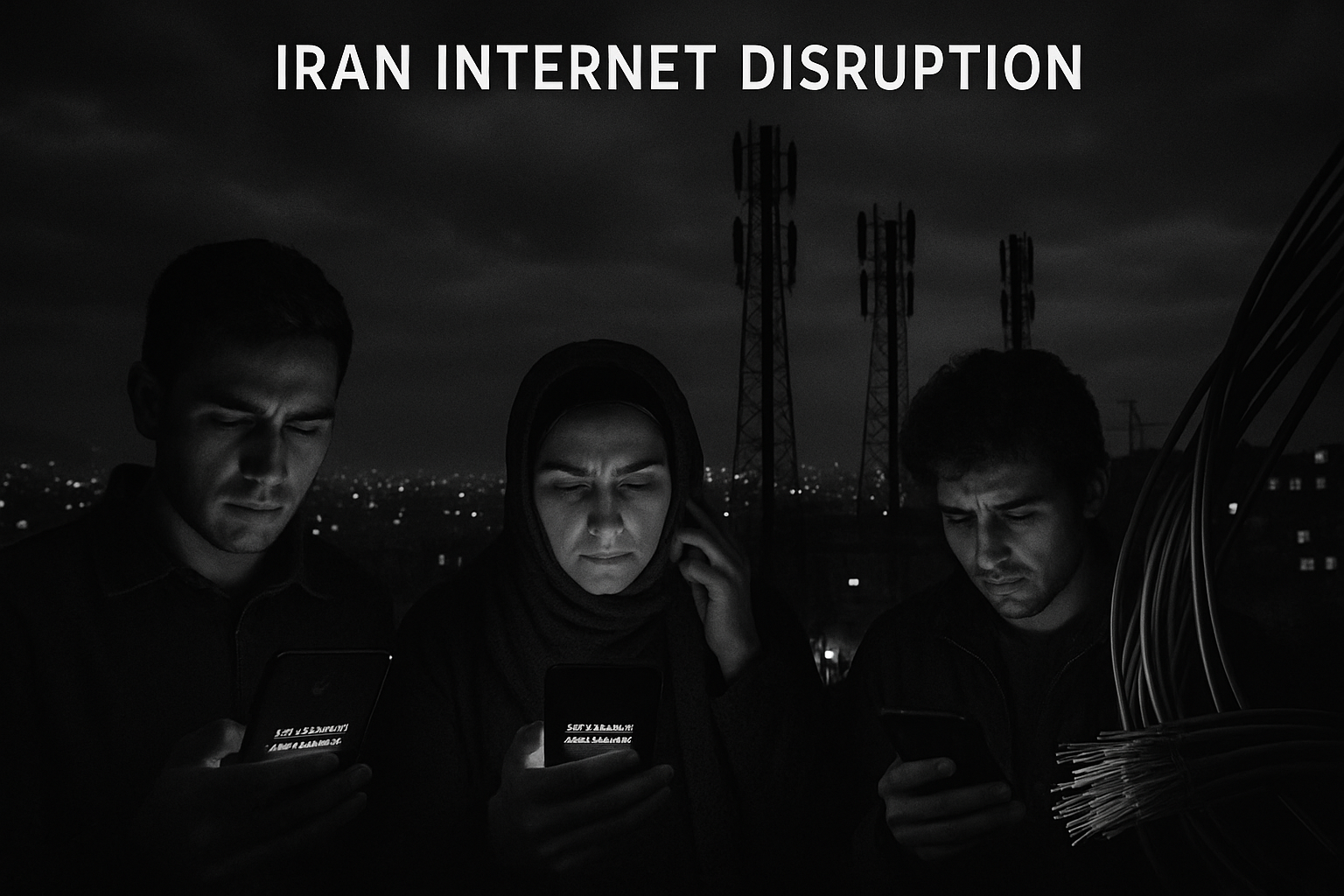
Iran's nationwide internet shutdown has entered its 12th consecutive day, with internet monitoring group NetBlocks reporting that connectivity remains at a devastating 1% of normal levels across the country, marking one of the most sustained digital blackouts in modern history.
The comprehensive digital isolation comes as Iran faces unprecedented regional conflict following the death of Supreme Leader Ali Khamenei on March 1, 2026, and the ongoing military confrontation with the United States and Israel known as "Operation Epic Fury." The internet shutdown represents a critical component of the Iranian government's information control strategy during this period of national crisis.
Scale and Impact of the Digital Blackout
NetBlocks, the international internet monitoring organization, confirmed Wednesday that after more than 264 hours of near-complete digital isolation, Iran's internet connectivity shows no signs of meaningful restoration. The 1% connectivity level represents only essential government and military communications, leaving Iran's 85 million citizens effectively cut off from the global internet.
This prolonged shutdown surpasses even the most severe internet restrictions previously implemented by authoritarian regimes during periods of political upheaval. The scale of the blackout encompasses all major Iranian cities including Tehran, Isfahan, Mashhad, and Shiraz, affecting both mobile data networks and fixed broadband connections.
The economic implications are staggering. Iran's digital economy, worth an estimated $8.5 billion annually, has been completely paralyzed. Small businesses reliant on digital payments and e-commerce platforms face bankruptcy, while the broader economy suffers from the inability to conduct international transactions or access global supply chain networks.
Geopolitical Context and Regional Crisis
The internet shutdown cannot be separated from the broader regional crisis that began with the collapse of nuclear negotiations between Iran and the United States. Despite achieving what diplomats called "broad agreement on guiding principles" during Geneva talks—representing the most progress since the JCPOA's collapse in 2018—fundamental disagreements over scope ultimately led to diplomatic breakdown.
The military escalation that followed has created what UN Secretary-General António Guterres described as "the most dangerous international crisis since the Cold War." Operation Epic Fury, the largest coordinated US-Israeli military campaign since 2003, resulted in the confirmed death of Supreme Leader Ali Khamenei and triggered Iran's massive retaliation under "Operation True Promise 4."
Iran's Revolutionary Guard declared "no red lines remain" in their response, leading to casualties across Gulf states and the unprecedented closure of the Strait of Hormuz, which handles 40% of global oil transit. This broader conflict provides the strategic backdrop for Iran's decision to implement total information control through internet shutdown.
Information Warfare and Domestic Control
The timing of the internet shutdown coincides with what Iranian officials describe as a critical period requiring "information security." The death of Khamenei after 37 years of rule has created a constitutional succession crisis, with a three-member transitional council currently governing while the Assembly of Experts selects a new Supreme Leader under unprecedented wartime conditions.
Intelligence sources suggest the new Supreme Leader will likely come from the Revolutionary Guards rather than traditional clerical leadership, representing a historic shift toward military governance in the Islamic Republic. Controlling information flow becomes essential during such a fundamental transformation of power structures.
The shutdown also serves to prevent coordination of potential domestic unrest. Iran has experienced significant internal dissent, with over 42,000 protest arrests since the 2022 uprising. The current regional crisis, combined with leadership transition, creates conditions where the regime views unrestricted internet access as an existential threat to stability.
Technical Infrastructure and Implementation
Iran's ability to implement such a comprehensive shutdown reflects years of preparation for digital isolation. The country has developed what experts call a "national internet" infrastructure, allowing domestic connectivity while severing international links. This system enables the government to maintain essential services while preventing citizens from accessing global information networks or communicating with the outside world.
The technical implementation involves multiple layers: international gateway shutdowns, mobile network restrictions, satellite internet blocking, and even targeting of private VPN networks. The 1% connectivity that remains appears limited to government facilities, military installations, and critical infrastructure operations.
This level of digital isolation requires significant infrastructure and planning, suggesting the shutdown was prepared well in advance of the current crisis. Iran's cyber capabilities, developed over years of international sanctions and isolation, now serve as tools of domestic control during the most critical period in the Islamic Republic's history.
International Response and Diplomatic Implications
The sustained internet shutdown has drawn criticism from human rights organizations and digital freedom advocates worldwide. The United Nations Special Rapporteur on Freedom of Opinion and Expression condemned the action as a violation of international law, particularly given the humanitarian implications for Iran's civilian population.
European Union officials have called for immediate restoration of internet access, arguing that digital communication represents a fundamental human right that cannot be suspended even during national emergencies. However, the broader military conflict limits diplomatic options for addressing Iran's information control measures.
The shutdown also complicates international efforts to verify information about the ongoing conflict. Independent journalism and citizen reporting have been effectively eliminated, leaving the international community dependent on official government sources and satellite intelligence for understanding developments inside Iran.
Humanitarian and Social Consequences
The human cost of the internet shutdown extends far beyond political considerations. Iranian families have been unable to communicate with relatives abroad, creating psychological trauma during an already stressful period of military conflict and political uncertainty.
Healthcare systems face particular challenges, as many medical facilities rely on internet connectivity for accessing patient records, ordering supplies, and coordinating with international medical organizations. Educational institutions remain effectively paralyzed, with universities and schools unable to maintain remote learning capabilities.
The banking sector, while maintaining some domestic operations through Iran's national payment systems, cannot process international transactions or provide citizens with access to global financial networks. This financial isolation compounds existing sanctions-related economic pressures.
Global Internet Governance Implications
Iran's sustained internet shutdown represents a test case for global internet governance in an era of increasing digital authoritarianism. The ability of sovereign states to completely sever their populations from global information networks raises fundamental questions about internet freedom and digital rights in the 21st century.
Technical experts note that Iran's success in implementing comprehensive shutdown could serve as a model for other authoritarian regimes facing internal or external threats. The precedent of sustained digital isolation during political crises may influence how other governments approach information control during emergencies.
The international community's limited ability to counteract such shutdowns highlights the need for new frameworks governing digital rights and internet governance. Traditional diplomatic tools prove ineffective when dealing with comprehensive information isolation implemented by sovereign states.
Looking Ahead: Recovery and Restoration Challenges
The eventual restoration of Iran's internet connectivity will face significant technical and political challenges. The prolonged shutdown may have caused damage to digital infrastructure and will require comprehensive security reviews before services can be safely restored.
More critically, the timing of restoration will depend on resolution of the broader regional crisis and completion of Iran's leadership succession process. The new Iranian leadership's approach to information control and internet governance will likely differ significantly from previous policies, particularly if military leaders assume greater political control.
International technology companies that previously provided services in Iran face complex decisions about re-engagement following the shutdown. The precedent of comprehensive digital isolation may influence corporate risk assessments and investment decisions regarding Iranian markets.
The 12-day shutdown already represents one of the most sustained internet blackouts in modern history, surpassing previous records set during political crises in Myanmar and other authoritarian states. Each additional day of isolation deepens the economic and social costs while demonstrating the Iranian regime's willingness to accept these consequences in exchange for information control during its most vulnerable period since the 1979 revolution.