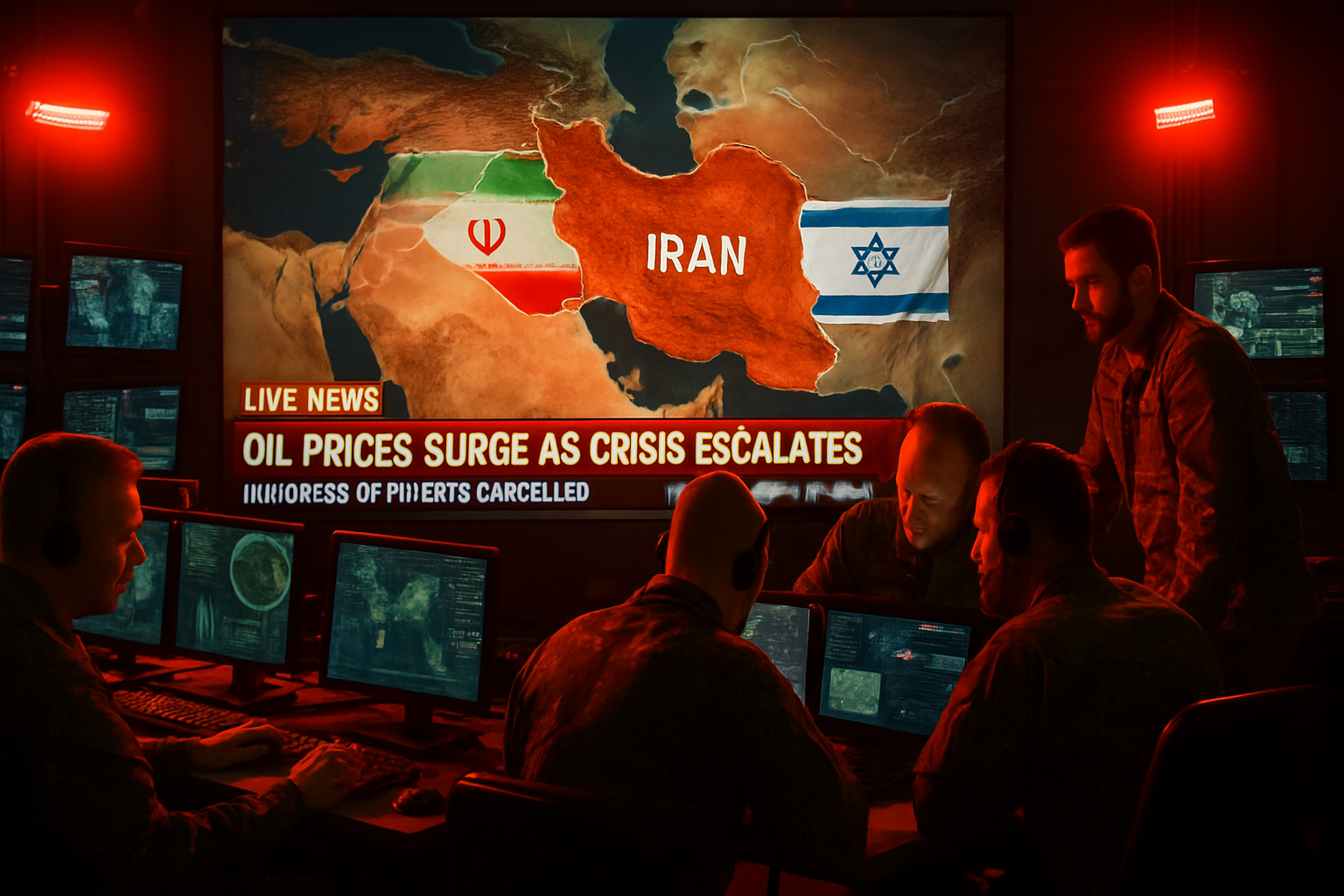
The Iran-Israel conflict has escalated into the most dangerous international crisis since the Cold War, with President Donald Trump announcing an extension of the pause on attacks against Iran's energy infrastructure until April 6, 2026, as diplomatic efforts continue amid unprecedented global disruption.
The announcement comes as the conflict enters its fourth week, following the confirmed death of Iran's Supreme Leader Ali Khamenei on March 1, 2026, in the massive US-Israeli "Operation Epic Fury" – the largest coordinated military campaign in the Middle East since the 2003 Iraq invasion.
Trump's Energy Infrastructure Ultimatum
In a statement posted on Truth Social, Trump wrote: "As per Iranian Government request, please let this statement serve to represent that I am pausing the period of Energy Plant destruction by 10 Days to Monday, April 6, 2026, at 8 P.M., Eastern Time." The President described ongoing talks as progressing "very well," despite what he characterized as "erroneous statements to the contrary by the Fake News Media."
The pause represents Trump's second extension of his ultimatum targeting Iran's critical energy facilities. Previously, the President had issued explosive threats to "obliterate their POWER PLANTS, STARTING WITH BIGGEST FIRST" if Iran failed to fully open the Strait of Hormuz within 48 hours. This strategic waterway carries approximately 40% of global seaborne oil transit.
"They're not fools. They're very smart, actually, in a certain way. And they're great negotiators. Iran is pushing for a deal, but the United States is not under pressure to reach an agreement."
— Donald Trump, US President
Historic Succession Crisis in Iran
The conflict was triggered by the breakdown of nuclear negotiations in Geneva, despite achieving "broad agreement on guiding principles" – the most significant diplomatic progress since the JCPOA collapse in 2018. The talks failed over fundamental scope disagreements, with Iran excluding ballistic missiles and regional proxies as "red lines" while demanding nuclear-only discussions, versus US demands for comprehensive agreements including missiles, armed groups, and human rights.
Following Khamenei's death, Iran faces its first constitutional succession crisis, with the Assembly of Experts selecting Mojtaba Khamenei, the late Supreme Leader's son, as his successor. This marks the first hereditary succession in the Islamic Republic's 47-year history, consolidating Revolutionary Guards control over governance during active warfare.
Global Economic and Aviation Crisis
The conflict has created unprecedented global disruption. Over 18,000 flights have been cancelled worldwide – the most extensive aviation crisis since COVID-19 – as eight Middle Eastern countries maintain simultaneous airspace closures. Dubai International Airport, the world's busiest with 86 million passengers annually, remains completely shut down due to missile damage.
Energy markets are experiencing historic volatility, with oil prices surging past $100 per barrel for the first time since 2014, heading toward $200 according to market warnings. The International Energy Agency has released a record 400 million barrels from strategic reserves – the largest intervention in the agency's 50-year history.
Iran has deployed an estimated 2,000-6,000 naval mines in the Strait of Hormuz, effectively closing the critical waterway. Over 150 tankers worth billions in cargo remain stranded in the Persian Gulf, while major shipping companies Maersk and MSC have suspended operations entirely.
Military Escalation and Casualties
Operation Epic Fury has cost $11.3 billion in its first week alone, with 150 US troops wounded (8 critically) and 3 confirmed killed – the first American deaths in the largest Middle East operation since 2003. The campaign utilizes a dual-carrier deployment of the USS Gerald R. Ford and Abraham Lincoln, representing approximately one-third of the US Navy's active fleet.
In a historic naval engagement, the USS Charlotte submarine sank the Iranian frigate IRIS Dena off Sri Lanka, killing over 80 crew members – the first enemy vessel sunk by a US submarine since World War II, expanding the conflict beyond Middle Eastern boundaries into the Indian Ocean.
Iranian retaliation through "Operation True Promise 4" has caused casualties across the region. The Islamic Revolutionary Guard Corps declared "no red lines remain," systematically targeting US and Israeli assets. Casualties include one civilian killed in UAE's Abu Dhabi, 32 injured in Kuwait airport strikes, and 8 wounded in Qatar despite Patriot missile interceptions of 65 missiles and 12 drones.
European Territory Under Attack
In an unprecedented escalation, Iranian drones struck RAF Akrotiri in Cyprus – the first attack on European territory since World War II. This prompted an extraordinary naval coalition response, with HMS Dragon, Spanish frigates, and vessels from Italy, France, Netherlands, and Greece deploying to protect European interests. The European Union activated its ESTIA evacuation plan for Cyprus for the first time in the bloc's history.
Humanitarian Crisis and Nuclear Concerns
The Iran Red Crescent reports over 787 civilian casualties from US-Israeli strikes, including the devastating Minab elementary school attack that killed 53-85 students and staff during regular school hours. The Pentagon has confirmed US responsibility for elementary school strikes that killed 165-185 students due to "outdated targeting data," drawing international condemnation for potential Geneva Conventions violations.
International evacuations have reached the largest scale since the Arab Spring in 2011, with Australia reporting 115,000 nationals trapped and Germany struggling to evacuate 30,000 stranded tourists. Multiple countries have ordered immediate evacuations from Iran, citing "extremely uncertain" security conditions.
The International Atomic Energy Agency has issued serious warnings about nuclear risks following reports of strikes near Iran's Bushehr nuclear facility. Director General Rafael Grossi emphasized the need for "maximum restraint" to avoid potential nuclear accidents that could have regional and global implications.
Congressional Opposition and Diplomatic Breakdown
Congressional scrutiny has reached unprecedented levels, with bipartisan lawmakers demanding answers about strategy, costs, and potential ground troop deployment. Senator Richard Blumenthal stated he is "more concerned than ever" about the possibility of boots on the ground, while the conflict maintains historically low public support at only 25% among Americans.
The Pentagon has quietly prepared for operations extending through September, far beyond the initial 4-6 week timeline presented by the White House. Financial markets are emerging as the "ultimate constraint" on further escalation, with Pakistan's KSE-100 index suffering its largest single-day decline in history at -8.97%.
Trump's demands for Iran's "unconditional surrender" and his claims of the right to personally choose Iran's next Supreme Leader represent the most direct assertion of American control over Iranian internal affairs since 1979. This policy evolution from nuclear-focused objectives to comprehensive regime change has effectively eliminated diplomatic solution possibilities.
Nuclear Governance Crisis Context
The conflict unfolds against a broader nuclear governance crisis, with the New START treaty having expired on February 5, 2026 – marking the first time in over 50 years without US-Russia nuclear constraints. Combined with China's nuclear expansion, UN Secretary-General António Guterres warns that nuclear risks are at their "highest in decades."
Iran continues uranium enrichment at 60% purity with over 400 kilograms of weapons-grade material, sufficient for multiple nuclear weapons if weaponized. The collapse of the most promising US-Iran diplomatic opening in years raises fundamental questions about negotiated solutions' viability for modern nuclear crises.
Regional Coalition Under Severe Strain
The unprecedented coalition of Saudi Arabia, UAE, Qatar, and Egypt that had supported diplomatic engagement is now severely strained as Iranian retaliation has directly targeted their territories. Egyptian President Abdel Fattah el-Sisi condemned attacks on "sisterly Arab countries," warning of "comprehensive chaos" spreading across the region.
Kuwait has relocated its Jazeera Airways operations to Saudi Arabia due to repeated drone attacks, while Saudi Arabia has intercepted over 60 drones targeting Riyadh and Eastern regions. The Gulf states find themselves caught between their traditional US alliance and mounting Iranian pressure, affecting security arrangements that have underpinned regional stability for decades.
Template-Setting Historical Significance
UN Secretary-General António Guterres has characterized the crisis as the "greatest test of multilateral cooperation and crisis management in the modern era." The rapid transition from diplomatic breakthrough to military confrontation demonstrates the fragility of crisis management mechanisms in the multipolar era.
The conflict's outcome will establish precedents for international dispute resolution, nuclear proliferation prevention, territorial sovereignty enforcement, and the credibility of diplomatic versus military solutions that will reverberate through 21st-century international relations for decades.
As the world watches this watershed moment in Middle East geopolitics, the stakes could not be higher: regional war prevention, global energy security, nuclear governance credibility, and the enforcement of post-WWII international order principles are all being tested simultaneously in what represents the most dangerous international crisis since the Cold War's end.