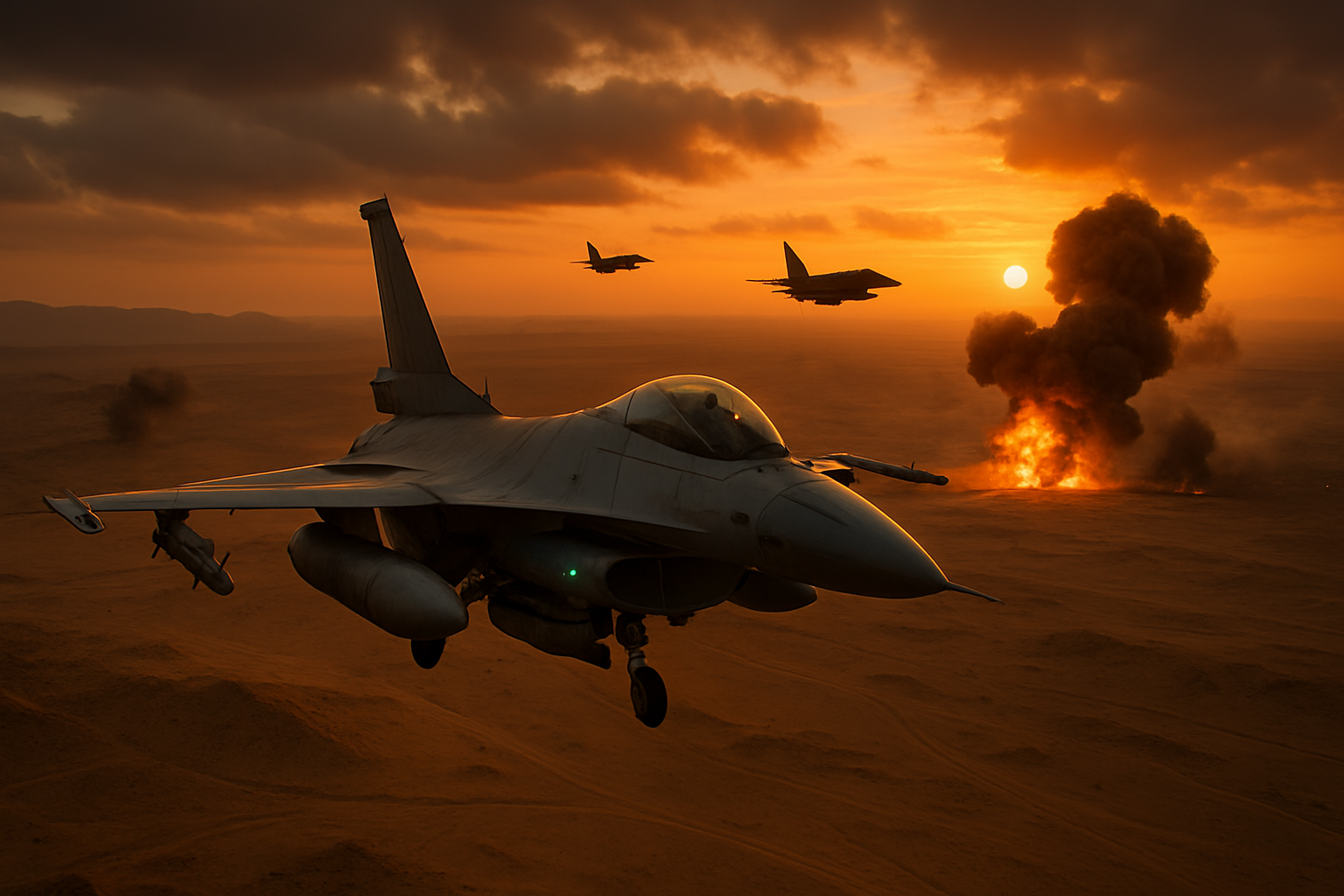
Israeli Defense Forces officially launched ground operations in southern Lebanon on March 16, 2026, marking a dramatic escalation in the Iran-Israel conflict that has already disrupted global energy markets and aviation networks for over two weeks.
The announcement of "limited ground operations" by the IDF comes as the broader Middle East war enters its 18th day, following the confirmed death of Iranian Supreme Leader Ali Khamenei on March 1 in coordinated US-Israeli strikes dubbed "Operation Epic Fury." The conflict has now expanded beyond direct Iran-Israel confrontation to include active ground warfare in Lebanon, threatening to destabilize the entire region.
Ground Operations Expand Beyond Airstrikes
According to multiple sources, Israeli forces have moved into more than a dozen locations in southern Lebanon, with military officials indicating further deployments are likely. The operations target Hezbollah positions and are described by the IDF as efforts to "strengthen a forward defensive posture" against the Iranian-backed organization.
The escalation follows massive airstrikes and artillery bombardments that Israeli forces conducted to "remove threats" before ground troops advanced. At least three separate air strikes hit the strategically important city of Khiam, a known Hezbollah stronghold that serves as a gateway to southern Lebanon, according to Al Jazeera Arabic reporting.
"The Israel Defense Forces have moved into more than a dozen locations in Lebanon and are likely to deploy further. The advance is meant to strengthen a forward defensive posture against Hezbollah."
— Israeli Official (speaking anonymously)
Global Energy Crisis Deepens
The military escalation occurs amid an unprecedented global energy crisis. Oil prices have surged past $106 per barrel, with industry analysts warning of potential $200 levels as Iran maintains its closure of the Strait of Hormuz using an estimated 2,000-6,000 naval mines. The waterway typically handles 40% of global seaborne oil transit.
The International Energy Agency has released a record 400 million barrels from strategic reserves—the largest intervention in the agency's 50-year history—attempting to stabilize markets. Meanwhile, over 150 oil tankers remain stranded in the Persian Gulf, representing billions in cargo value.
Airlines worldwide continue implementing emergency fuel surcharges as jet fuel costs have jumped from typical levels of $85-90 per barrel to $150-200. The aviation industry faces its most severe crisis since COVID-19, with over 18,000 flights cancelled globally and Dubai International Airport—the world's busiest—remaining closed due to missile damage.
Iran Threatens NATO Territory
In a significant diplomatic escalation, Iran has directly threatened Romania, warning that allowing US forces to operate from Romanian bases would constitute "military aggression." Foreign Ministry spokesman Esmaeil Baghaei declared Tehran would respond "politically and juridically" to any such cooperation.
This marks the first time Iran has directly threatened a NATO member state during the current crisis, potentially triggering Article 5 mutual defense considerations. The warning comes as Iranian drones have already struck RAF Akrotiri in Cyprus—the first attack on European territory since World War II.
Revolutionary Leadership Under Fire
Iran continues operating under extraordinary wartime governance following the March 1 death of Supreme Leader Ali Khamenei. His son, Mojtaba Khamenei, has been appointed as successor in the first hereditary transition in the Islamic Republic's 47-year history, though US Defense Secretary Pete Hegseth claims the new leader has been "wounded and likely disfigured" in ongoing strikes.
The succession represents a fundamental shift from clerical to military governance, with CIA assessments suggesting unprecedented Revolutionary Guard influence over Iranian state apparatus. This transformation occurs as Iran maintains its policy of "no red lines remain" in targeting US and Israeli assets across the Middle East.
Humanitarian Crisis Mounts
The Lebanese Health Ministry reports devastating casualty figures, with over 800 killed and more than 800,000 displaced since the conflict began. In a particularly concerning development, 26 Lebanese paramedics have been killed and 51 wounded, with Israeli military spokesman Avichai Adraee threatening additional strikes against ambulances and medical facilities.
The systematic targeting of medical personnel has drawn international condemnation for potential violations of the Geneva Conventions. Meanwhile, Iran plans to convert the girls' school bombed on the conflict's first day into a museum commemorating nearly 200 victims, declaring it a "living document of American crimes."
Congressional Pressure Intensifies
In Washington, bipartisan congressional pressure continues mounting against the Trump administration's handling of the crisis. Senator Richard Blumenthal expressed being "more concerned than ever" about potential ground troop deployment, while the conflict maintains historically low public support at only 25% among Americans.
Operation Epic Fury has already cost $11.3 billion in its first week alone, making it one of the most expensive military operations in recent history. Pentagon officials are reportedly preparing for operations extending through September, far beyond the administration's initial 4-6 week timeline.
Trump Demands Unconditional Surrender
President Trump has escalated his rhetoric to demand Iran's "unconditional surrender" while claiming the right to personally choose the country's next Supreme Leader. This represents the most direct assertion of American control over Iranian internal affairs since the 1979 revolution.
Iranian Foreign Minister Abbas Araghchi has categorically rejected any negotiations with the Trump administration, stating Tehran is prepared to continue missile attacks "as long as necessary." The complete breakdown of diplomatic channels has eliminated any near-term prospects for peaceful resolution.
Nuclear Diplomacy Collapse
The current military confrontation emerged from the complete collapse of nuclear negotiations despite Geneva talks achieving "broad agreement on guiding principles"—the most promising diplomatic opening in years since the 2018 JCPOA breakdown. Iran continues enriching uranium at 60% purity with over 400 kilograms of material, approaching the 90% weapons-grade threshold.
The crisis occurs amid a broader nuclear governance breakdown, with the New START treaty having expired on February 5, marking the first time in over 50 years without US-Russia nuclear constraints. UN Secretary-General António Guterres has warned that nuclear risks are at their "highest in decades."
Regional Coalition Fractures
The unprecedented coalition of Saudi Arabia, UAE, Qatar, and Egypt that initially supported diplomatic resolution is now severely strained as Iranian retaliation has directly targeted member territories. Egyptian President Abdel Fattah el-Sisi has condemned attacks on "sisterly Arab countries" while warning of "comprehensive chaos" spreading across the region.
Saudi Arabia has intercepted over 60 drones in the Riyadh and Eastern regions since early Monday morning, representing one of the largest defensive operations in the kingdom's recent history. Kuwait has been forced to relocate Jazeera Airways operations to Saudi Arabia due to repeated drone attacks on Kuwait International Airport.
European Security Implications
The attack on Cyprus has fundamentally altered the conflict's scope, prompting an unprecedented European naval response. HMS Dragon, Spanish frigates, and vessels from Italy, France, the Netherlands, and Greece are now deployed to protect European territories. The EU has activated its ESTIA evacuation plan for the first time in the bloc's history.
This represents a template-setting moment for European security architecture, as the first attack on European soil since World War II tests the continent's crisis response mechanisms and collective defense capabilities.
Global Economic Disruption
Beyond energy markets, the conflict has exposed fundamental vulnerabilities in global supply chains dependent on Middle Eastern logistics networks. Manufacturing sectors including automotive, electronics, and textiles face severe disruptions as the Persian Gulf—a critical Asia-Europe trade hub—remains largely paralyzed.
Stock markets worldwide continue experiencing volatility, with Pakistan's KSE-100 suffering its largest single-day decline in history at -8.97%. Major corporations have postponed significant financial activities, including PayPal's $1.1 billion IPO, citing market instability.
Template-Setting Crisis
UN Secretary-General António Guterres has characterized the crisis as the "greatest test of multilateral cooperation and crisis management in the modern era." The rapid transition from diplomatic breakthrough to military confrontation demonstrates the fragility of crisis management mechanisms in the multipolar international system.
The stakes extend far beyond the immediate conflict, affecting global energy security, nuclear governance credibility, international law enforcement, and the post-World War II international order. The outcome will establish precedents for 21st-century conflict resolution approaches, potentially determining whether diplomatic or military solutions become the preferred method for resolving territorial and nuclear disputes.
Looking Ahead
As Israeli ground operations in Lebanon commence, the conflict shows no signs of de-escalation. With over 150 US troops wounded, three confirmed killed, and Iranian forces maintaining systematic attacks across the region, the crisis appears headed toward prolonged regional warfare with global implications extending decades beyond current events.
The coming days will prove crucial in determining whether international diplomatic mechanisms can contain the escalation or if the Middle East faces its most devastating regional war since the Iran-Iraq conflict of the 1980s. The stakes for global stability, energy security, and international order have never been higher in the post-Cold War era.