Iran's Revolutionary Guard has issued its starkest warning yet, threatening to completely seal the Strait of Hormuz and launch widespread attacks on Gulf energy infrastructure if the United States bombs Iranian power plants, as President Trump's 48-hour ultimatum deadline approaches Monday night.
The Iranian military's Khatam al-Anbiya Central Headquarters declared Sunday that the critical waterway—which carries 40% of global seaborne oil—will remain "completely closed" until any destroyed energy facilities are rebuilt. The threat represents an unprecedented escalation in what has become the most dangerous international crisis since the Cold War.
Trump's Energy Infrastructure Ultimatum
President Trump on Saturday delivered his most explosive threat to date, posting on Truth Social that Iran must "FULLY OPEN, WITHOUT THREAT, the Strait of Hormuz, within 48 HOURS" or the US will "hit and obliterate their various POWER PLANTS, STARTING WITH THE BIGGEST ONE FIRST."
Iranian President Masoud Pezeshkian responded defiantly, stating the Strait of Hormuz remains "open to all but enemies" while warning against further US and Israeli escalation. Speaking through state media, Pezeshkian declared that any notion of removing Iran from the map reflects "desperation" in the face of a resilient nation.
"The strait will be completely closed and not be reopened until our destroyed plants are rebuilt," the Iranian military statement declared, marking the most direct threat to global energy supplies in the three-week conflict.
— Khatam al-Anbiya Central Headquarters, Iran
Global Energy Crisis Intensifies
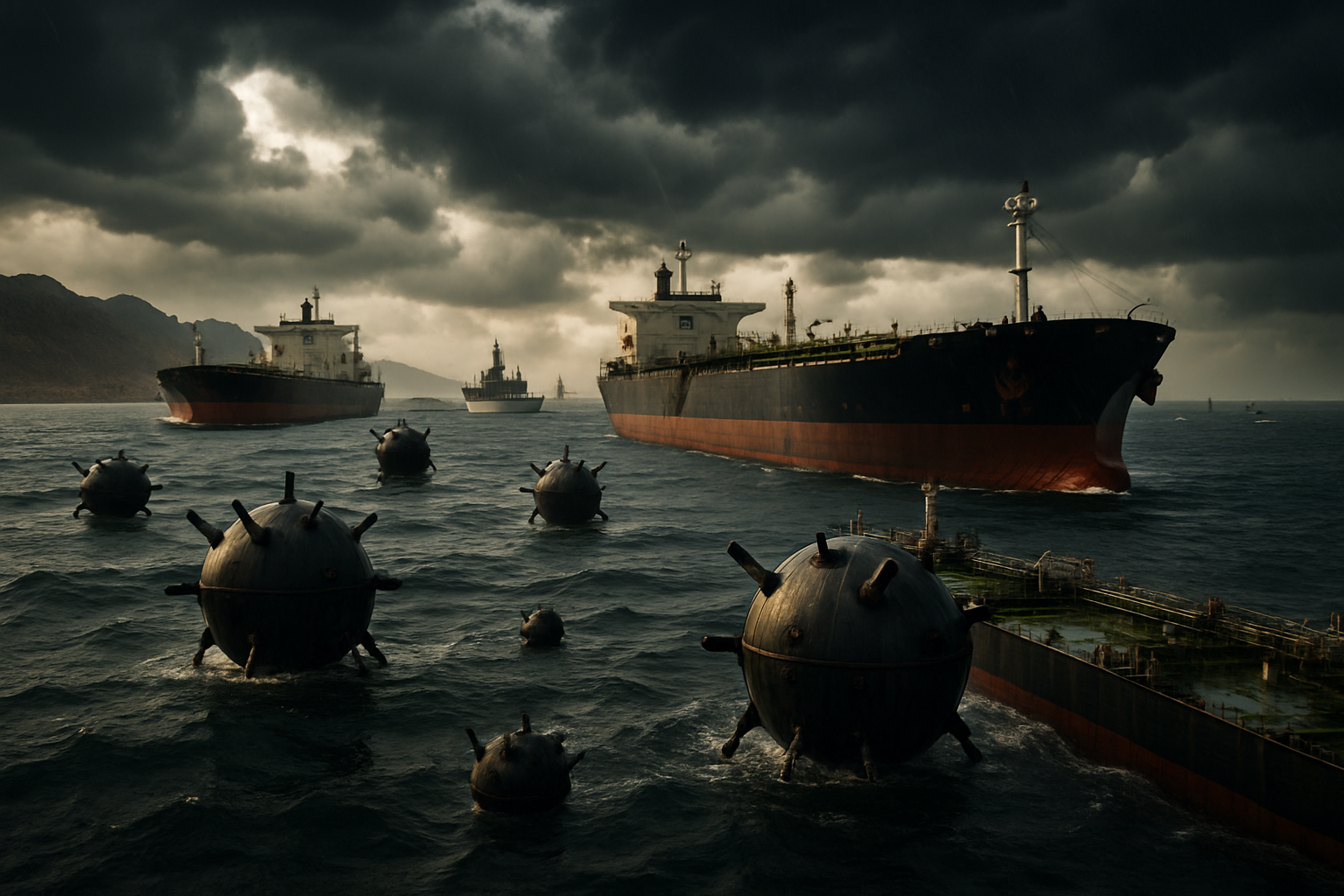
Oil prices have surged past $100 per barrel for the first time since 2022, with Brent crude hitting $119.50 as Iran continues deploying between 2,000-6,000 naval mines throughout the 21-mile-wide Strait of Hormuz chokepoint. The International Energy Agency has released a record 400 million barrels from strategic reserves—the largest intervention in the agency's 50-year history.
The crisis has created the most severe aviation disruption since COVID-19, with over 18,000 flights cancelled worldwide as eight Middle Eastern countries maintain simultaneous airspace closures. Dubai International Airport, the world's busiest with 86 million passengers annually, remains shuttered from missile damage.
Natural gas prices have exploded 24% in Europe and 78% in the United States, while Qatar has halted LNG production representing approximately 20% of global exports. Major shipping companies Maersk and MSC have suspended Persian Gulf operations, leaving over 150 tankers stranded with billions in cargo.
Revolutionary Threats and Regional Retaliation
Iran's military leadership has expanded beyond traditional military targets, warning of systematic attacks on energy facilities, desalination plants, and telecommunications infrastructure across the region. Under "Operation True Promise 4," the Revolutionary Guard has declared "no red lines remain" in targeting countries hosting US military bases.
The threats have materialized across the Gulf region: one civilian was killed in Abu Dhabi, 32 people were injured in Kuwait airport strikes, and eight were wounded in Qatar despite successful Patriot missile interceptions of 65 missiles and 12 drones. Most significantly, Iranian drones struck RAF Akrotiri in Cyprus—the first attack on European territory since World War II.
Regional Coalition Under Severe Strain
The unprecedented diplomatic consensus between Saudi Arabia, UAE, Qatar, and Egypt that initially supported diplomatic solutions has fractured as Iranian retaliation directly targets member territories. Egyptian President Abdel Fattah el-Sisi condemned attacks on "sisterly Arab countries," warning of "comprehensive chaos" spreading across the region.
Saudi Arabia has intercepted 21 drones and seven missiles targeting oil infrastructure, while Kuwait has relocated airline operations to Saudi Arabia due to repeated drone attacks. The Gulf Cooperation Council has strongly condemned what it terms "blatant aggression" against energy infrastructure.
Nuclear Diplomacy's Complete Collapse
The current military confrontation emerged from the complete breakdown of nuclear negotiations despite achieving "broad agreement on guiding principles" in February—the most progress since the JCPOA collapse in 2018. The fundamental scope disagreement proved insurmountable: Iran insisted on nuclear-only talks excluding ballistic missiles and regional proxies as "red lines," while the US demanded comprehensive agreements addressing missiles, armed groups, and human rights.
Iran continues uranium enrichment at 60% purity with over 400 kilograms of weapons-grade material—sufficient for multiple nuclear weapons. The crisis occurs amid broader nuclear governance breakdown following the New START treaty's expiration in February 2026, marking the first time in over 50 years without US-Russia nuclear constraints.
Congressional Opposition Mounts
Bipartisan congressional opposition has intensified as Operation Epic Fury costs reached $11.3 billion in the first week alone. Senator Richard Blumenthal expressed being "more concerned than ever" about potential ground troop deployment, while Pentagon officials prepare operations through September—far beyond the initial 4-6 week timeline.
Public support remains historically low at just 25% for the conflict, which Democratic senators describe as "almost unprecedented" unpopularity for early-stage military operations. Senator Chris Murphy has accused Trump of having "lost control" of the Iran war, appearing "unsettled and disorganized."
European Security Architecture Transformed
The Iranian attack on Cyprus has prompted an unprecedented European naval coalition response, with HMS Dragon, Spanish frigates, and Italian, French, Dutch, and Greek vessels deploying to protect European territory. The EU has activated its ESTIA crisis evacuation mechanism for the first time in the bloc's history.
International evacuations have reached Arab Spring proportions, with Australia reporting 115,000 nationals trapped and Germany evacuating 30,000 stranded tourists from the region. Multiple countries have ordered immediate evacuations from Iran citing "extremely uncertain" security conditions.
Economic Consequences Cascade Globally
Global supply chains dependent on Gulf logistics have suffered severe disruption, affecting automotive, electronics, and textile manufacturing worldwide. Airlines have implemented emergency fuel surcharges as jet fuel costs jumped from $85-90 per barrel to $150-200.
Financial markets have crashed in multiple countries, with Pakistan's stock exchange suffering its largest single-day decline in history at -8.97%. South Korea's KOSPI triggered circuit breakers with a -12% drop as the crisis demonstrates the fundamental vulnerability of global systems to geopolitical shocks.
Trump's Regime Change Demands
President Trump has evolved from nuclear-focused objectives to comprehensive regime change, demanding Iran's "unconditional surrender" and claiming the right to personally choose Iran's next Supreme Leader. He has rejected Mojtaba Khamenei's succession following his father Ali Khamenei's death on March 1, calling the hereditary appointment "lightweight."
This represents the most direct assertion of American control over Iranian internal affairs since 1979, effectively eliminating diplomatic solution possibilities and ensuring prolonged military confrontation with global consequences.
Template-Setting Crisis for the 21st Century
UN Secretary-General António Guterres has called the crisis the "greatest test of multilateral cooperation in crisis management of the modern era." The rapid transition from diplomatic breakthrough to military confrontation demonstrates the fragility of crisis management in the multipolar era.
With stakes including regional war prevention, global energy security, nuclear governance credibility, and international law enforcement, the outcome will establish precedents for 21st-century conflict resolution approaches affecting diplomatic versus military solutions worldwide.
"We are facing the most dangerous international crisis since the end of the Cold War, with implications that will extend decades beyond current events," warned a senior UN official familiar with crisis management protocols.
— Senior UN Official
As Trump's 48-hour ultimatum deadline approaches Monday evening, the world confronts a watershed moment where the containment of this crisis could provide a framework for future nuclear disputes, while failure may accelerate military solutions reshaping global geopolitics for decades, encouraging proliferation worldwide and undermining diplomatic credibility on an unprecedented scale.