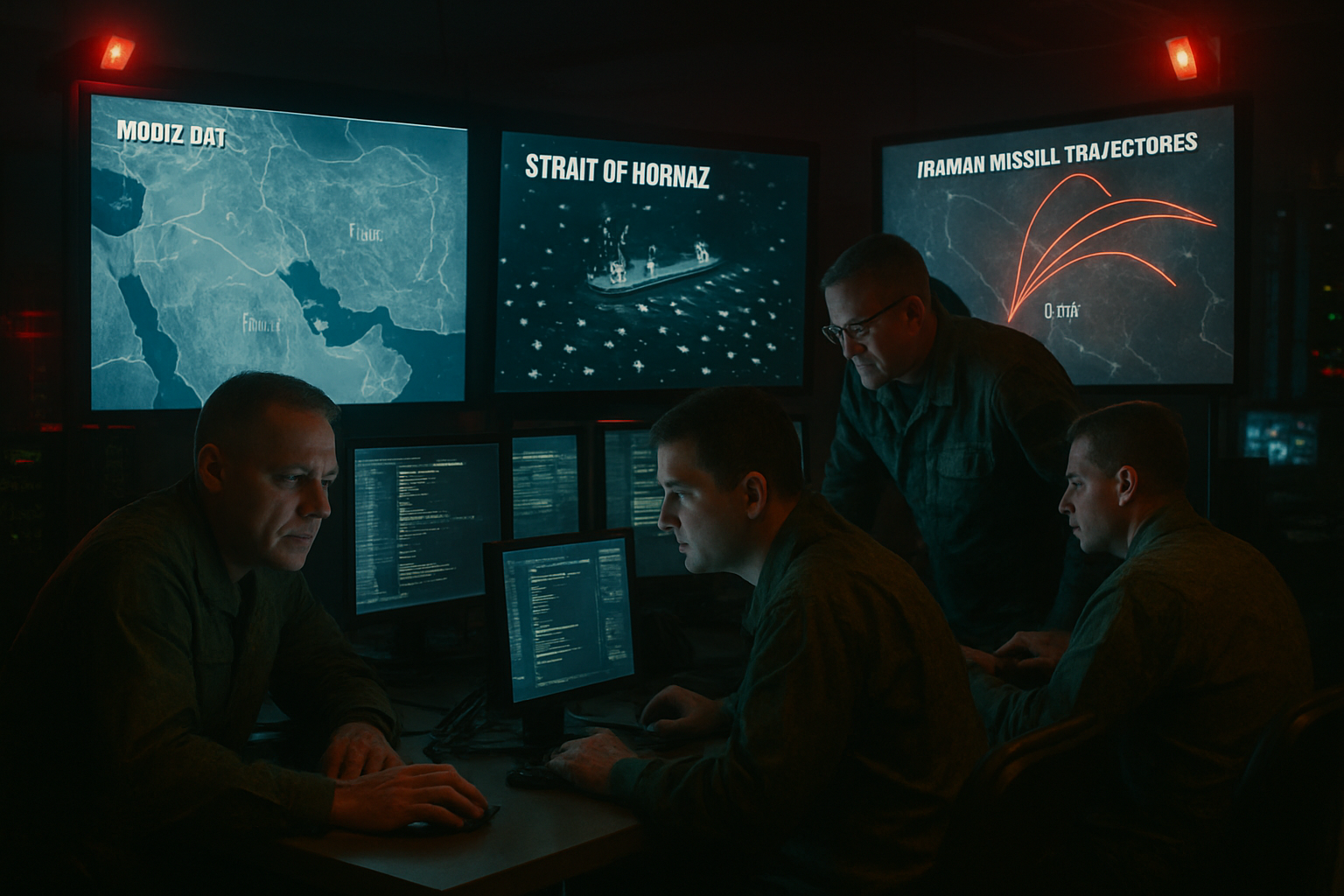
The most dangerous international crisis since the Cold War reached a critical juncture on Monday as Israeli forces launched new waves of devastating airstrikes against Tehran while thousands of US Marines arrived in the Middle East aboard the USS Tripoli, sparking fears of an imminent ground invasion of Iran.
President Donald Trump escalated his threats against the Islamic Republic, telling the Financial Times that his "preference would be to take the oil" in Iran and seriously considering the seizure of Kharg Island, which handles 90% of Tehran's oil exports. The inflammatory comments came as multiple sources confirmed thousands of American troops, including Marines and paratroopers, are positioning for potential ground operations.
Massive US Military Buildup
The USS Tripoli's arrival with 3,500 Marines represents the largest potential ground force deployment since Operation Epic Fury began on March 1. Romanian intelligence analysis suggests that if Trump approves additional deployments, the US could have over 17,000 troops at "Iran's doorstep" - sufficient to occupy strategic territories or secure uranium stockpiles.
Israeli I24 News reported that the massive troop buildup includes Marines and paratroopers specifically chosen for potential Iranian ground operations. This marks the most significant American military presence in the region since the 2003 Iraq invasion.
"To be honest with you, my favourite thing is to take the oil in Iran but some stupid people back in the US say: 'why are you doing that?' But they're stupid people"
— President Donald Trump, Financial Times interview
Iran's Defiant Response
Iranian officials responded defiantly to Trump's ultimatums, with the president claiming Tehran had accepted "most" of 15 US demands for ending the war. However, Iran's Revolutionary Guards warned that any ground troops would be "set on fire," while maintaining their "Operation True Promise 4" campaign with "no red lines remaining."
The escalation has created unprecedented global disruptions. Over 18,000 flights have been cancelled worldwide - the most severe aviation crisis since COVID-19. Eight Middle Eastern countries maintain simultaneous airspace closures, effectively severing critical Asia-Europe air corridors.
Global Energy Crisis Deepens
Oil prices have surged past $100 per barrel for the first time since 2014, with analysts warning of potential $200 levels as Iran maintains its blockade of the Strait of Hormuz using naval mines. The critical waterway, which carries 40% of global seaborne oil transit, remains effectively closed with over 150 tankers stranded.
The International Energy Agency has released a record 400 million barrels from strategic reserves - the largest intervention in the agency's 50-year history. Natural gas prices have increased 24% in Europe and 78% in the US, while Qatar has halted LNG production affecting global supplies.
Unprecedented European Involvement
For the first time since World War II, European territory has been directly attacked, with Iranian drones striking RAF Akrotiri in Cyprus. This prompted an unprecedented naval coalition response, with HMS Dragon, Spanish frigates, and vessels from Italy, France, Netherlands, and Greece deploying to protect European interests.
The EU activated its ESTIA evacuation plan for Cyprus for the first time in the bloc's history, fundamentally altering the conflict's scope from a regional Middle Eastern crisis to a direct European security concern.
Congressional Opposition Mounts
Despite the military escalation, domestic opposition in the US continues to grow. Senator Richard Blumenthal expressed being "more concerned than ever" about potential ground troop deployment, while conflict unpopularity has reached "almost unprecedented" levels with only 25% American public support.
The Pentagon has quietly prepared operations extending through September, far beyond the initial 4-6 week timeline promised by the White House. Operation Epic Fury has already cost $11.3 billion in its first week alone, with 150 US troops wounded and 3 confirmed deaths.
Diplomatic Window Remains
Amid the military escalation, Pakistan has emerged as a potential mediator, with Foreign Minister Ishaq Dar announcing that both the US and Iran have expressed confidence in Pakistan's ability to facilitate talks. China has offered "full support" for Pakistan's initiative to host potential US-Iran negotiations in Islamabad.
However, Trump's explicit regime change demands - including his claim to personally choose Iran's next Supreme Leader while rejecting the hereditary succession of Mojtaba Khamenei - have effectively eliminated diplomatic solutions from the table.
Humanitarian Crisis Escalates
The humanitarian toll continues mounting, with Iran's Red Crescent reporting over 787 civilian casualties from US-Israeli strikes. The Pentagon has confirmed responsibility for elementary school strikes killing 165-185 students due to "outdated targeting data," raising serious questions about compliance with international humanitarian law.
International evacuations have reached Arab Spring levels, with Australia reporting 115,000 nationals trapped and Germany struggling to evacuate 30,000 stranded tourists. Multiple countries have ordered immediate evacuations citing "extremely uncertain" security conditions.
Nuclear Diplomacy Collapses
The current crisis emerged from the complete collapse of Geneva nuclear negotiations, despite achieving "broad agreement on guiding principles" - the most progress since the JCPOA breakdown in 2018. The fundamental obstacle remains unchanged: Iran excludes ballistic missiles and regional proxies as "red lines," while the US demands comprehensive agreements covering missiles, armed groups, and human rights.
Iran continues uranium enrichment at 60% purity with over 400kg of weapons-grade material, while the New START treaty's expiration in February marked the first time in over 50 years without US-Russia nuclear constraints.
Template-Setting Historical Moment
UN Secretary-General António Guterres has called the crisis the "greatest test of multilateral cooperation in the modern era." The rapid transition from diplomatic engagement to military confrontation demonstrates the fragility of crisis management mechanisms in the multipolar world order.
The stakes extend far beyond the Middle East, affecting global energy security, nuclear governance credibility, and international law enforcement. Success in containing the crisis could provide a framework for future nuclear disputes, while failure may accelerate military solutions globally, encouraging proliferation and undermining diplomatic credibility worldwide.
As the conflict enters its fifth week, the deployment of US Marines and Trump's territorial ambitions regarding Iran mark the most dangerous phase yet of a crisis that has already reshaped Middle Eastern geopolitics and threatened the post-World War II international order.