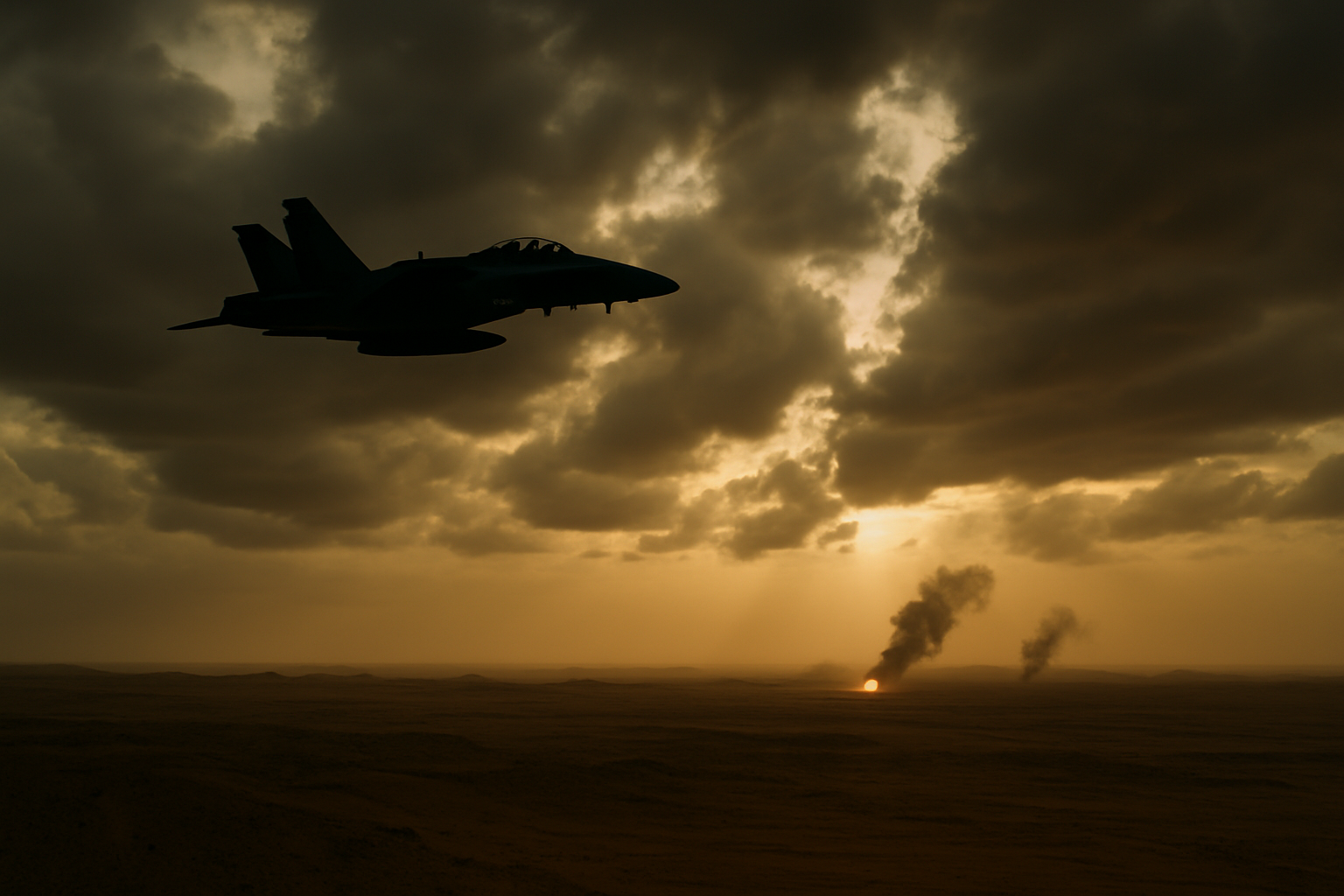
The devastating military confrontation between Iran, Israel, and the United States entered its sixth day on March 5, 2026, with unprecedented escalation as a US submarine torpedoed and sank an Iranian naval frigate in the Indian Ocean, marking the first enemy vessel destroyed by American submarines since World War II.
The USS Charlotte struck the Iranian frigate IRIS Dena approximately 40 nautical miles off Sri Lanka's southern coast, killing over 80 crew members in what Defense Secretary Pete Hegseth described as demonstrating America's "global military reach." The attack represents a dramatic expansion of Operation Epic Fury beyond traditional Middle Eastern boundaries into international waters.
Global Aviation Crisis Reaches Critical Point
The conflict has created the most extensive aviation disruption since COVID-19, with over 18,000 flights cancelled worldwide as eight countries - Iran, Iraq, Israel, UAE, Qatar, Syria, Kuwait, and Bahrain - maintain simultaneous airspace closures. Dubai International Airport, the world's busiest, remains shut down from missile damage suffered during Iranian retaliatory strikes.
Major carriers including Emirates, Air France-KLM, Wizz Air, and Bulgaria Air have suspended operations indefinitely, affecting hundreds of thousands of passengers globally. The crisis has severely compromised Middle Eastern aviation hubs that serve as critical links between European and Asian routes.
"The scale of this aviation disruption is unprecedented in modern peacetime," stated a senior industry analyst. "We're looking at fundamental rerouting requirements that could take months to normalize even after hostilities end."
— Aviation Industry Expert
Energy Markets in Turmoil as Iran Closes Strategic Waterway
Oil prices have surged more than 10% past $80 per barrel as Iran declared the Strait of Hormuz "unsafe" for commercial shipping. The strategic chokepoint, through which 40% of global oil transit passes, has seen operations suspended by major shipping companies Maersk and MSC, with over 150 tankers anchored in the Persian Gulf worth billions in stranded cargo.
Natural gas prices have spiked 24% in Europe and 78% in the United States, creating severe energy security concerns. Qatar has halted LNG production following Iranian infrastructure strikes, further exacerbating global supply shortages.
Massive Iranian Retaliation Campaign Spreads Across Region
Iran's Revolutionary Guard continues Operation True Promise 4, with the IRGC declaring "no red lines remain" in systematic targeting of US and Israeli assets. The campaign has produced casualties across multiple Gulf states:
- UAE: 1 civilian killed in Abu Dhabi from missile debris, Dubai International Airport completely shut down
- Kuwait: 32 foreign nationals injured in airport drone strikes
- Qatar: 8 injured despite successfully intercepting 65 missiles and 12 drones using Patriot systems
- Israel: 9 killed and 28 wounded in residential strikes in Beit Shemesh
- Bahrain: Fifth Fleet headquarters targeted
Nuclear Diplomacy Collapses Despite Breakthrough
The military escalation follows the complete breakdown of nuclear negotiations despite achieving what Iranian Foreign Minister Abbas Araghchi called "broad agreement on guiding principles" - the most significant diplomatic progress since the 2018 JCPOA collapse.
Fundamental disagreements proved insurmountable, with Iran excluding ballistic missiles and regional proxy groups as "red lines" while demanding nuclear-only talks. The United States insisted on comprehensive agreements including missiles, armed groups, and human rights issues.
Iran continues uranium enrichment at 60% purity with over 400kg of material, approaching the 90% weapons-grade threshold that could enable multiple nuclear weapons if weaponized.
Iranian Leadership Succession Crisis
Following the confirmed death of Supreme Leader Ali Khamenei on March 1, Iran faces its most significant constitutional crisis since the 1979 revolution. A three-member transitional council manages the country while the Assembly of Experts selects a permanent successor.
CIA assessments suggest a Revolutionary Guards member will likely be chosen, indicating a hardline military shift. Mojtaba Khamenei, the deceased leader's son, has emerged as a favored candidate, which would represent the Islamic Republic's first hereditary succession.
First US Military Casualties Confirmed
US Central Command confirmed the first American casualties of Operation Epic Fury, with 3 service members killed and 5 wounded - marking the first confirmed US deaths in the largest Middle East military operation since the 2003 Iraq invasion.
"Major combat operations continue and our responsive actions are ongoing," stated CENTCOM, indicating the conflict's potential for prolonged regional engagement.
International Response and Evacuations
The crisis has triggered the largest coordinated international evacuation since the Arab Spring in 2011, with over 115,000 Australians trapped in the region and 30,000 German tourists stranded. Multiple countries including Sweden and Serbia have ordered immediate evacuations from Iran citing "extremely uncertain" security conditions.
The UN Security Council continues emergency sessions as Secretary-General António Guterres warns of "serious threats to international peace and security." Russia has condemned what it calls "reckless actions by Washington and West Jerusalem," while China issued its strongest condemnation in years regarding "serious violations of sovereignty."
Regional Coalition Under Severe Strain
The unprecedented coalition of Saudi Arabia, UAE, Qatar, and Egypt that had backed diplomatic efforts now faces severe strain as Iranian retaliation directly targets member territories. Egyptian President Abdel Fattah el-Sisi condemned attacks on "sisterly Arab countries," warning of "comprehensive chaos" spreading across the region.
The breakdown of this extraordinary Middle Eastern consensus represents a significant setback for regional stability mechanisms and diplomatic conflict resolution.
Global Economic Impact
Stock markets have crashed worldwide, with Pakistan's KSE-100 suffering its largest single-day decline in history at -8.97%. Dow futures dropped 400-570 points as the crisis exposes global supply chain vulnerabilities extending far beyond energy markets to manufacturing centers dependent on Gulf logistics networks.
The disruption affects automotive, electronics, and textile industries reliant on Middle Eastern trade routes, demonstrating the region's critical role in global commerce beyond its energy resources.
Nuclear Governance Crisis Context
The military escalation occurs amid a broader nuclear governance breakdown, with the New START treaty having expired on February 5 - marking the first time in over 50 years without US-Russia nuclear constraints. Combined with China's nuclear expansion, UN officials warn that nuclear risks are at their "highest in decades."
This template-setting crisis will influence international approaches to nuclear disputes and territorial sovereignty enforcement for decades, potentially establishing precedents for military versus diplomatic solutions in the 21st century.
Looking Ahead: Critical Days for Regional Stability
As the conflict enters its second week, the stakes continue to escalate. The successful containment of hostilities could provide a framework for future nuclear crisis resolution, but failure may accelerate military solutions that could reshape Middle Eastern geopolitics for decades.
The coming phase will test multilateral cooperation and crisis management in the modern era, with implications extending far beyond the current conflict to affect energy markets, supply chains, diplomatic precedents, and international law enforcement mechanisms globally.
What began as a promising diplomatic breakthrough has evolved into what many analysts describe as the most dangerous international crisis since the end of the Cold War, with global implications that could reverberate for generations.