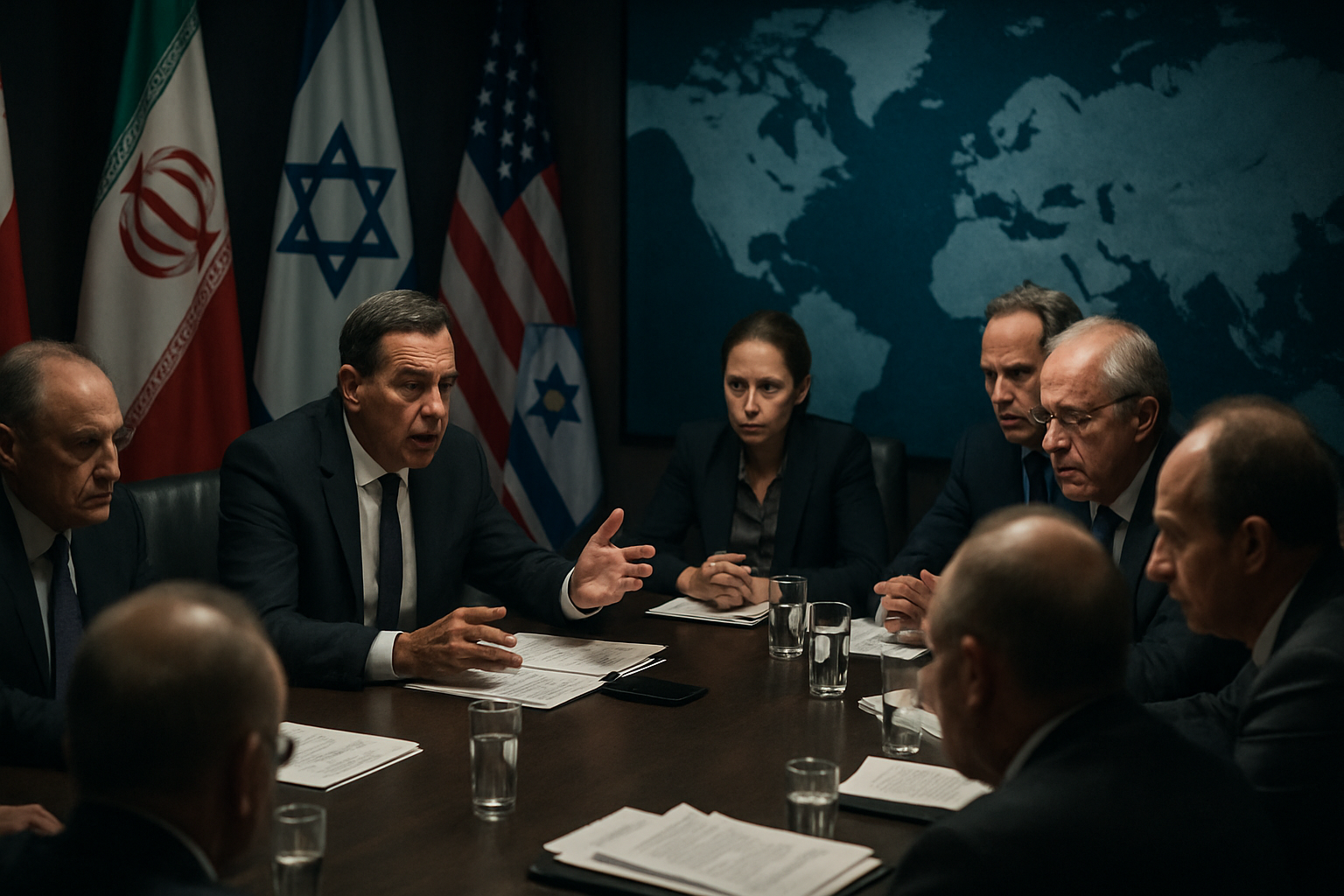
The Iran-Israel war has entered its most dangerous phase yet as Iranian forces struck nuclear facilities, prompting international warnings of radiological disaster while oil prices surge past $114 per barrel amid fears of global economic chaos.
The conflict, which began on February 28 with US-Israeli "Operation Epic Fury" targeting Iranian leadership including Supreme Leader Ali Khamenei, has now expanded into a full-scale regional war with unprecedented global implications. What started as targeted strikes has evolved into the most dangerous international crisis since the Cold War.
Nuclear Facilities Under Attack
International atomic watchdogs issued urgent warnings on March 28 about potential radiological disaster after Iranian power plants came under attack. Australian news outlet 9News reported that watchdogs are "warning of radiological disaster if power plants are struck," marking a critical escalation from conventional warfare to attacks on nuclear infrastructure.
Iran has suffered multiple strikes on its nuclear facilities, with Israeli forces confirming attacks on the Khondab heavy water reactor in Arak and uranium enrichment facility at Ardakan. This represents the third attack on the Bushehr nuclear power plant in 10 days, according to Italian media reports, though Iranian officials maintain there have been no radiation leaks.
The targeting of nuclear infrastructure has raised unprecedented concerns about the risks of a nuclear accident during active warfare. The International Atomic Energy Agency (IAEA) has called for "maximum restraint" to avoid catastrophic consequences that could affect civilian populations across the region.
US Naval Deployment and Military Escalation
The United States is deploying unprecedented military assets to the region, with the USS George H.W. Bush aircraft carrier moving toward Iranian waters according to CNN reports cited by Azerbaijan's AzerNews. This would mark the third US aircraft carrier group in the region, representing the largest American naval presence in the Middle East since the 2003 Iraq invasion.
The Pentagon is reportedly preparing to deploy an additional 10,000 ground troops to the Middle East, bringing the total US military presence to approximately 17,000 soldiers. According to Wall Street Journal reports, this force would be sufficient "to secure uranium stockpiles and take control of an island" - suggesting preparations for potential ground operations inside Iran.
The war has already cost the United States $11.3 billion in its first week alone, with Pentagon sources indicating operations could continue through September 2026, far beyond the initially projected 4-6 week timeline. First US casualties have been confirmed with 3 service members killed and 5 wounded, marking the deadliest American military engagement in the Middle East since the Iraq War.
Strait of Hormuz Crisis and Global Energy Impact
Iran has effectively closed the Strait of Hormuz, a critical waterway that carries 40% of the world's seaborne oil transit, through the deployment of naval mines and missile threats. President Trump has dubbed it the "Strait of Trump" in a diplomatic slip that has raised eyebrows internationally, while demanding Iran reopen the passage within 48 hours or face devastating consequences.
The closure has had immediate global ramifications. Oil prices have surged past $114 per barrel, with some analysts warning of potential increases to $200. The International Energy Agency has authorized the largest strategic petroleum reserve release in its 50-year history - 400 million barrels - in an attempt to stabilize global markets.
The crisis has severely disrupted global supply chains, with over 150 tankers stranded in the Persian Gulf carrying billions of dollars worth of cargo. Major shipping companies Maersk and MSC have suspended operations in the region, while Qatar has halted its LNG production, threatening energy supplies to Europe where natural gas prices have increased by 24%.
International Response and Diplomatic Efforts
Pakistan and China have emerged as key mediators in the crisis. Chinese Foreign Minister Wang Yi told Pakistani Deputy Prime Minister Mohammad Ishaq Dar that Beijing "welcomes Pakistan's mediation efforts between the United States and Iran," according to Afghanistan's Khaama Press. The two countries agreed to work together to promote a ceasefire and ensure the safety of shipping routes.
Iran has shown some willingness to allow humanitarian aid through the Strait of Hormuz, with an Iranian envoy saying the country would "facilitate safe passage for ships carrying humanitarian aid," according to Norwegian media reports. The United Nations has called for the strait to be opened for essential goods, highlighting the humanitarian dimensions of the crisis.
However, diplomatic progress has been limited. Iran arrested 8 Israeli-American agents in West Azerbaijan province, according to Egyptian media, while simultaneously launching its first missile attack toward Israeli territory from Yemen - marking an expansion of the conflict's geographic scope.
Aviation Crisis and Global Disruption
The war has created the worst aviation crisis since COVID-19, with over 18,000 flights cancelled worldwide. Eight Middle Eastern countries have simultaneously closed their airspace, including Iran, Iraq, Israel, UAE, Qatar, Syria, Kuwait, and Bahrain. Dubai International Airport, the world's busiest, remains completely shut down due to missile damage.
Major airlines including Emirates, Air France-KLM, Wizz Air, and Bulgaria Air have suspended operations indefinitely, affecting hundreds of thousands of passengers globally. The crisis has severed critical Asia-Europe air corridors, forcing complex and expensive rerouting of international flights.
Finnish media reports indicate that "hopes for ending the war are fading" as oil prices have "jumped over $114," Houthis threaten to join the war, and Trump hints at abandoning NATO commitments if allies don't provide more support for the Iran operation.
Humanitarian and Regional Consequences
The conflict has created a massive humanitarian crisis with Iran's Red Crescent reporting over 787 civilian casualties from US-Israeli strikes. The most tragic incident occurred at the Minab elementary school where between 53-85 students and staff were killed in what Iranian officials called a "barbaric crime." The Pentagon has acknowledged responsibility for the school strike, citing "outdated targeting data."
Regional allies have suffered casualties as Iranian retaliation has targeted multiple countries. The UAE reported one civilian killed in Abu Dhabi, Kuwait has seen 32 people injured in airport strikes, and Qatar intercepted 65 Iranian missiles and 12 drones using Patriot defense systems, resulting in 8 people injured by debris.
The crisis has strained the unprecedented regional coalition of Saudi Arabia, UAE, Qatar, and Egypt that had supported diplomatic solutions. Egyptian President Sisi condemned attacks on "sisterly Arab countries" and warned of "comprehensive chaos" spreading across the region.
Congressional Scrutiny and Domestic Politics
In the United States, the conflict faces growing congressional opposition with Senator Richard Blumenthal stating he is "more concerned than ever" about the potential deployment of ground troops. The war's unpopularity is "almost unprecedented" for an early-stage military operation, with only 25% of Americans supporting the strikes according to recent polling.
Financial markets are emerging as what analysts call the "ultimate constraint" on further escalation. Pakistan's stock exchange suffered its largest single-day decline in history with an 8.97% drop, while global markets have experienced widespread volatility due to energy security concerns.
Nuclear Diplomacy Collapse
The current crisis emerged from the complete breakdown of nuclear negotiations in Geneva despite achieving "broad agreement on guiding principles" - the most significant diplomatic progress since the 2018 JCPOA collapse. The fundamental disagreement persisted over scope: Iran excluded ballistic missiles and proxy groups as "red lines," demanding nuclear-only talks, while the US insisted on a comprehensive agreement including missiles, armed groups, and human rights issues.
Iran continues uranium enrichment at 60% purity with over 400 kilograms of weapons-grade material - sufficient for multiple nuclear weapons if weaponized. The crisis occurs amid the broader collapse of nuclear governance with the New START treaty between the US and Russia having expired in February 2026, the first time in over 50 years without nuclear constraints between the superpowers.
Looking Ahead: Critical Decisions
UN Secretary-General António Guterres has called this the "greatest test of multilateral cooperation and crisis management in the modern era." The conflict represents a template-setting moment for 21st-century international relations, demonstrating the fragility of crisis management in the multipolar era.
As Trump extends his ultimatum deadline by 10 days while claiming Iran has requested pause negotiations - which Tehran categorically denies - the international community faces its most dangerous moment since the Cold War. The stakes include regional war prevention, global energy security, nuclear governance credibility, and the enforcement of international law principles established after World War II.
The coming days will determine whether this crisis can be contained through diplomatic means or will escalate into a broader Middle Eastern war with global implications extending far beyond the current participants. The decisions made in the next critical phase will reverberate through international relations for decades, potentially reshaping how the world approaches territorial disputes, nuclear crises, and energy security in the 21st century.