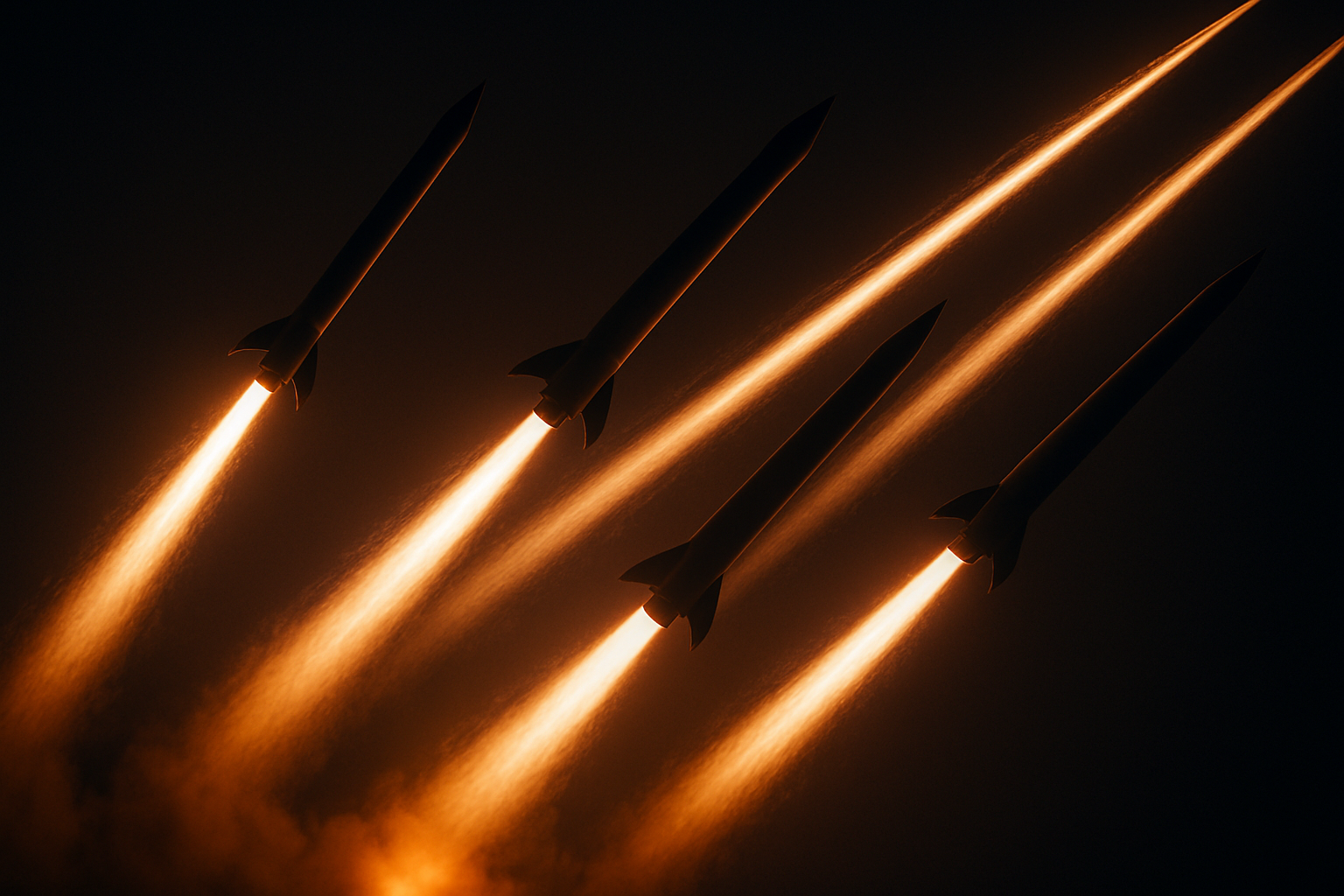
Iran has launched a coordinated ballistic missile attack targeting the US-UK military base Diego Garcia and multiple American installations across the Gulf region, marking the most serious escalation in the ongoing Middle East crisis that has now entered its third week.
According to multiple international sources, Iran fired ballistic missiles at the strategically important Diego Garcia military base in the Indian Ocean, though reports indicate the missiles did not hit the target. The attack represents a dramatic expansion of Iran's retaliatory campaign following the US-Israeli "Operation Epic Fury" strikes that began on March 1, 2026.
Coordinated Strikes Across Multiple Theaters
The Iranian Revolutionary Guard Corps (IRGC) has systematically targeted US military installations across the region under what they call "Operation True Promise 4," declaring that "no red lines remain" in their confrontation with American and Israeli forces. The strikes have affected multiple Gulf states, creating the most dangerous international crisis since the end of the Cold War.
Intelligence sources confirm that Iran has deployed between 2,000 to 6,000 naval mines in the Strait of Hormuz, effectively closing the waterway that handles 40% of global seaborne oil transit. This has led to unprecedented disruptions in global energy markets, with oil prices surging past $110 per barrel as over 150 tankers remain stranded in the Persian Gulf.
"Iran has declared the Strait of Hormuz unsafe for shipping, effectively weaponizing one of the world's most critical energy chokepoints."
— Energy Security Analyst
Nuclear Diplomacy Collapses
The missile strikes come despite the complete breakdown of nuclear negotiations that had shown the most promise since the 2018 collapse of the Joint Comprehensive Plan of Action (JCPOA). Geneva talks in February had achieved a "broad agreement on guiding principles," representing the most significant diplomatic progress in years.
However, fundamental disagreements proved insurmountable. Iran maintained that ballistic missiles and regional proxy activities were "red lines" that could not be part of nuclear-only negotiations, while US Secretary of State Marco Rubio insisted on comprehensive agreements addressing missiles, armed groups, and human rights issues.
The diplomatic failure is particularly significant given that Iran continues to enrich uranium at 60% purity - far above the 3.67% limit established by the original JCPOA and approaching the 90% threshold considered weapons-grade. Intelligence sources confirm Iran possesses over 400 kilograms of enriched uranium, sufficient material for multiple nuclear weapons if weaponized.
Global Aviation Crisis Unprecedented
The conflict has triggered the most extensive aviation crisis since the COVID-19 pandemic, with over 18,000 flights cancelled worldwide. Eight countries have simultaneously closed their airspace, including Iran, Iraq, Israel, UAE, Qatar, Syria, Kuwait, and Bahrain.
Dubai International Airport, the world's busiest with 86 million passengers annually, remains completely shut down due to missile damage. Major carriers including Emirates, Air France-KLM, Wizz Air, and Bulgaria Air have suspended operations indefinitely, affecting hundreds of thousands of passengers globally.
Regional Coalition Under Severe Strain
The Iranian attacks have severely strained the unprecedented regional coalition that had supported diplomatic efforts to resolve the crisis. Saudi Arabia, the UAE, Qatar, and Egypt had formed an extraordinary Middle Eastern consensus backing negotiations, but direct attacks on their territories have forced a fundamental reassessment.
Egyptian President Abdel Fattah el-Sisi condemned the attacks on "sisterly Arab countries," warning of "comprehensive chaos" spreading throughout the region. The coalition's fracturing represents a significant blow to Middle Eastern stability architecture that had taken years to develop.
Massive International Evacuations
The crisis has triggered the largest coordinated international evacuation since the Arab Spring of 2011. Australia reports 115,000 nationals trapped in the region, while Germany has 30,000 tourists stranded. The European Union has activated its ESTIA evacuation mechanism for Cyprus for the first time in the bloc's history.
Multiple countries have ordered immediate evacuations from Iran, citing "extremely uncertain" security conditions. The scale of the evacuation effort reflects the international community's assessment that the crisis could escalate into a broader regional war.
Energy Security Global Implications
The International Energy Agency has announced the largest strategic petroleum reserve release in its 50-year history, with 400 million barrels being released from 32 countries' reserves. Japan is releasing 80 million barrels for the first time since the 2011 Fukushima disaster, reflecting the critical nature of the supply disruption.
Qatar's Energy Minister has warned that Gulf states may declare force majeure "within weeks" if the conflict continues, potentially driving oil prices to $150 per barrel - levels that could "bring down economies of the world."
Congressional Scrutiny Intensifies
Bipartisan members of Congress are demanding comprehensive briefings on the administration's long-term strategy, cost projections, and exit plans. Senator Richard Blumenthal expressed being "more concerned than ever" about potential ground troop deployment, noting that public support for the military operation stands at only 25% - "almost unprecedented" for the early stages of a conflict.
Financial markets have emerged as what experts call the "ultimate constraint" on further escalation, with massive disruptions affecting stock exchanges worldwide. Pakistan's KSE-100 index suffered its largest single-day decline in history at -8.97%.
Nuclear Governance Crisis Context
The crisis unfolds against the backdrop of the broadest nuclear governance breakdown in decades. The New START treaty between the US and Russia expired on February 5, 2026, marking the first time in over 50 years that the two nuclear superpowers operate without bilateral constraints.
Combined with China's nuclear expansion and Iran's advancing uranium enrichment program, UN Secretary-General António Guterres has warned that nuclear risks are at their "highest level in decades."
Template-Setting Historical Moment
Military analysts describe the current crisis as a "template-setting" moment for 21st-century conflict resolution approaches. The rapid transition from diplomatic breakthrough to military confrontation demonstrates the fragility of crisis management mechanisms in the multipolar era.
The stakes extend far beyond the immediate region, affecting global energy security, nuclear governance credibility, and international law enforcement mechanisms. Success in containing the escalation could provide a framework for future nuclear crisis resolution, while failure may encourage military over diplomatic solutions in territorial and nuclear disputes worldwide.
"This represents the most dangerous international crisis since the end of the Cold War, with implications that will extend decades beyond the current events."
— International Security Expert
As the crisis enters its third week, the international community faces an urgent challenge to prevent further escalation while addressing the underlying issues that led to this dramatic diplomatic breakdown. The coming days will be decisive in determining whether this remains a contained regional confrontation or expands into a broader Middle Eastern war with global consequences for energy security, nuclear governance, and international stability.