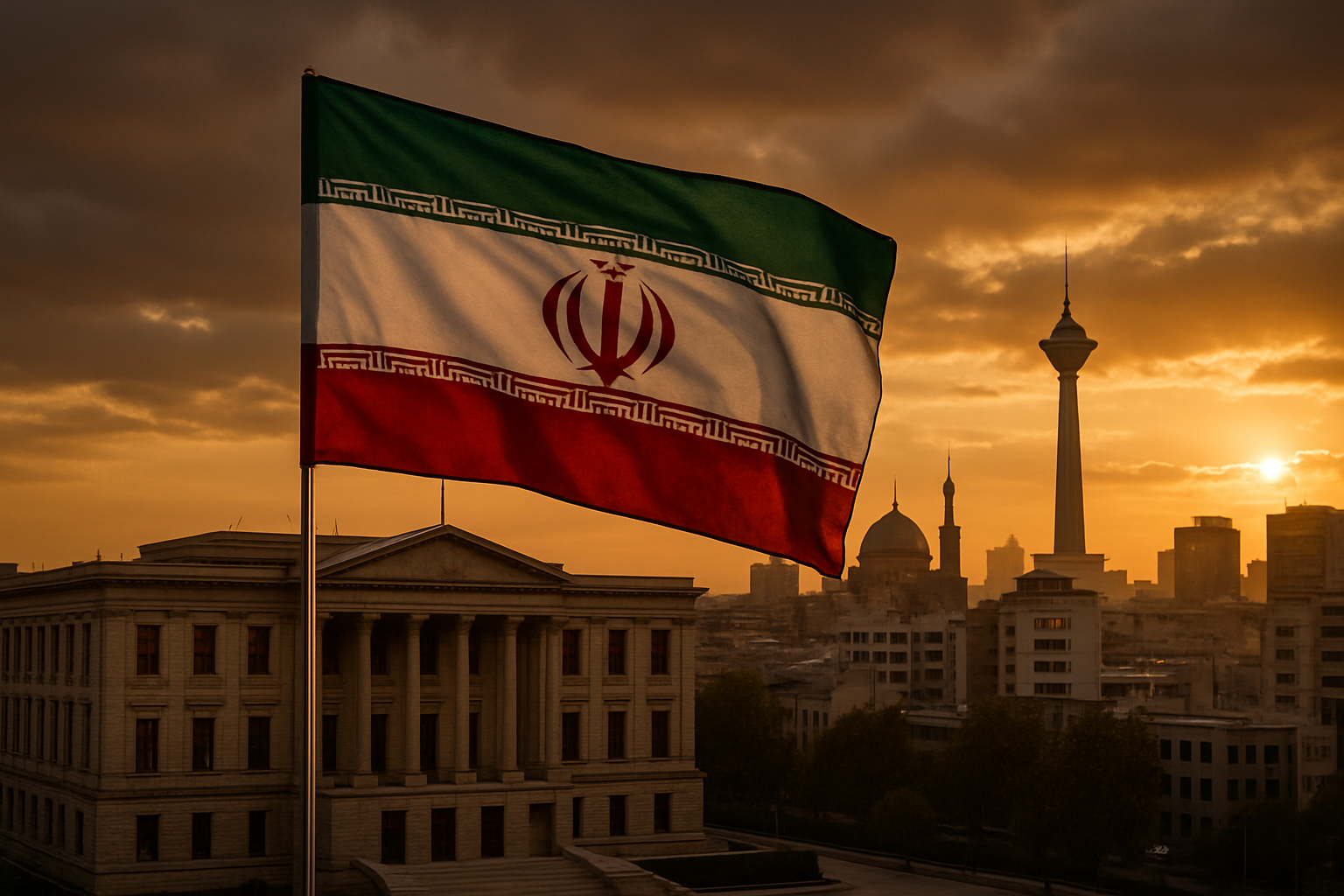
Iran's President Masoud Pezeshkian announced Sunday that the country's temporary leadership council has officially begun its duties following the death of Supreme Leader Ali Khamenei, marking the most significant political transition in the Islamic Republic since its establishment in 1979.
In his first video message since Khamenei's death, broadcast on state television, Pezeshkian confirmed that the three-member transitional council started work earlier in the day. The council, established in accordance with Article 111 of Iran's Constitution, includes President Pezeshkian, the head of the judiciary, and a jurist from the Guardian Council.
Constitutional Framework Activated
The formation of the interim council follows the constitutional provisions that govern succession in the Islamic Republic. According to Iranian media reports, Ayatollah Alireza Arafi, a 66-year-old cleric and jurist, has been named as the third member of the transitional council alongside President Pezeshkian and Judiciary Chief Golamhosein Mohseni Eyei.
This arrangement, prescribed by Article 111 of Iran's Constitution, ensures continuity of government while the Assembly of Experts - a body of 88 senior clerics - undertakes the process of selecting a permanent successor to the Supreme Leader position.
The Iranian government has declared 40 days of official mourning and seven days of public holidays, reflecting the gravity of the transition. This marks the end of Khamenei's 37-year rule, during which he transformed Iran into a major regional power with extensive influence across the Middle East.
Unprecedented Circumstances
The succession process unfolds under extraordinary circumstances following what Iranian officials describe as coordinated US-Israeli military strikes. Multiple international sources confirm that the operation, dubbed "Operation Epic Fury," resulted in significant casualties within Iran's leadership structure.
Confirmed casualties include Defense Minister Aziz Nasirzadeh, Islamic Revolutionary Guard Corps (IRGC) Chief Mohammad Pakpour, and senior aide Ali Shamkhani, along with more than 40 other high-ranking officials. The strikes also reportedly killed members of Khamenei's immediate family, including his daughter, son-in-law, and granddaughter.
Iran's immediate response has been swift and comprehensive. The IRGC declared that "no red lines remain" and launched retaliatory strikes across the region, targeting what it terms "all US and Israeli assets as legitimate targets."
Regional and Global Impact
The crisis has triggered the most extensive aviation disruption since the COVID-19 pandemic, with Iran, Iraq, Israel, the UAE, and Qatar closing their airspace simultaneously. Over 18,000 flights have been cancelled worldwide, affecting hundreds of thousands of passengers as major carriers including Emirates, Air France-KLM, Wizz Air, and Bulgaria Air suspended Middle East operations.
The events have severely strained the unprecedented regional coalition of Saudi Arabia, UAE, Qatar, and Egypt that had been supporting diplomatic efforts. Egyptian President Sisi condemned attacks on "sisterly Arab countries," warning of potential "comprehensive chaos" in the region.
Energy markets have responded with rising oil prices amid concerns about the Strait of Hormuz, through which 40% of global oil transit passes. Iran has warned that shipping through this critical waterway may "not be allowed," raising fears of worldwide supply chain disruptions.
Constitutional Succession Process
The Assembly of Experts now faces the task of selecting Iran's next Supreme Leader through a process that could reshape the country's future direction. According to CIA assessments, a Revolutionary Guards member is considered likely to be chosen as the next Supreme Leader, which could signal a more militaristic approach to governance.
The transitional council will manage the country's affairs during this critical period, which analysts describe as a test of the theocratic system's resilience under external military pressure and regional instability.
President Pezeshkian's prominent role in the transitional arrangements positions him as a potential bridge figure, though the military strikes may strengthen hardline positions within the selection process.
Diplomatic Collapse Context
The succession crisis unfolds against the backdrop of completely collapsed nuclear diplomacy. Despite achieving what officials described as "broad agreement on guiding principles" in Geneva talks - representing the most progress since the JCPOA collapse in 2018 - fundamental disagreements proved insurmountable.
Iran had maintained that ballistic missiles and regional proxy relationships were "red lines" to be excluded from nuclear-only discussions, while the US demanded a comprehensive agreement including missiles, armed groups, and human rights issues. Iran continues enriching uranium at 60% purity, approaching the 90% threshold required for weapons-grade material.
International Response
The United Nations Security Council has convened emergency sessions at the request of France, China, Russia, Colombia, and Bahrain. Russia has condemned what it terms "reckless actions by Washington and West Jerusalem" as violations of international law.
Multiple countries have initiated embassy evacuations, with Sweden and Serbia immediately evacuating their citizens from Iran citing "extremely uncertain" security conditions. The US has authorized the departure of non-essential embassy staff from Israel.
The crisis occurs amid broader nuclear governance challenges, including the expiration of the New START treaty on February 5 - the first time in over 50 years without US-Russia nuclear constraints - and China's nuclear expansion programs.
Historical Significance
Analysts describe the events as potentially the most dangerous moment since the end of the Cold War, with implications extending far beyond the immediate crisis. The rapid transition from diplomatic framework to military confrontation demonstrates the fragility of modern crisis management in the multipolar era.
The success or failure of containing the escalation could provide templates for future international crisis resolution, while failure might accelerate military solutions over diplomatic ones, potentially reshaping regional geopolitics for decades.
Iran's succession process represents a critical test of institutional continuity under extreme pressure, with outcomes likely to influence the country's domestic and international trajectory for years to come. The Assembly of Experts faces the unprecedented challenge of selecting new leadership while the nation confronts its most serious external threats since the Iran-Iraq War of the 1980s.