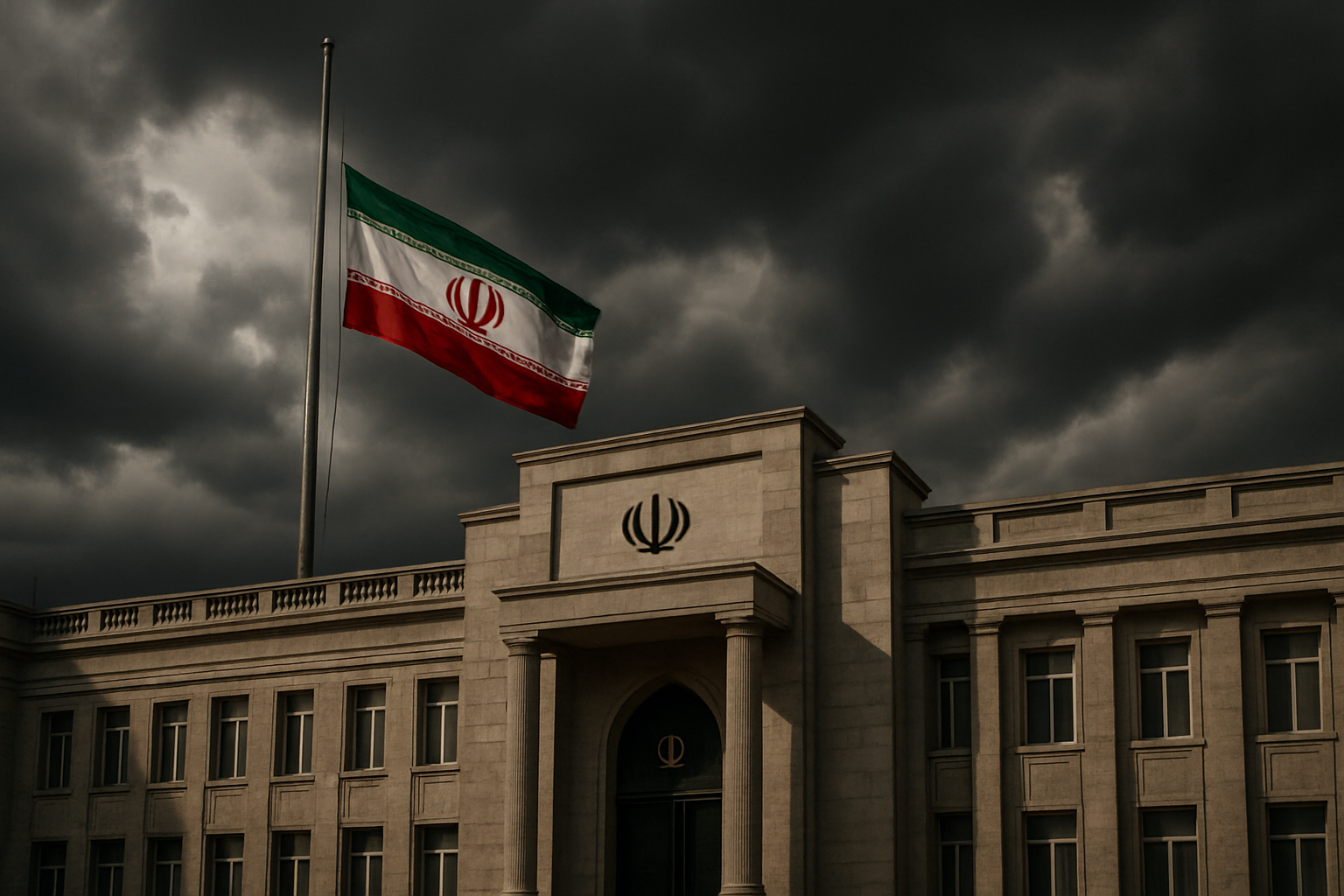
Iran has officially established a three-member transitional council to assume leadership responsibilities following the confirmed death of Supreme Leader Ali Khamenei, marking the beginning of the most significant political succession crisis in the Islamic Republic since its founding in 1979.
According to multiple international sources and Iranian state media confirmations, the transitional body consists of President Masoud Pezeshkian, the head of the judiciary, and one Islamic jurist from the Guardian Council, as announced by senior Iranian official Mohammad Mokhber. This arrangement follows constitutional protocols established for such unprecedented circumstances in the theocratic system.
Constitutional Framework and Succession Protocols
The formation of the transitional council represents the activation of Iran's constitutional succession mechanisms, designed to maintain governmental continuity during leadership transitions. As reported by Iranian Students' News Agency (ISNA), the three-member structure adheres to provisions outlined in Iran's 1979 constitution for managing periods without a Supreme Leader.
Swedish media reports indicate that President Pezeshkian and two other high-ranking officials will lead Iran during this transition period, while the country begins the complex process of selecting Khamenei's permanent successor. The constitution mandates that 40 days of official mourning be observed, with seven days declared as public holidays.
"The transitional council will maintain the essential functions of state while the Assembly of Experts convenes to select the next Supreme Leader."
— Constitutional Expert on Iranian Governance
Historical Context of the Crisis
The succession crisis emerges from the March 1, 2026, death of Khamenei during what has been described as "Operation Epic Fury" - coordinated US-Israeli military strikes that marked the most significant escalation in Middle Eastern tensions since the 2003 Iraq invasion. The 86-year-old cleric, who had ruled Iran since 1989, died at his place of work while performing official duties, according to Iranian state television.
The crisis represents the culmination of months of failed nuclear diplomacy. Despite Geneva talks achieving what Iranian Foreign Minister Abbas Araghchi called "broad agreement on guiding principles" - the most significant progress since the JCPOA collapse in 2018 - fundamental disagreements over scope proved insurmountable. Iran had excluded ballistic missiles and regional proxies as "red lines," demanding nuclear-only discussions, while the US insisted on comprehensive agreements addressing missiles, armed groups, and human rights.
Immediate Challenges and Regional Implications
The transitional period faces immediate challenges as Iran manages both internal succession procedures and external security threats. The Islamic Revolutionary Guard Corps (IRGC) has declared "no red lines remain" following the military strikes, launching what they termed "first wave" retaliation against US and Israeli assets across the Middle East.
Regional coalition dynamics have shifted dramatically, with the unprecedented consensus among Saudi Arabia, UAE, Qatar, and Egypt - which had backed diplomatic solutions - now severely strained as Iranian retaliation has targeted member territories. This has created what Egyptian President Sisi condemned as attacks on "sisterly Arab countries."
The Role of Intelligence Assessments
According to Romanian media reports citing American intelligence sources, the CIA believes Khamenei could potentially be replaced by a member of the Revolutionary Guards, suggesting the succession may favor hardline military elements within Iran's power structure. This assessment reflects the significant influence the IRGC has gained during nearly five decades of the Islamic Republic.
Nuclear Governance and International Implications
The leadership transition occurs amid a broader nuclear governance crisis, with the New START treaty having expired on February 5, 2026 - marking the first time in over 50 years without US-Russia nuclear constraints. UN Secretary-General António Guterres has warned that nuclear risks are at their "highest in decades."
Iran's nuclear program status remains critical, with uranium enrichment continuing at 60% purity - approaching the 90% weapons-grade threshold. Former IAEA inspector Dr. Yusri Abu Shadi has confirmed that Iran possesses over 400kg of enriched uranium, making nuclear weapons capability "easily achievable" if the political decision is made to weaponize.
Theocratic System Structure and Succession Process
Iran's unique theocratic system combines religious authority with republican institutions, creating complex succession dynamics that extend beyond simple political transition. The Assembly of Experts, consisting of 88 clerics elected by popular vote, holds constitutional responsibility for selecting the Supreme Leader and theoretically monitoring their performance.
The current succession crisis tests this system's resilience and adaptability. Unlike previous transitions, including Khamenei's own succession of Ayatollah Ruhollah Khomeini in 1989, the current circumstances involve external military pressure and regional instability that could influence the selection process.
Regional Security Architecture Disruption
The transitional period has already triggered massive regional disruptions. A global aviation crisis has emerged with Iran, Iraq, Israel, UAE, and Qatar closing their airspace, resulting in over 18,000 flight cancellations worldwide. Major carriers including Emirates, Air France-KLM, and Wizz Air have suspended Middle East operations, affecting hundreds of thousands of passengers globally.
Energy security concerns have intensified, with oil prices rising amid warnings that shipping through the Strait of Hormuz - which handles 40% of global oil transit - may be restricted. The potential for broader regional conflict has created worldwide supply chain disruption risks extending far beyond the immediate Middle Eastern scope.
International Response and Diplomatic Implications
The crisis has prompted emergency sessions of the UN Security Council, with Russia condemning what it termed "reckless actions by Washington and West Jerusalem" as violations of international law. Multiple European governments have issued travel warnings and authorized embassy evacuations, with Sweden and Serbia ordering immediate citizen evacuations from Iran.
The breakdown of what was considered the most promising US-Iran diplomatic opening in years raises fundamental questions about the viability of diplomatic solutions for modern nuclear crises. The rapid transition from framework agreements to military escalation demonstrates the fragility of crisis management in the multipolar era.
Succession Scenarios and Future Governance
The succession process faces multiple scenarios that could reshape Iran's domestic and international trajectory. The Assembly of Experts traditionally selects from among senior clerics, but the current crisis may influence preferences toward candidates who can manage both internal stability and external threats.
The transitional council's performance during this critical period will likely influence the permanent succession. President Pezeshkian's role as a key transitional figure positions him as a potential bridge between reformist and conservative factions, though the military strikes may strengthen hardline positions.
Domestic Considerations
The succession occurs against a backdrop of significant domestic challenges. Iran has faced over 42,000 arrests since the 2022 protests, with Nobel laureate Narges Mohammadi receiving additional prison sentences even during diplomatic talks. The regime has prioritized maintaining control and nuclear capabilities over sanctions relief, despite severe economic pressures.
Template-Setting Implications for Global Governance
This crisis represents a template-setting moment for 21st-century international relations, affecting global governance mechanisms, territorial sovereignty enforcement, and international law credibility in the multipolar era. The rapid escalation from diplomatic framework to military confrontation could influence future approaches to nuclear crisis resolution and conflict management worldwide.
Success in containing the current crisis while managing the succession could provide precedents for diplomatic solutions to complex security challenges. Failure may accelerate military solutions to international disputes, potentially reshaping Middle Eastern geopolitics for decades while undermining diplomatic credibility for territorial and nuclear disputes globally.
Looking Forward: Challenges and Opportunities
The transitional period presents both immediate challenges and longer-term opportunities for regional stability. The constitutional framework provides a structured approach to succession, but external pressures and internal dynamics create unprecedented complexity for Iran's leadership transition.
Regional powers face choices between supporting stability through diplomatic engagement or pursuing strategic advantages amid Iran's vulnerability. The international community confronts urgent needs to prevent broader conflict escalation while addressing the underlying nuclear and security issues that precipitated this crisis.
As Iran navigates this historic transition, the world watches to see whether institutional frameworks can maintain stability amid profound political change, or whether the succession crisis will trigger broader transformations in Middle Eastern power structures that have defined the region for nearly half a century.