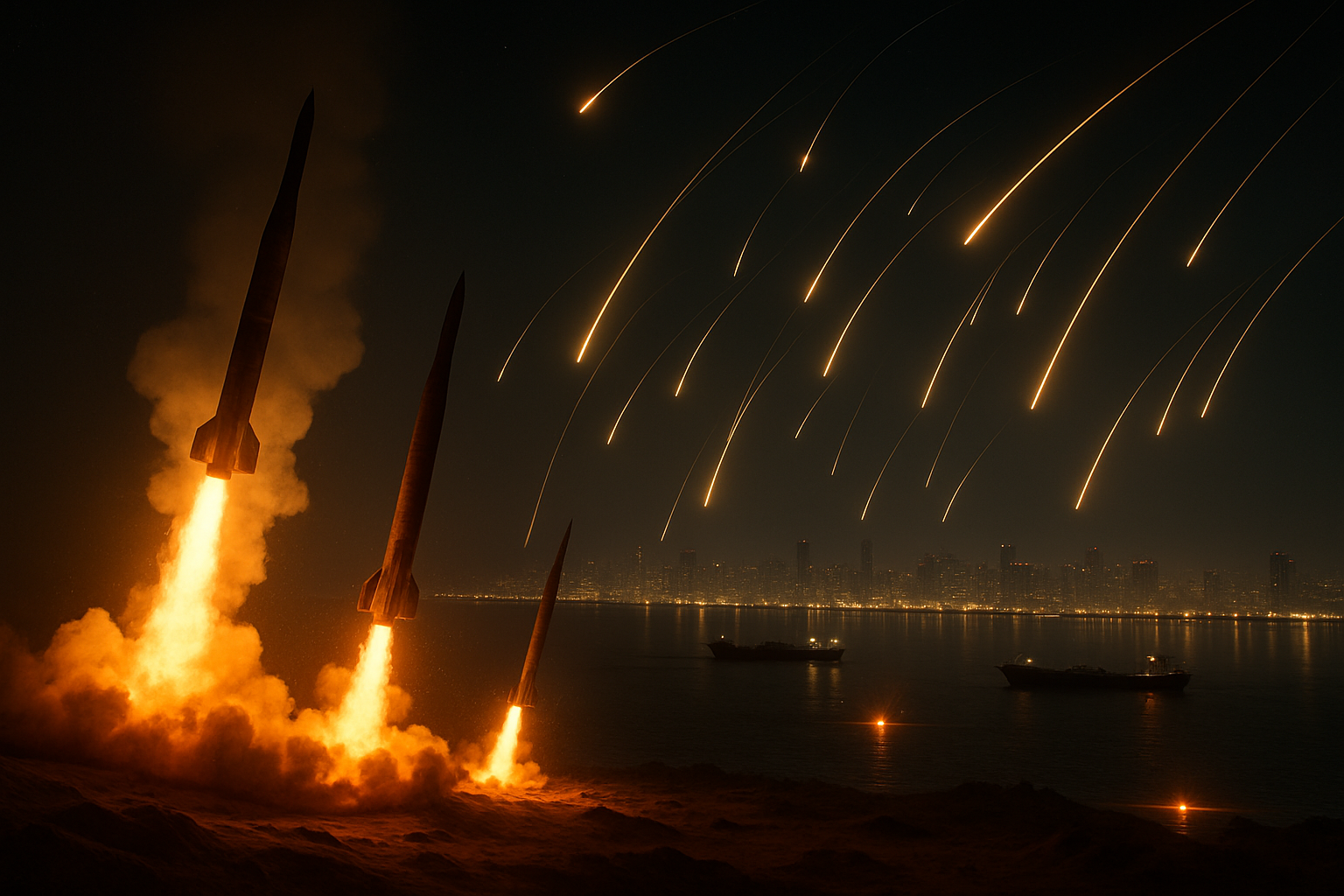
Iran's Islamic Revolutionary Guard Corps has launched a coordinated sixth wave of missile and drone attacks targeting 27 American military bases across the Middle East, marking the most dangerous escalation in decades following the confirmed death of Supreme Leader Ayatollah Ali Khamenei in US-Israeli strikes.
The unprecedented retaliation, dubbed "Operation True Promise 4" by Iranian forces, has plunged the region into chaos as multiple Gulf states simultaneously came under attack. Iran's Foreign Minister Abbas Araghchi declared "no red lines remain," with all US and Israeli assets now considered "legitimate targets" following Operation Epic Fury – the largest coordinated Western military operation against Iran since 2003.
Massive Casualties and Infrastructure Damage
The Iranian strikes have caused casualties and severe disruption across multiple nations. In the United Arab Emirates, one civilian was killed in Abu Dhabi from missile debris, while Dubai International Airport – the world's busiest international hub – sustained missile damage and has completely suspended operations, affecting hundreds of thousands of passengers worldwide.
Kuwait International Airport was struck by drone attacks, injuring multiple employees and forcing the suspension of all flights. Qatar successfully intercepted 65 ballistic missiles and 12 drones using Patriot systems, though eight people were injured by falling fragments. In Bahrain, the US Navy's Fifth Fleet headquarters came under direct attack, with reports of explosions in residential areas of Manama.
"The strikes represent systematic targeting of key US installations across the Gulf region, demonstrating Iran's capability to project power despite the unprecedented losses to its leadership."
— Senior US Military Official
The Jebel Ali port in Dubai, one of the world's busiest shipping hubs, was hit by four drone strikes targeting an MSP ammunition vessel, causing complete service disruption and thick black smoke rising from the facility. The landmark Burj Al Arab hotel also sustained damage from falling debris.
Global Aviation Crisis Unfolds
The escalation has triggered the most comprehensive aviation disruption since the COVID-19 pandemic. Iran, Iraq, Israel, the UAE, and Qatar have all closed their airspace completely, with over 18,000 flights cancelled worldwide.
Major carriers including Emirates, Air France-KLM, Wizz Air, and Bulgaria Air have suspended Middle East operations. Emirates airline announced a total suspension of all flight operations to and from its Dubai hub until 3:00 PM UAE time on Monday, March 2, 2026, as the UAE's General Civil Aviation Authority implemented a "precautionary safety measure."
Flight-tracking maps show vast areas of Middle Eastern airspace virtually empty, creating complex rerouting challenges for international airlines and stranding hundreds of thousands of passengers globally.
Nuclear Diplomacy Collapse Context
The military escalation follows the dramatic collapse of nuclear negotiations that had achieved the most significant progress since the 2018 JCPOA breakdown. Geneva talks had reached "broad agreement on guiding principles" through Switzerland-Oman mediation, representing months of intensive diplomatic efforts.
However, fundamental disagreements proved insurmountable. Iran maintained that ballistic missiles and regional proxies were "red lines" excluded from nuclear-only talks, while the US demanded comprehensive agreements including missiles, armed groups, and human rights issues.
Iran continues enriching uranium at 60% purity – approaching the 90% weapons-grade threshold – with over 400kg of enriched material that nuclear experts say makes weapons development "easily achievable."
Khamenei Death Confirmation Sparks Succession Crisis
Iranian state television officially confirmed the death of Supreme Leader Ayatollah Ali Khamenei, killed "at his place of work" in Tehran's leadership compound while "performing official duties." The 86-year-old cleric's family members, including his daughter, son-in-law, and granddaughter, were also killed in the strikes.
President Trump confirmed Khamenei's death hours before Iranian media, calling him "one of the most evil people in History" and describing the moment as the "single greatest chance for Iranian people to take back their Country."
Iran has formed a three-member transitional council comprising the president, judiciary head, and a Guardian Council jurist, while declaring 40 days of official mourning. The death ends Khamenei's 37-year rule since 1989, creating an immediate succession crisis with no clear heir apparent.
Regional Coalition Under Severe Strain
The unprecedented coalition of Saudi Arabia, UAE, Qatar, and Egypt that had supported diplomatic solutions now faces severe strain as Iranian retaliation directly targets member territories. Egyptian President Abdel Fattah el-Sisi condemned the attacks on "sisterly Arab countries," warning of "comprehensive chaos."
Multiple governments have issued emergency evacuations. Sweden and Serbia ordered immediate citizen evacuations from Iran citing "extremely uncertain" security conditions, while the US authorized departure of non-essential embassy personnel from Israel.
Energy Security and Global Economic Impact
Oil prices are rising sharply amid concerns over the Strait of Hormuz, through which 40% of global oil transit passes. Iran has reportedly warned shipping operators that the strait is "not allowed" for international vessels, raising fears of a complete blockade.
Natural gas prices have surged 24% in Europe and 78% in the United States. The regional conflict threatens to disrupt worldwide supply chains far beyond the Middle East scope, with energy markets facing potential destabilization that could affect global economic stability.
"We are witnessing the most dangerous moment since the end of the Cold War. Regional war prevention, global energy security, and nuclear governance credibility are all at stake."
— UN Secretary-General António Guterres
Unprecedented Military Buildup
The escalation occurred against the backdrop of the largest US military presence in the Middle East since the 2003 Iraq invasion. The unprecedented dual-carrier deployment of USS Gerald R. Ford and USS Abraham Lincoln represents approximately one-third of the active US Navy fleet positioned 800km from Iran's coast.
Trump had issued a historic 10-day ultimatum warning that "bad things will happen" if no nuclear deal was reached, with Pentagon officials confirming that forces were prepared for "weeks-long operations" targeting everything from nuclear facilities to Revolutionary Guard infrastructure.
International Response and UN Emergency Session
The UN Security Council has convened an emergency session following requests from France, China, Russia, Colombia, and Bahrain. Russia condemned what it called "reckless actions by Washington and West Jerusalem," describing the strikes as violations of international law.
The crisis occurs amid a broader nuclear governance breakdown, following the expiration of the New START treaty on February 5 – the first time in over 50 years without US-Russia nuclear constraints. Combined with China's nuclear expansion, UN officials warn that nuclear risks are at their "highest in decades."
Template-Setting Implications for 21st Century
The rapid transition from diplomatic breakthrough to military confrontation demonstrates the fragility of modern crisis management in the multipolar era. The collapse of the most promising US-Iran diplomatic opening in years raises fundamental questions about the viability of diplomatic solutions for nuclear crises.
Success in containing the current escalation could provide a template for nuclear crisis resolution, while failure may accelerate military solutions, reshape Middle Eastern geopolitics for decades, encourage nuclear proliferation elsewhere, and undermine diplomatic credibility globally.
The coming phase will determine whether this represents a contained regional confrontation or the beginning of a broader Middle Eastern war with implications extending far beyond the immediate participants, affecting international approaches to conflict resolution for the 21st century.
Looking Forward
As Iranian Revolutionary Guard forces prepare additional waves of attacks and US military assets remain on highest alert, the world watches to see whether diplomatic channels can be reopened or if the region will descend into the most comprehensive Middle Eastern war since World War II.
The death of Khamenei, combined with the systematic targeting of US military installations across the Gulf, marks a potential turning point in Middle Eastern conflict dynamics that could reshape regional power balances for decades to come. The stakes – regional war prevention, global energy security, nuclear governance credibility, and international law enforcement – remain at their highest levels since the Cold War ended.