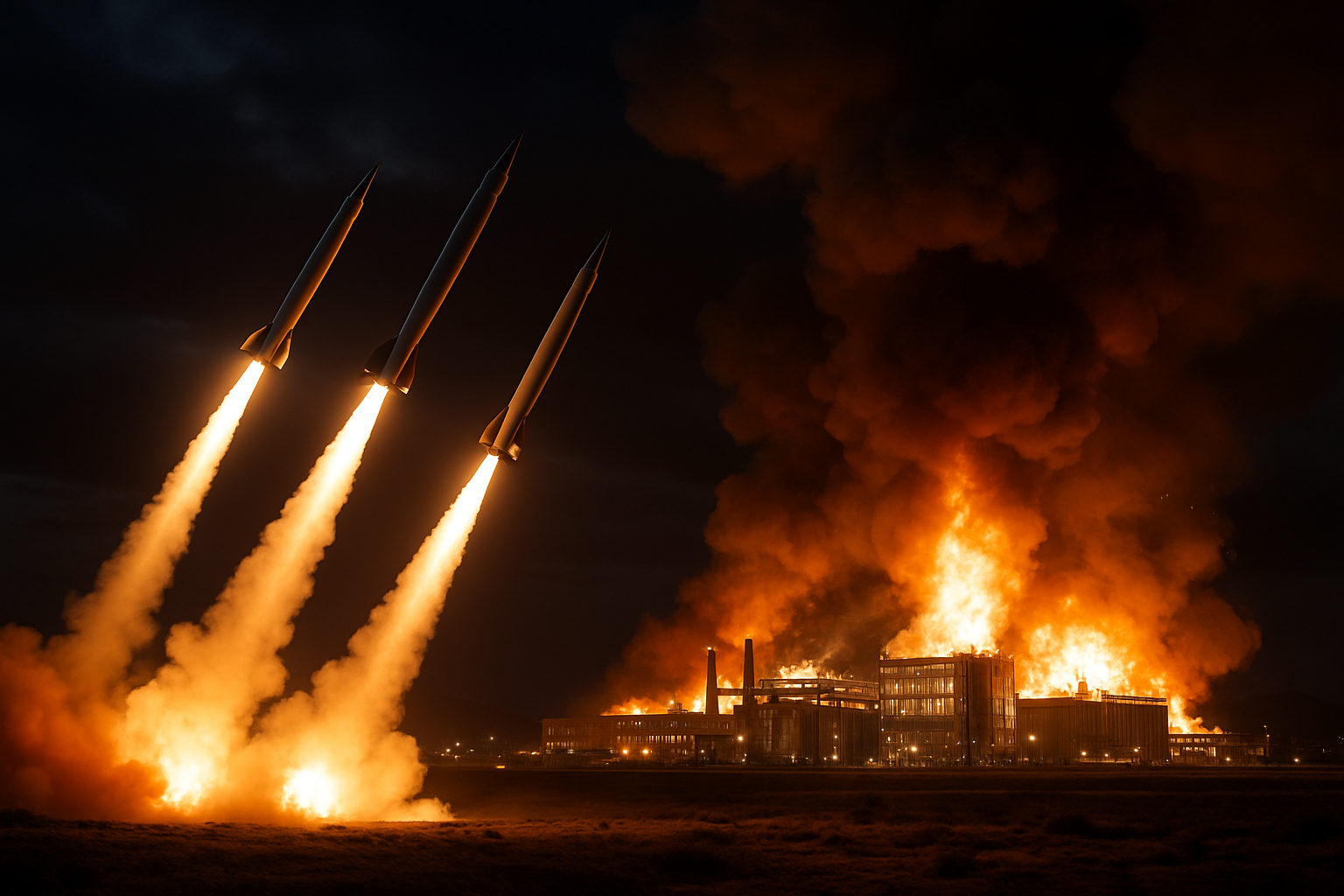
Iran launched precision missile strikes against major aluminum facilities in the UAE and Bahrain on Sunday morning, marking a dangerous escalation in the three-week conflict that has already claimed over 1,300 lives and triggered the most serious international crisis since the Cold War.
The Iranian Revolutionary Guard Corps (IRGC) confirmed targeting Aluminium Bahrain (Alba) and Emirates Global Aluminium (EGA) facilities in what they described as retaliation for "US-Israeli attacks on Iranian infrastructure." The strikes represent a strategic shift from military targets to critical economic infrastructure in the Gulf region.
Strategic Economic Warfare
According to sources at Al Jazeera, Iran specifically targeted these aluminum facilities as part of its ongoing "Operation True Promise 4," the systematic retaliation campaign launched following the death of Supreme Leader Ali Khamenei on March 1. The IRGC has maintained its position of "no red lines remain" in targeting any facilities linked to US-Israeli operations.
The aluminum industry represents a crucial economic pillar for both nations. Alba in Bahrain is one of the world's largest aluminum smelters, while EGA is the UAE's flagship metals producer and a major employer in the region. The targeting of these facilities signals Iran's willingness to strike at the economic foundations of Gulf states supporting the US-led campaign.
"Iran has struck aluminum facilities in Bahrain and the UAE, deepening the conflict and raising fears of a broader Gulf escalation."
— Khaama Press Report
Broader Regional Conflict Context
The aluminum facility strikes come as the Iran-Israel-US war enters its fourth week, having already produced unprecedented global consequences. Over 18,000 flights have been cancelled worldwide, oil prices have surged past $100 per barrel, and the Strait of Hormuz remains effectively closed to commercial shipping.
Iran's new Supreme Leader, Mojtaba Khamenei - the first hereditary succession in the Islamic Republic's 47-year history - has maintained the hardline military approach inherited from his father. The Revolutionary Guards now exercise unprecedented control over Iranian governance during the active warfare.
The conflict began after the breakdown of Geneva nuclear talks despite achieving what negotiators described as "broad agreement on guiding principles" - the most progress since the JCPOA collapse in 2018. However, fundamental disagreements over scope proved insurmountable, with Iran excluding ballistic missiles and proxy activities as "red lines" while the US demanded comprehensive agreements including missiles, armed groups, and human rights.
Energy and Economic Warfare
The targeting of aluminum facilities represents an expansion of Iran's economic warfare strategy. The Revolutionary Guard has systematically attacked energy infrastructure across the Gulf region, including Qatar's Ras Laffan LNG complex (responsible for 20% of global LNG exports) and various oil facilities in Saudi Arabia and the UAE.
This economic targeting has contributed to the worst global energy crisis in decades. Natural gas prices have increased 24% in Europe and 78% in the United States, while the International Energy Agency has released a record 400 million barrels from strategic petroleum reserves - the largest intervention in the agency's 50-year history.
Regional Coalition Under Severe Strain
The aluminum facility attacks further strain the unprecedented regional coalition of Saudi Arabia, UAE, Qatar, and Egypt that had backed diplomatic efforts to resolve the Iranian nuclear crisis. Egyptian President Abdel Fattah el-Sisi has repeatedly condemned Iranian attacks on "sisterly Arab countries," warning of "comprehensive chaos" spreading across the region.
The UAE has declared a "state of defense" following over 1,400 Iranian missiles and drones targeting civilian infrastructure, while Kuwait has relocated its national airline operations to Saudi Arabia due to repeated drone attacks on its airports.
Global Crisis Implications
The conflict has produced the most extensive aviation crisis since COVID-19, with eight Middle Eastern countries maintaining simultaneous airspace closures. Dubai International Airport, the world's busiest with 86 million annual passengers, remains shuttered due to missile damage.
Congressional opposition in the United States continues to mount, with bipartisan lawmakers demanding answers about strategy, costs, and potential ground troop deployment. Operation Epic Fury has cost $11.3 billion in its first week alone, with Pentagon operations now scheduled through September - far beyond the originally projected 4-6 week timeline.
Nuclear Diplomacy Collapse
The current crisis emerged from the complete breakdown of nuclear negotiations despite the February breakthrough in Geneva. Iran continues uranium enrichment at 60% purity with over 400 kilograms of weapons-grade material - sufficient for multiple nuclear weapons if weaponized.
The conflict unfolds against the backdrop of a broader nuclear governance crisis, with the New START treaty having expired in February for the first time in 50+ years without US-Russia nuclear constraints, while China expands its nuclear arsenal. UN Secretary-General António Guterres has warned that nuclear risks are at their "highest in decades."
Template-Setting Historical Moment
Intelligence analysts describe this as the most dangerous international crisis since the Cold War's end, with implications extending far beyond the Middle East. The rapid transition from diplomatic breakthrough to military escalation demonstrates what experts call "multipolar era crisis management fragility."
The aluminum facility strikes represent a dangerous escalation in economic warfare targeting critical infrastructure. Success in containing the conflict could provide a framework for future nuclear crisis resolution, while failure may accelerate military solutions over diplomatic approaches for decades, encouraging proliferation globally and undermining diplomatic credibility worldwide.
As the crisis enters its fourth week, the international community faces what UN Secretary-General Guterres has called "the greatest test of multilateral cooperation and crisis management in the modern era," with decisions in the coming days likely to reverberate through international relations for decades to come.