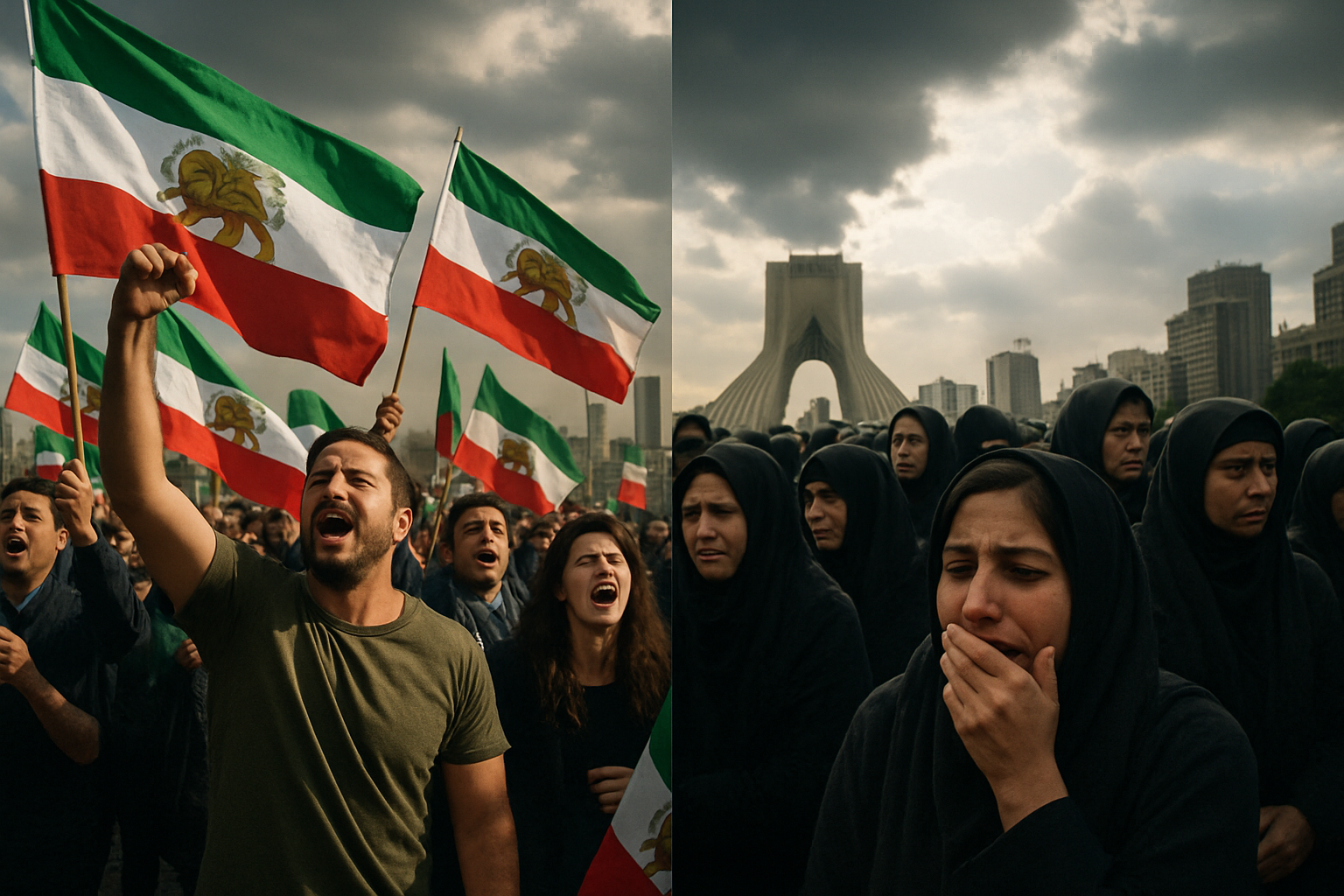
The confirmed death of Iran's Supreme Leader Ayatollah Ali Khamenei in the US-Israeli "Operation Epic Fury" strikes has triggered a stark global divide, with spontaneous celebrations among Iranian exiles across major world capitals contrasting sharply with violent protests in Pakistan and Iraq that have left at least 23 dead and dozens injured.
Iranian state media officially confirmed Saturday that the 86-year-old Khamenei was killed "at his place of work" in Tehran's leadership compound while "performing official duties," ending his 37-year rule since 1989. The announcement came hours after President Trump declared the Supreme Leader's death via Truth Social, calling him "one of the most evil people in History."
Deadly Violence in Pakistan and Iraq
The most severe unrest occurred in Pakistan, where at least 23 protesters died in clashes with security forces. In Karachi, 10 people were killed when security guards at the U.S. consulate opened fire on demonstrators who breached the outer wall of the compound. Another 11 died in Skardu, in northern Pakistan, where angry crowds torched a UN office, and two more were killed in the capital Islamabad.
"Today is a sorrowful day for the entire Muslim ummah, Pakistan's public and Iran's public. My only request is that we all stand with you, but please do not take the law into your hands."
— Mohsin Naqvi, Pakistani Interior Minister
In Iraq, police fired tear gas and stun grenades to disperse hundreds of pro-Iranian protesters who had gathered outside Baghdad's Green Zone diplomatic compound, where the U.S. embassy is located. The demonstrations reflected the complex religious and political ties between these countries and Iran, particularly among Shia populations.
Jubilant Celebrations Across Europe and North America
A dramatically different scene unfolded in major Western cities, where thousands of Iranian exiles and dissidents took to the streets in celebration. In Paris, joyous crowds waved flags of Iran's pre-revolutionary monarchy, featuring the lion and sun symbol, while chanting "Long live freedom for Iran."
Similar celebrations erupted across multiple German cities, with thousands gathering in Düsseldorf and Cologne. Many were Iranian exiles who had fled the Islamic Republic and saw Khamenei's death as a potential turning point for their homeland. In Manchester, approximately 1,000 British Iranians held rallies supporting the military action against Iran.
"It's not easy to talk about or even think about, but the fact is that we've been under so much repression and pressure that we just want to break free."
— Farid Vahidi, Iranian human rights activist in Manchester
In Stockholm, demonstrations were held outside Iran's embassy, with one protester, Muham Baghdadi, telling Swedish media he became "tearful" when hearing news of Khamenei's death. Rome saw hundreds of young Iranians celebrating in Piazza San Giovanni, while Oslo hosted what local media described as "full celebration" outside the Iranian embassy.
Tehran's Divided Response
Even within Iran itself, reactions were sharply divided. Tehran residents were reportedly seen dancing at bus stops and participating in car parades, with people coming to their balconies applauding and chanting "The tyrant is no more," according to Repubblica.it reports. Revolutionary Guards officials told citizens to leave the city, apparently fearing mass celebrations.
However, the Iranian regime also managed to project images of mourning crowds in several cities across the country, highlighting the deep divisions within Iranian society. The government declared 40 days of official mourning and established a three-member transitional council to manage the succession process.
Global Aviation Crisis and Regional Impact
The geopolitical consequences extended far beyond street protests. Iran, Iraq, Israel, the UAE, and Qatar all closed their airspace simultaneously, leading to the cancellation of over 18,000 flights worldwide—the most extensive regional aviation disruption since COVID-19.
Dubai International Airport, the world's busiest, was completely shut down after sustaining missile damage from Iranian retaliation strikes. Major carriers including Emirates, Air France-KLM, Wizz Air, and Bulgaria Air suspended operations, affecting hundreds of thousands of passengers globally.
The End of an Era
Khamenei's death represents the end of a transformative era in Middle Eastern geopolitics. Since taking power in 1989 following the death of Ayatollah Khomeini, he had overseen Iran's evolution into a regional anti-American power with an extensive proxy network including Hezbollah, Hamas, and the Houthis.
The Supreme Leader's death occurred despite recent diplomatic progress, with Geneva nuclear talks having achieved what officials called "broad agreement on guiding principles"—the most significant progress since the collapse of the JCPOA nuclear deal in 2018. However, fundamental disagreements over Iran's ballistic missile program and regional proxy activities remained insurmountable.
Strategic Implications and Regional Coalition Strain
The crisis has severely strained the unprecedented Middle Eastern diplomatic coalition of Saudi Arabia, the UAE, Qatar, and Egypt that had been supporting the nuclear negotiation process. Egyptian President Abdel Fattah el-Sisi condemned Iranian attacks on "sisterly Arab countries," warning of "comprehensive chaos."
Iran's massive retaliation operation, dubbed "True Promise 4" by the Islamic Revolutionary Guard Corps, targeted U.S. and Israeli assets across the region. The IRGC declared that "no red lines remain" and that all American and Israeli assets are now "legitimate targets."
Nuclear Governance Crisis Context
The crisis unfolds against the backdrop of a broader nuclear governance breakdown. The New START treaty between the U.S. and Russia expired on February 5, marking the first time in over 50 years without nuclear constraints between the superpowers. Combined with China's nuclear expansion, this creates what UN Secretary-General António Guterres has called nuclear risks at their "highest level in decades."
Oil prices have surged on concerns about the Strait of Hormuz, through which 40% of global oil transit passes. Iran has warned that shipping through the strategic chokepoint will "not be allowed," raising the specter of a global energy crisis.
Looking Ahead: Succession and Uncertainty
As Iran's Assembly of Experts—88 senior clerics—prepares to select Khamenei's permanent successor, CIA assessments suggest a Revolutionary Guards member is likely to be chosen, potentially indicating continued hardline military influence over Iran's direction.
The events of March 1, 2026, mark what analysts are calling the most dangerous moment since the end of the Cold War, with regional war prevention, global energy security, nuclear governance credibility, and international law enforcement all hanging in the balance.
The stark contrast between celebration and mourning, between hope and violence, reflects not just the complex legacy of Ali Khamenei, but the uncertain future that Iran and the broader Middle East now face in the wake of "Operation Epic Fury" and its far-reaching consequences.