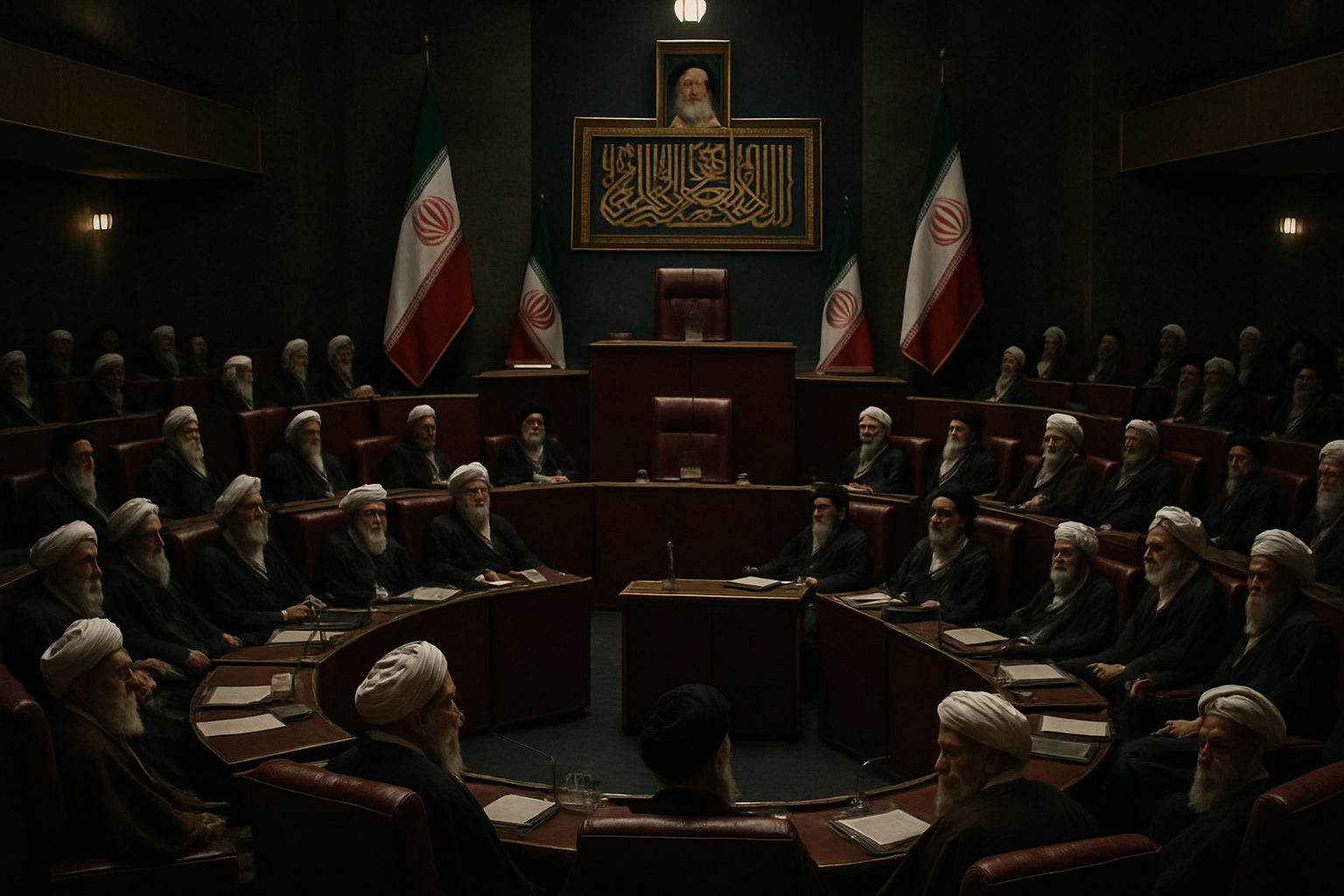
Iran's Assembly of Experts has officially selected Mojtaba Khamenei as the Islamic Republic's new Supreme Leader, completing an unprecedented hereditary succession nine days after his father Ali Khamenei was killed in US-Israeli military strikes. The appointment marks the first time in the theocracy's 47-year history that leadership has passed from father to son.
In a statement released early Monday, the 88-member clerical body announced that Ayatollah Seyyed Mojtaba Hosseini Khamenei had been chosen "by a decisive vote" during an extraordinary emergency session held under extraordinary wartime conditions. The selection comes as Iran continues to engage in its most dangerous regional conflict since the Cold War ended.
Breaking Constitutional Precedent
The appointment of the 56-year-old Mojtaba Khamenei represents a fundamental break from Islamic Republic tradition, which has historically selected Supreme Leaders based on clerical scholarship and religious credentials rather than family lineage. Critics have described the succession as transforming Iran from a theocracy into what regional experts term a "clerical monarchy."
Known within Iranian security circles as the "invisible soldier," Mojtaba built his career through the military and security apparatus, particularly the Islamic Revolutionary Guard Corps (IRGC), rather than traditional religious institutions. Multiple intelligence sources, including the CIA, suggested that Revolutionary Guards pressure was decisive in the selection process, indicating a historic shift from clerical to military influence in Iranian governance.
"By a decisive vote, the Assembly of Experts appointed Ayatollah Seyyed Mojtaba Hosseini Khamenei as the third Leader of the sacred system of the Islamic Republic of Iran."
— Assembly of Experts Statement
Wartime Selection Process
The succession occurred under extraordinary circumstances, with the Assembly of Experts conducting their deliberations during active military operations. Iran has been engaged in "Operation True Promise 4," a systematic retaliation campaign targeting US and Israeli assets across the Middle East following the death of Ali Khamenei on March 1, 2026.
The three-member transitional council established under Article 111 of Iran's constitution—comprising President Masoud Pezeshkian, judiciary head Gholamhossein Mohseni Ejei, and Guardian Council representative Ayatollah Alireza Arafi—managed the country during the nine-day succession period.
Oil prices surged past $100 per barrel following the announcement, while global aviation remained in crisis with over 18,000 flights cancelled worldwide. The Strait of Hormuz, through which 40% of global oil transit flows, remains effectively closed to commercial shipping due to the ongoing conflict.
International Opposition and Recognition
The appointment has drawn sharp international criticism, particularly from the United States. President Donald Trump explicitly rejected Mojtaba Khamenei as "unacceptable" and "lightweight," claiming American involvement in Iran's leadership selection process—the most direct assertion of US control over Iranian internal affairs since the 1979 revolution.
European officials have expressed concerns about regional stability implications and the prospects for renewed nuclear negotiations. No major world power has yet recognized the new Iranian leadership, with many governments maintaining wait-and-see approaches amid the ongoing military crisis.
Trump's demand for Iran's "unconditional surrender" and his assertion of the right to choose Iran's Supreme Leader personally has eliminated diplomatic solution possibilities, according to foreign policy analysts. This represents a complete policy evolution from nuclear-focused concerns to comprehensive regime change objectives.
Nuclear Program Inheritance
The new Supreme Leader inherits an advanced nuclear program that has achieved 60% uranium enrichment levels, with over 400 kilograms of weapons-grade material—sufficient for multiple nuclear weapons if weaponized. Nuclear diplomacy collapsed completely despite achieving a Geneva breakthrough described as the most progress since the 2018 JCPOA withdrawal.
The fundamental scope disagreement proved insurmountable: Iran excluded ballistic missiles and proxy relationships as "red lines" in nuclear-only discussions, while the US demanded comprehensive agreements including missiles, armed groups, and human rights concerns.
Regional and Domestic Challenges
Mojtaba Khamenei assumes power during Iran's most vulnerable period since 1979, inheriting over 42,000 arrests from 2022 protests, severe international sanctions, and significant legitimacy questions over the hereditary nature of his appointment. Reports of spontaneous celebrations in Tehran following his father's death, with residents chanting "tyrant no more," suggest substantial domestic opposition.
Regional coalition partners including Saudi Arabia, the UAE, Qatar, and Egypt face severe strain as Iranian retaliation has directly targeted their territories. Egyptian President Abdel Fattah el-Sisi condemned attacks on "sisterly Arab countries," warning of "comprehensive chaos" spreading across the region.
The humanitarian toll continues mounting, with Iran's Red Crescent reporting over 787 civilian casualties from US-Israeli strikes, including the controversial Minab school attack that killed 53-85 students and staff members, drawing international condemnation as potential war crimes.
Global Crisis Management Test
UN Secretary-General António Guterres has called the March 2026 crisis "the greatest test of multilateral cooperation and crisis management in the modern era." The rapid transition from diplomatic breakthrough to military confrontation demonstrates what experts describe as multipolar era crisis management fragility.
The current crisis occurs amid broader nuclear governance breakdown, with New START having expired on February 5, 2026—the first time in over 50 years without US-Russia nuclear constraints. Combined with Chinese nuclear expansion, UN officials warn that nuclear risks are at their "highest levels in decades."
International evacuations continue on the largest scale since the 2011 Arab Spring, with Australia reporting 115,000 nationals trapped in the region and Germany evacuating 30,000 tourists. The European Union activated Cyprus's ESTIA evacuation plan for the first time in its history.
Economic and Energy Implications
The succession announcement triggered immediate market reactions, with crude oil futures surging more than 20% as traders factored in prolonged Middle Eastern instability. Natural gas prices increased 24% in Europe and 78% in the United States, while major shipping companies including Maersk and MSC suspended Persian Gulf operations entirely.
Over 150 tankers worth billions in cargo remain stranded in the Persian Gulf, while Qatar has halted LNG production affecting European energy supplies. The global aviation industry faces its most comprehensive disruption since COVID-19, with eight countries maintaining closed airspace simultaneously.
Template-Setting Historical Moment
Foreign policy analysts describe March 2026 as a watershed moment for 21st-century international relations, with implications extending decades beyond the current crisis. The success or failure of containing this escalation could provide either a diplomatic template for future nuclear crises or accelerate military solutions reshaping Middle Eastern geopolitics globally.
The hereditary succession represents the end of traditional clerical succession processes in Iran, potentially encouraging similar authoritarian consolidation elsewhere in the region. Revolutionary Guards' decisive role in the selection indicates that future Iranian policy will likely emphasize military confrontation over diplomatic engagement.
Congressional Scrutiny Intensifies
In Washington, bipartisan congressional leaders are demanding comprehensive answers on strategy, costs, and potential ground troop deployments. Senator Richard Blumenthal stated he is "more concerned than ever" about the possibility of American boots on the ground, while operation costs have reached $3.7 billion in the first week alone.
The conflict's unpopularity among Americans is described as "almost unprecedented" for military operations in their early stages, with financial markets emerging as what observers call the "ultimate constraint" on continued escalation. Pakistan's stock exchange crashed 8.97% in its largest single-day decline in history.
First US casualties have been confirmed with three service members killed and five wounded in what CENTCOM describes as the largest Middle East operation since the 2003 Iraq invasion. The USS Charlotte submarine made history by sinking the Iranian frigate IRIS Dena near Sri Lanka—the first enemy vessel sunk by a US submarine since World War II.
As the second week of this unprecedented crisis begins, the world faces what UN officials describe as the most dangerous moment since the Cold War ended, with stakes including regional war prevention, global energy security, nuclear governance credibility, and international law enforcement all being tested simultaneously. The decisions made in Tehran, Washington, and other world capitals in the coming days will likely reverberate through international relations for decades to come.