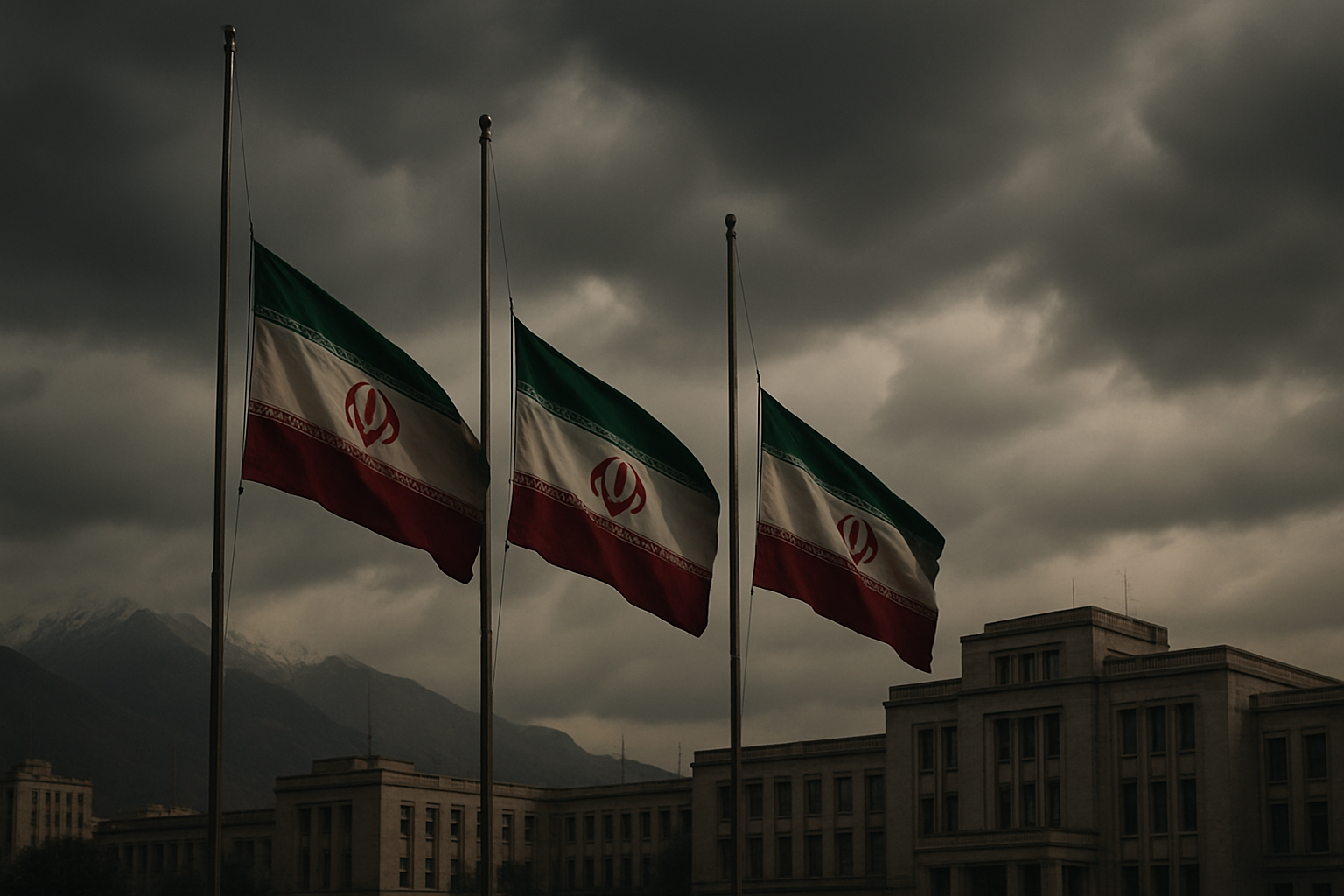
In an unprecedented move that breaks with nearly half a century of Islamic Republic tradition, Iran's Assembly of Experts has officially named Mojtaba Khamenei as the country's new Supreme Leader, making him the first son to directly succeed his father in the position since the 1979 revolution.
The 56-year-old cleric's appointment, confirmed by Iranian state television on March 9, 2026, represents the Islamic Republic's first hereditary succession and marks a dramatic shift from the traditional process of selecting religious scholars based on theological credentials to one influenced by political and security considerations.
The selection comes amid the most dangerous international crisis since the Cold War, with Iran still reeling from the death of Ayatollah Ali Khamenei on March 1 during US-Israeli military operations known as "Operation Epic Fury." The 88-member Assembly of Experts made their decision under extraordinary wartime conditions, with multiple international sources reporting that the choice was made "under pressure from Revolutionary Guards."
Breaking Constitutional Tradition
Mojtaba Khamenei's ascension breaks a fundamental principle of the Islamic Republic's founding ideology. Since Ayatollah Ruhollah Khomeini established the position in 1979, succession has been based on religious scholarship, clerical standing, and popular legitimacy rather than family lineage. The late Ali Khamenei himself was chosen in 1989 not because of family connections but due to his revolutionary credentials and clerical position.
"This represents the most significant constitutional departure since the Islamic Republic's founding," said Dr. Mehdi Khalaji, a senior fellow at the Washington Institute. "It transforms Iran from a theocracy based on religious authority to what critics are calling a 'clerical monarchy.'"
The new Supreme Leader, known within Iran's power circles as the "invisible soldier," built his influence through the security apparatus rather than traditional clerical channels. Since the mid-2000s, he has worked closely with Iran's Revolutionary Guards, managing critical aspects of his father's domestic and regional policies while maintaining an extremely low public profile.
International Opposition and Regional Implications
The succession has drawn immediate international criticism, with President Trump explicitly rejecting Mojtaba Khamenei as "unacceptable" and a "lightweight." In an unprecedented assertion of American influence over Iranian internal affairs, Trump declared that the United States should have a role in choosing Iran's leader - the most direct US intervention claim since the 1979 revolution.
European officials have expressed deep concern about the implications for regional stability and nuclear negotiations. The appointment signals no policy moderation despite massive international pressure, with the Revolutionary Guards' decisive role indicating a shift toward more hardline, military-oriented governance.
The timing of the succession, amid ongoing military operations between Iran and the US-Israeli alliance, has created what UN Secretary-General António Guterres described as "the greatest test of multilateral cooperation and crisis management in the modern era."
Nuclear Program Inheritance
Mojtaba Khamenei inherits one of the world's most advanced nuclear programs, with Iran currently enriching uranium to 60% purity - dangerously close to the 90% needed for weapons-grade material. Intelligence estimates suggest Iran possesses over 400 kilograms of enriched uranium, sufficient for multiple nuclear weapons if weaponized.
Despite recent diplomatic progress in Geneva talks - described as the most significant breakthrough since the 2018 JCPOA collapse - fundamental disagreements between Iran and the United States proved insurmountable. Iran insisted on limiting negotiations to nuclear issues only, while the US demanded comprehensive discussions including ballistic missiles, regional proxy relationships, and human rights concerns.
Nuclear experts warn that the new leadership, given its strong ties to the military establishment, is unlikely to pursue the diplomatic compromises that might have been possible under a more moderate successor.
Domestic Challenges and Legitimacy Questions
The new Supreme Leader faces significant domestic challenges that could undermine the Islamic Republic's stability. Since the 2022 nationwide protests following Mahsa Amini's death, Iranian authorities have arrested over 42,000 demonstrators, creating widespread domestic opposition to the regime.
Reports of spontaneous celebrations in Tehran following his father's death - with residents dancing at bus stops and chanting "the tyrant is no more" - suggest deep public discontent that the new leader must address. The hereditary nature of his appointment may further undermine legitimacy among Iranians who view it as contradicting the revolution's founding principles.
Economic sanctions, international isolation, and the ongoing regional conflict present immediate governance challenges that will test the new leadership's ability to maintain unity during what intelligence sources describe as the regime's most vulnerable period since 1979.
Revolutionary Guards Ascendancy
Multiple intelligence assessments indicate that the Revolutionary Guards played a decisive role in Mojtaba Khamenei's selection, marking a historic shift from clerical to military influence in Iran's governance structure. This represents the first time in the Islamic Republic's 47-year history that the military apparatus has directly controlled the selection of the country's highest authority.
The implications extend beyond domestic governance to Iran's regional proxy network, nuclear program management, and confrontational approach toward the United States and Israel. Military influence in leadership selection suggests an escalation rather than moderation of Iran's regional policies.
Regional coalition partners, including Saudi Arabia, the UAE, Qatar, and Egypt, who had previously supported diplomatic engagement, now face the prospect of dealing with a militarily-influenced Iranian leadership during one of the Middle East's most dangerous periods.
Historical Significance and Global Implications
The March 2026 succession represents a watershed moment in Middle Eastern geopolitics with implications extending far beyond Iran's borders. The combination of hereditary succession, military influence, and wartime conditions creates precedents that could reshape regional governance models and international approaches to nuclear crises.
The crisis has already triggered the most extensive global disruption since COVID-19, with over 18,000 flights cancelled worldwide, oil prices surging past $80 per barrel, and the Strait of Hormuz - through which 40% of global oil transits - declared unsafe by Iranian authorities.
International law experts note that the crisis tests fundamental post-World War II principles of territorial sovereignty, diplomatic immunity, and nuclear non-proliferation. The rapid transition from diplomatic negotiations to military confrontation demonstrates what scholars describe as "multipolar era crisis management fragility."
Looking Ahead: Regional War or Containment
The success or failure of containing the current crisis will likely determine international approaches to conflict resolution for decades to come. The template being set in March 2026 affects not only Middle Eastern stability but global mechanisms for managing nuclear proliferation, territorial disputes, and diplomatic versus military solutions to international crises.
Mojtaba Khamenei's first decisions as Supreme Leader will be closely watched by intelligence agencies worldwide. His response to ongoing US-Israeli military pressure, approach to nuclear negotiations, and management of domestic opposition will shape not only Iran's trajectory but broader Middle Eastern geopolitics.
The Islamic Republic now faces its most challenging period since the 1980-1988 war with Iraq. Whether the new Supreme Leader can maintain regime unity, manage international pressure, and navigate the complex regional landscape will determine both Iran's future and the broader architecture of Middle Eastern power relationships.
As the crisis enters its second week, the international community faces what may be the defining test of 21st-century diplomacy, nuclear governance, and collective security mechanisms established after World War II.