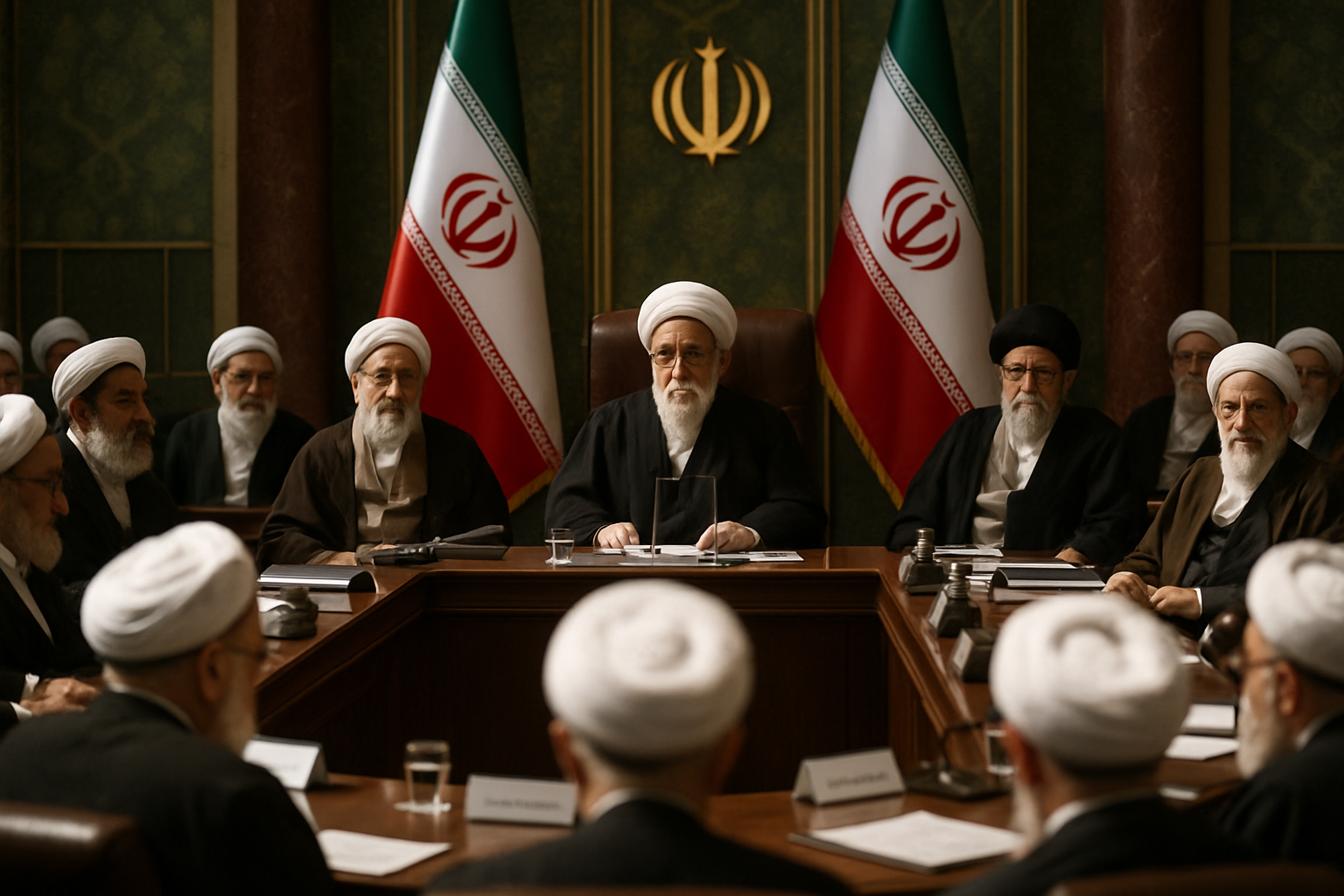
Iran's Assembly of Experts has officially appointed Mojtaba Khamenei, 56, as the Islamic Republic's new Supreme Leader, completing an unprecedented hereditary succession following the death of his father, Ali Khamenei, in early March 2026. The appointment represents the first father-to-son leadership transition in the Islamic Republic's 47-year history, fundamentally altering the country's theocratic governance structure.
The 88-member Assembly of Experts made the historic decision during extraordinary wartime conditions, with multiple sources confirming that the Revolutionary Guards played a decisive role in pressuring the selection. This marks a significant shift from traditional clerical succession to military-influenced governance, as Mojtaba Khamenei built his career through Iran's security apparatus rather than following the conventional religious scholarly path.
Breaking Constitutional Precedent
Known as the "invisible soldier" within Iran's power structure, Mojtaba Khamenei has operated in the shadows since the mid-2000s, helping his father control the country's military and security networks. Unlike previous Supreme Leaders who rose through clerical ranks based on religious scholarship, his appointment signals what critics are calling a transformation from "theocracy to clerical monarchy."
"We will obey the commander-in-chief until the last drop of our blood."
— Iranian Defense Council Statement
Iran's political institutions have rallied behind the new Supreme Leader with strongly worded pledges of loyalty. Public processions to take loyalty vows were announced across the country, though Iranian society remains deeply divided. Many Iranians had publicly celebrated Ali Khamenei's death, weeks after his security forces killed thousands during recent protests.
International Opposition and Recognition
The appointment has faced immediate international opposition, with U.S. President Donald Trump explicitly rejecting Mojtaba Khamenei as "unacceptable" and "lightweight." Trump has asserted an American right to influence Iranian leadership selection, marking the most direct U.S. assertion of control over Iranian affairs since the 1979 revolution.
European officials have expressed concerns about regional stability implications and the prospects for nuclear negotiations under the new leadership. No major world powers have yet recognized the appointment, reflecting the extraordinary circumstances surrounding the succession.
Nuclear Program Inheritance
The new Supreme Leader inherits Iran's most advanced nuclear program in decades, with uranium enriched to 60% purity and over 400 kilograms of weapons-grade material—sufficient for multiple nuclear weapons if weaponized. Nuclear diplomacy had collapsed despite recent Geneva breakthrough talks, with fundamental disagreements over the scope of any future agreement.
Iran has maintained its ballistic missiles and regional proxy relationships as "red lines" that cannot be negotiated, while the United States demands comprehensive agreements covering missiles, armed groups, and human rights issues alongside nuclear restrictions.
Regional and Global Context
The succession occurs during the most dangerous Middle Eastern crisis since the Cold War, with ongoing military operations affecting global aviation, energy markets, and international stability. Over 18,000 flights have been cancelled worldwide, oil prices have surged past $80 per barrel, and the Strait of Hormuz—critical for 40% of global oil transit—remains effectively closed.
The appointment has severely strained regional coalitions, with traditionally allied Gulf states facing Iranian retaliation that has directly targeted their territories. Egypt's President Sisi condemned attacks on "sisterly Arab countries" and warned of "comprehensive chaos" spreading across the region.
Domestic Challenges
Mojtaba Khamenei inherits significant domestic challenges, including over 42,000 arrests since 2022 protests, severe international sanctions, and questions about legitimacy given the hereditary nature of his selection. Reports of spontaneous celebrations in Tehran following his father's death suggest substantial internal opposition to the system.
The new leader must maintain national unity during what many consider the regime's most vulnerable period since 1979, while managing Iran's extensive regional influence networks and confrontational policies toward the United States and Israel.
Revolutionary Guards Ascendancy
The decisive role of the Revolutionary Guards in Mojtaba Khamenei's selection indicates a fundamental shift toward military-influenced governance in Iran. This represents the first time in the Islamic Republic's history that the military apparatus has directly controlled Supreme Leader selection, suggesting policy continuity rather than moderation in Iran's regional approach.
Intelligence assessments indicate that the Revolutionary Guards' influence will likely result in continued hardline policies, affecting Iran's nuclear program direction, regional proxy management, and domestic security measures for decades to come.
Historical Significance
The March 2026 succession represents a watershed moment in Middle Eastern geopolitics with global implications extending far beyond Iran's borders. The rapid transition from diplomatic engagement to military confrontation demonstrates the fragility of crisis management in the modern multipolar era.
"Going full dynasty was not surprising, even for a regime that overthrew the Pahlavi monarchy in 1979, since revolutions tend to replace what they destroyed with something very similar."
— Rouzbeh Parsi, Lund University
The United Nations Secretary-General has called this period "the greatest test of multilateral cooperation and crisis management in the modern era." The success or failure of containing the current crisis will likely influence international approaches to conflict resolution for decades to come.
Constitutional Process Under Pressure
The succession followed the Islamic Republic's constitutional procedures despite extraordinary wartime conditions. A three-member transitional council, consisting of President Pezeshkian, judiciary head Ejei, and a Guardian Council representative, managed the country during the selection process under Article 111 of the constitution.
However, the unprecedented nature of conducting this selection during active military operations, combined with Revolutionary Guards pressure, has raised questions about the legitimacy and independence of the decision-making process.
Looking Forward
The appointment of Mojtaba Khamenei closes potential paths to a swift diplomatic resolution of the current regional crisis. His military background and the circumstances of his selection suggest Iran will maintain its confrontational stance toward the United States and Israel while continuing to support regional proxy networks.
International observers note that this succession, occurring during the most dangerous international crisis since the Cold War, will serve as a template for 21st-century crisis management and state succession under extreme pressure. The implications extend well beyond the Middle East, affecting global energy security, nuclear governance, and international law enforcement mechanisms.
As Iran enters this new era of leadership, the world watches to see whether the historic succession will lead toward greater stability or further escalation in an already volatile region. The decisions made in Tehran in the coming weeks and months will reverberate through international relations for decades to come.