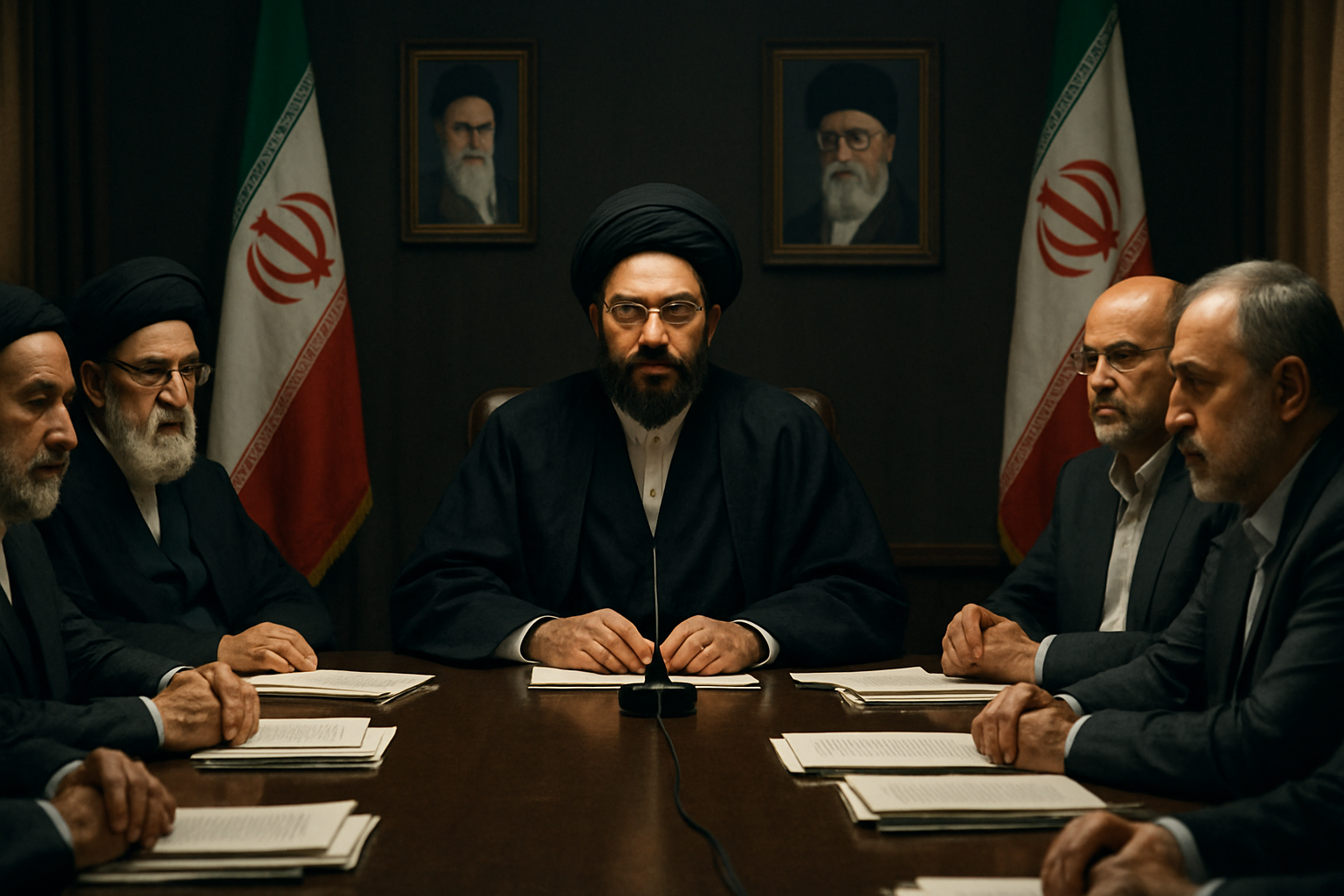
Iran's Assembly of Experts has officially appointed Mojtaba Khamenei, son of the deceased Supreme Leader Ali Khamenei, as the Islamic Republic's new Supreme Leader - marking the first hereditary succession in the nation's 47-year history as a devastating regional war with the United States and Israel enters its second week.
The historic appointment, announced Monday by Iranian state television, comes as the Middle East crisis reaches unprecedented levels following Ali Khamenei's death on March 1 during the massive US-Israeli "Operation Epic Fury" strikes. The 56-year-old Mojtaba's selection represents a fundamental shift from Iran's traditional clerical governance to military-influenced leadership, with intelligence sources confirming Revolutionary Guards pressure was decisive in the selection process.
Unprecedented Wartime Succession
The Assembly of Experts' 88 clerics conducted the selection under extraordinary wartime conditions, with the succession occurring amid Iran's systematic "Operation True Promise 4" retaliation campaign. The new Supreme Leader, known as the "invisible soldier" for his secretive career building influence within Iran's security apparatus, inherits the world's most dangerous regional conflict since the Cold War.
"This marks a constitutional break with the Islamic Republic's founding principles," said regional expert Dr. Mehran Kamrava. "The Revolutionary Guards' decisive role indicates Iran is transitioning from theocracy to what critics call 'clerical monarchy' under direct military influence."
"The Iranian regime has committed a fundamental error with this succession. They won't last long without our consent."
— Donald Trump, US President
Trump explicitly rejected Mojtaba's appointment as "unacceptable" and "lightweight," claiming the United States must be "involved in the appointment" of Iran's next leader - the most direct assertion of American control over Iranian affairs since 1979.
Global Crisis Reaches Critical Peak
The succession announcement triggered immediate market volatility, with oil prices surging past $100 per barrel for the first time since the conflict began. Iran continues to declare the Strait of Hormuz "unsafe for shipping," affecting 40% of global seaborne oil transit and stranding over 150 tankers worth billions in the Persian Gulf.
The global aviation industry faces its worst crisis since COVID-19, with over 18,000 flights cancelled worldwide. Eight Middle Eastern countries maintain simultaneous airspace closures, while Dubai International Airport - the world's busiest - remains completely shut down from Iranian missile damage.
Revolutionary Guards Consolidate Power
Unlike his father's rise through traditional clerical ranks, Mojtaba Khamenei built his career through Iran's military and security apparatus since the mid-2000s. CIA assessments suggest his appointment signals no policy moderation despite international pressure, with hardline military-oriented governance expected to continue Iran's confrontational regional approach.
The new Supreme Leader inherits an advanced nuclear program with 60% uranium enrichment and over 400 kilograms of weapons-grade material sufficient for multiple nuclear weapons. Nuclear diplomacy collapsed despite a Geneva framework breakthrough - the most progress since the 2018 JCPOA withdrawal - over fundamental scope disagreements between Iran's nuclear-only position and US demands for comprehensive missile and proxy restrictions.
Regional War Escalates Dramatically
Iran's ongoing retaliation campaign has caused unprecedented regional casualties and marked several historic firsts. Iranian drones struck RAF Akrotiri in Cyprus - the first attack on European territory since World War II - prompting an unprecedented naval coalition response including HMS Dragon and vessels from Spain, Italy, France, Netherlands, and Greece.
Regional casualties from Iran's "no red lines remain" policy include one civilian killed in Abu Dhabi, 32 injuries from Kuwait airport strikes, eight wounded in Qatar despite successful Patriot missile interceptions, and the complete shutdown of Dubai International Airport affecting hundreds of thousands of passengers globally.
Massive International Response
The crisis has triggered the largest international evacuation since the 2011 Arab Spring, with Australia reporting 115,000 nationals trapped in the region and Germany coordinating the evacuation of 30,000 tourists. The European Union activated its ESTIA emergency evacuation protocol for Cyprus for the first time in its history.
UN Secretary-General António Guterres called the crisis "the greatest test of multilateral cooperation and crisis management in the modern era," warning that decisions made in the coming days will reverberate through international relations for decades.
Nuclear Governance Crisis
The succession occurs amid a broader nuclear governance crisis, with the New START treaty having expired on February 5 - marking the first time in over 50 years without US-Russia nuclear constraints. Combined with China's nuclear expansion, Guterres warns nuclear risks are at their "highest in decades."
Congressional scrutiny of the conflict intensifies, with bipartisan lawmakers demanding strategy and cost answers from the Pentagon. Senator Richard Blumenthal expressed being "more concerned than ever" about potential ground troop deployment, while the conflict's unpopularity has reached "almost unprecedented" levels for early-stage military operations.
Economic Disruption Worldwide
The crisis demonstrates fundamental vulnerabilities in global economic systems, with Pakistan's stock market suffering its largest single-day decline in history at -8.97%. Natural gas prices have surged 24% in Europe and 78% in the United States, while major shipping companies Maersk and MSC have suspended Persian Gulf operations entirely.
Manufacturing sectors dependent on Gulf logistics networks - including automotive, electronics, and textiles - face severe supply chain disruptions. The collapse of the Persian Gulf as a critical Asia-Europe trade hub affects global commerce far beyond energy markets.
Historical Watershed Moment
The appointment of Mojtaba Khamenei represents a template-setting moment for 21st-century international relations. The rapid transition from diplomatic breakthrough to military confrontation demonstrates the fragility of crisis management mechanisms in the multipolar era.
Regional experts note that March 2026 marks several historic firsts: Iran's first hereditary Supreme Leader succession, the first European territory attack since WWII, the first enemy vessel sunk by a US submarine since WWII (USS Charlotte's sinking of the Iranian frigate IRIS Dena), and the most extensive global aviation disruption since the pandemic.
Looking Forward: Critical Crossroads
The new Supreme Leader faces immediate domestic challenges, inheriting over 42,000 arrests since the 2022 protests, severe economic sanctions, and legitimacy questions over the hereditary nature of his appointment. Spontaneous celebrations in Tehran following his father's death - with crowds chanting "tyrant no more" - suggest significant internal opposition.
International analysts warn the coming phase will determine whether the crisis remains a contained regional confrontation or escalates into broader Middle Eastern warfare with worldwide implications. The stakes include regional war prevention, global energy security, nuclear governance credibility, and the enforcement of international law - all being tested simultaneously in what represents the most dangerous international crisis since the Cold War's end.
As Operation Epic Fury costs reach $3.7 billion in its first week and Iran continues its systematic retaliation across the region, the world watches to see whether diplomatic solutions can still emerge from what UN officials describe as the greatest test of international cooperation in modern history.