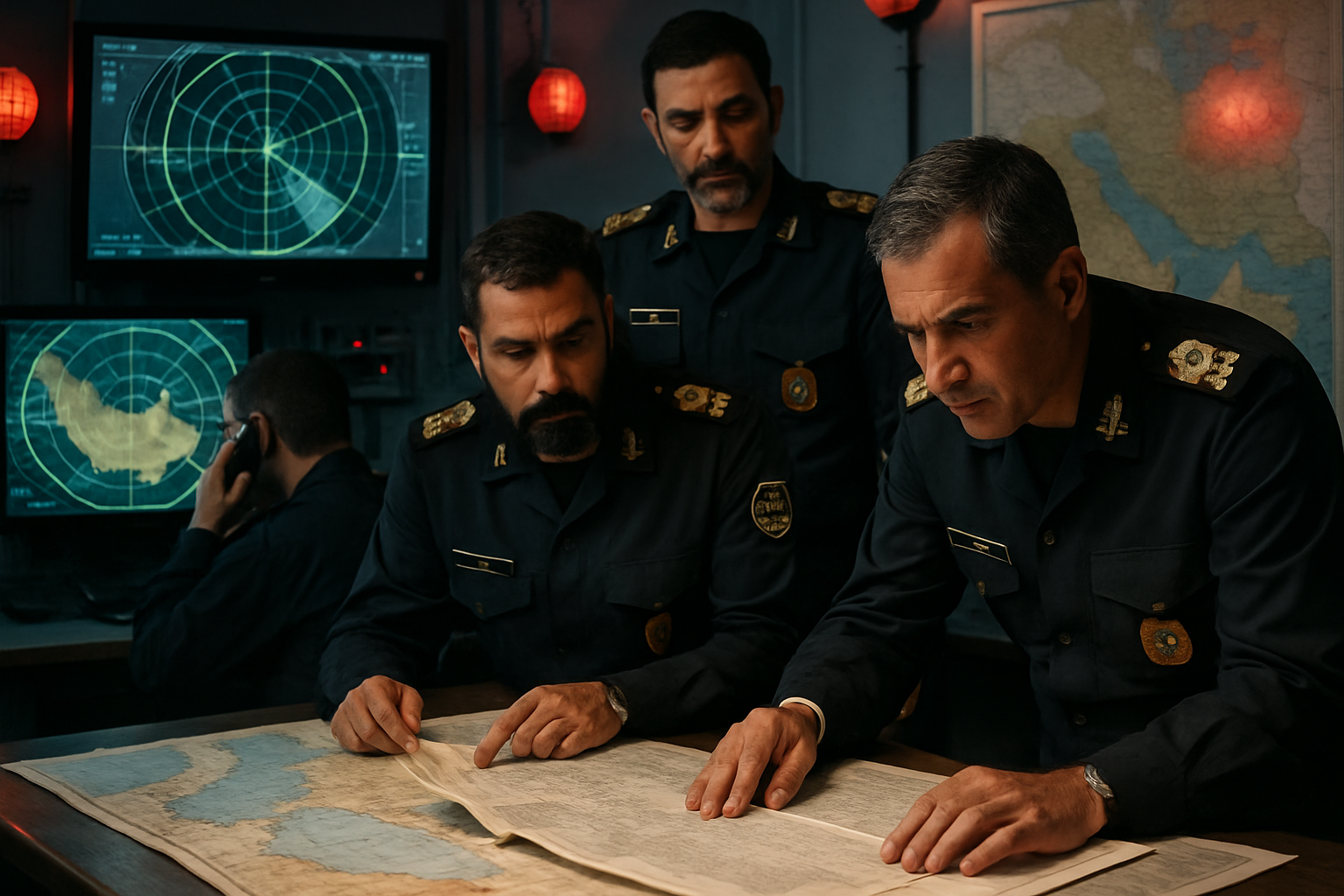
Iran's Revolutionary Guards Navy Commander Alireza Tangsiri has been killed in an Israeli airstrike, Israeli Defense Minister Israel Katz announced Thursday, marking another significant escalation in the devastating three-week conflict that has brought the world to the brink of regional war.
The assassination of Tangsiri, who was directly responsible for Iran's naval operations in the strategically critical Persian Gulf, comes as the most dangerous international crisis since the Cold War continues to unfold with unprecedented global implications affecting energy security, aviation networks, and nuclear governance.
Strategic Assassination Amid Ongoing Crisis
Defense Minister Katz confirmed the targeted killing, describing it as a "precise and lethal operation" against a commander "directly responsible for mining and blocking the Strait of Hormuz." The U.S. military subsequently confirmed the operation, with officials stating that Tangsiri's death "makes the region safer."
The killing represents the latest in a systematic assassination campaign that has targeted Iran's military leadership since the death of Supreme Leader Ali Khamenei on March 1, 2026. Previous high-value targets eliminated include Iran's top security chief Ali Larijani and Revolutionary Guards spokesman Mohammad Ali Naini, demonstrating a coordinated strategy to decapitate Iran's military command structure.
Tangsiri's elimination is particularly significant given his role in Iran's naval operations that have effectively blockaded the Strait of Hormuz, through which 40% of global seaborne oil transits. Iran has deployed an estimated 2,000-6,000 naval mines in the waterway, causing oil prices to surge past $100 per barrel and stranding over 150 tankers worth billions in cargo.
Global Energy Crisis Intensifies
The conflict has triggered the most severe global energy crisis in decades, with the International Energy Agency releasing a record 400 million barrels from strategic petroleum reserves – the largest intervention in the agency's 50-year history. Natural gas prices have surged 24% in Europe and 78% in the United States, while major shipping companies Maersk and MSC have suspended all Persian Gulf operations.

Airlines have implemented emergency fuel surcharges as jet fuel costs jumped from $85-90 per barrel to $150-200, while Qatar has halted LNG production affecting approximately 20% of global exports. The energy architecture collapse demonstrates the fundamental vulnerability of global systems to geopolitical shocks in strategic chokepoints.
Aviation Crisis Reaches COVID-19 Levels
The conflict has created an unprecedented aviation crisis with over 18,000 flights cancelled worldwide – the most severe disruption since the COVID-19 pandemic. Eight Middle Eastern countries have simultaneously closed their airspace, creating what analysts describe as an "aviation black hole" that has severed critical Asia-Europe flight corridors.
Dubai International, the world's busiest airport serving 86 million passengers annually, remains completely shut down due to missile damage. Major carriers including Emirates, Air France-KLM, and Wizz Air have suspended Middle Eastern operations indefinitely, affecting hundreds of thousands of passengers globally.
Historic Succession Crisis
The assassination occurs against the backdrop of Iran's first hereditary succession in the Islamic Republic's 47-year history. Mojtaba Khamenei, son of the late Supreme Leader, has been appointed to the position, consolidating Revolutionary Guards control over governance during active warfare conditions.
"This represents a fundamental shift from clerical to military governance under the most challenging circumstances," said a CIA assessment. "The Revolutionary Guards have achieved unprecedented influence over the Iranian state apparatus during this succession crisis."
Intelligence analysts suggest that Tangsiri's death further weakens the new leadership's ability to coordinate naval operations, potentially creating operational gaps that Israel and the United States are seeking to exploit in their systematic campaign against Iran's military infrastructure.
Diplomatic Efforts Amid Military Escalation
Despite the ongoing violence, diplomatic efforts continue with Pakistan officially mediating between the United States and Iran. Foreign Minister Shah Mahmood Qureshi has acknowledged Pakistan's facilitation role in what he describes as "indirect discussions" aimed at finding a resolution to the crisis.
Turkey's President Erdogan has warned that Israel's war "does not target Iran alone," while reports indicate that Pakistan's intervention temporarily removed Iranian Foreign Minister Abbas Araghchi and parliament speaker Mohammad Bagher Qalibaf from Israeli assassination lists.
However, the fundamental scope disagreement that led to the collapse of Geneva nuclear negotiations remains insurmountable. Iran continues to exclude ballistic missiles and regional proxies as "red lines" while demanding nuclear-only talks, whereas the United States insists on comprehensive agreements including missiles, armed groups, and human rights.
European Security Implications
The conflict has fundamentally altered European security calculations with the first attack on European territory since World War II. Iranian drones struck RAF Akrotiri Cyprus, prompting an unprecedented naval coalition response featuring HMS Dragon and frigates from Spain, Italy, France, Netherlands, and Greece.
The European Union activated its ESTIA evacuation plan for Cyprus for the first time in the bloc's history, demonstrating how the Middle Eastern crisis has direct implications for European security architecture. This expansion beyond regional boundaries represents a template-setting moment for 21st-century conflict management.
Nuclear Governance Crisis
The Iranian crisis unfolds against a broader nuclear governance breakdown, with the New START treaty having expired in February 2026 – the first time in over 50 years without US-Russia nuclear constraints. China's nuclear expansion and Iran's continued 60% uranium enrichment with over 400kg of weapons-grade material create what UN Secretary-General António Guterres describes as nuclear risks at their "highest level in decades."
Iran's uranium stockpile is sufficient for multiple weapons if weaponized, while the complete collapse of diplomatic engagement after the Geneva framework breakthrough raises fundamental questions about the viability of negotiated solutions for modern nuclear crises.
Congressional Opposition Mounts
In Washington, Operation Epic Fury faces mounting congressional scrutiny with bipartisan lawmakers demanding comprehensive briefings on strategy, costs, and potential ground troop deployments. Senator Richard Blumenthal expressed being "more concerned than ever" about the possibility of boots on the ground.
The conflict's unpopularity is "almost unprecedented" for early-stage military operations, with only 25% of Americans supporting the strikes according to recent polling. Pentagon operations are now planned through September, far beyond the initial 4-6 week timeline, with costs reaching $27 billion and climbing at approximately $1 billion daily.
Humanitarian Crisis Deepens
The Iran Red Crescent reports over 787 civilian casualties from US-Israeli strikes, including the tragic Minab school attack that killed between 53-85 students and staff. The Pentagon has confirmed US responsibility for an elementary school strike that killed 165-185 students using what officials described as "outdated targeting data."
International evacuations are occurring on a scale not seen since the Arab Spring, with Australia reporting 115,000 nationals trapped in the region and Germany evacuating 30,000 stranded tourists. Multiple countries have ordered immediate evacuations from Iran citing "extremely uncertain" security conditions.
Template-Setting Implications
UN Secretary-General Guterres has characterized the crisis as the "greatest test of multilateral cooperation in crisis management in the modern era." The rapid transition from diplomatic breakthrough to military escalation demonstrates the fragility of crisis management in the multipolar era.
The stakes extend far beyond the immediate participants, affecting regional war prevention, global energy security, nuclear governance credibility, and international law enforcement. Success in containing the crisis could provide a framework for future nuclear crisis resolution, while failure might accelerate military solutions for decades, encouraging global proliferation and undermining diplomatic credibility worldwide.
Looking Ahead
The assassination of Commander Tangsiri represents a critical escalation in what has become the most consequential international crisis since the Cold War ended. With Iran's naval command structure under systematic attack and global energy markets in crisis, the coming days will determine whether diplomatic solutions remain viable or whether the international community faces a broader Middle Eastern war with implications extending decades beyond current events.
As President Trump demands Iran's "unconditional surrender" while claiming the right to personally choose Iran's next Supreme Leader, the crisis has evolved from nuclear-focused concerns to comprehensive regime change objectives, effectively eliminating diplomatic solution possibilities and setting a dangerous precedent for 21st-century conflict resolution.
The death of Alireza Tangsiri marks another step toward what could become the defining moment of post-Cold War international relations, with energy architecture evolution, nuclear proliferation mechanisms, and the sustainability of the post-WWII order all hanging in the balance.