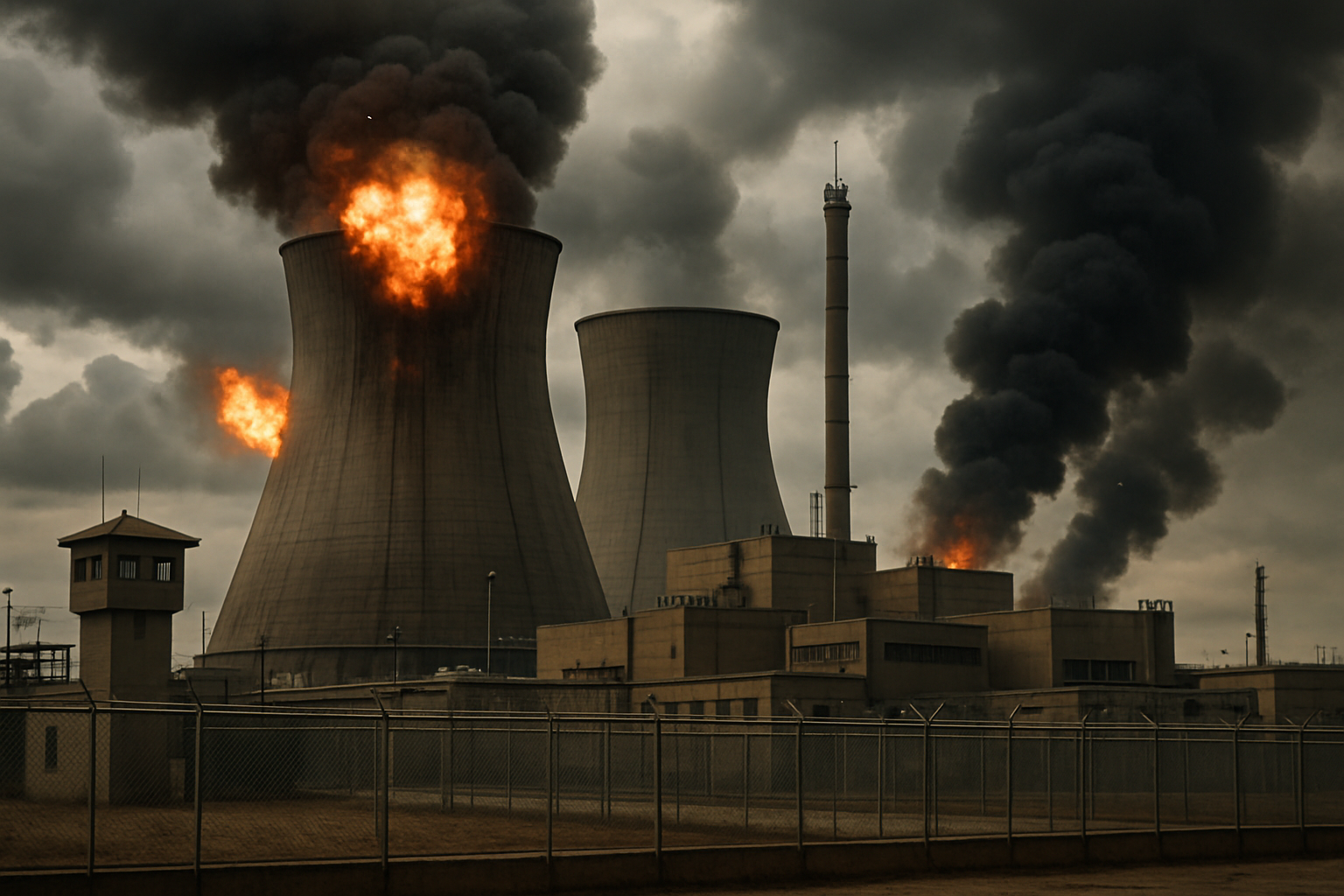
Emerging reports of targeted strikes on Iranian nuclear facilities have raised urgent questions about the security of uranium stockpiles and the escalation of regional tensions that began with the collapse of nuclear diplomacy in early 2026.
New satellite imagery analyzed by international intelligence sources has revealed potential movement of enriched uranium materials from key Iranian nuclear facilities shortly before reported airstrikes, according to multiple intelligence assessments. The timing of these apparent relocations coincides with the most dangerous period of Middle East instability since the Cold War.
Critical Timeline of Events
The current crisis emerged from the complete breakdown of nuclear negotiations between Iran and the United States in February 2026, despite what had been described as the most promising diplomatic progress since the collapse of the Joint Comprehensive Plan of Action (JCPOA) in 2018. Geneva talks had achieved what Iranian Foreign Minister Abbas Araghchi called "broad agreement on guiding principles," but fundamental disagreements over scope proved insurmountable.
Iran maintained that ballistic missiles and regional proxy activities were "red lines" to be excluded from nuclear-only talks, while U.S. Secretary of State Marco Rubio demanded a comprehensive agreement addressing missiles, armed groups, and human rights. This structural disagreement, which had prevented breakthroughs for over a decade, ultimately triggered the military escalation that followed.
Nuclear Stockpile Security Concerns
Intelligence assessments indicate Iran had been enriching uranium to 60% purity—significantly above the 3.67% limit established under the original JCPOA and approaching the 90% threshold needed for weapons-grade material. Former IAEA inspector Dr. Yusri Abu Shadi had confirmed that Iran possessed over 400 kilograms of enriched uranium, making weapons development "easily achievable" if Iran chose to weaponize its program.
"The movement of nuclear materials during active hostilities represents an unprecedented challenge to international monitoring and non-proliferation efforts."
— International Nuclear Security Expert
The potential relocation of these materials ahead of reported strikes raises critical questions about Iran's intentions and the international community's ability to monitor nuclear assets during armed conflict. The International Atomic Energy Agency (IAEA) had been denied access to Iranian facilities since November 2025, eliminating real-time verification of nuclear activities.
Regional War Context
The targeting of nuclear facilities occurs within the broader context of "Operation Epic Fury," the largest coordinated U.S.-Israeli military campaign since 2003. The operation, which began in late February 2026 following the collapse of diplomatic negotiations, has fundamentally altered Middle Eastern geopolitics.
The death of Iranian Supreme Leader Ali Khamenei on March 1, 2026, ended 37 years of rule and triggered an unprecedented succession crisis. His son, Mojtaba Khamenei, became the first hereditary Supreme Leader in the Islamic Republic's 47-year history, representing a shift toward hardline military control under Revolutionary Guards influence.
Global Implications
The crisis has created the most severe international disruptions since the Cold War. Over 18,000 flights have been cancelled worldwide—the most extensive aviation crisis since COVID-19—as eight Middle Eastern countries closed their airspace simultaneously. Oil prices have surged past $100 per barrel for the first time since 2014, with Iran's effective closure of the Strait of Hormuz threatening 40% of global oil transit.
The International Energy Agency has authorized the largest strategic petroleum reserve release in its 50-year history—400 million barrels from 32 countries—to mitigate global supply disruptions. Natural gas prices have increased 24% in Europe and 78% in the United States, creating energy security concerns worldwide.
Nuclear Governance Crisis
The current events unfold against the backdrop of a broader nuclear governance crisis. The New START Treaty between the United States and Russia expired on February 5, 2026—the first time in over 50 years that the two nuclear superpowers lacked bilateral arms control constraints. Combined with China's nuclear expansion and what UN Secretary-General António Guterres has called nuclear risks at their "highest level in decades," the Iranian crisis represents a critical test of 21st-century non-proliferation mechanisms.
International Response
The targeting of nuclear facilities has prompted urgent calls from the international community for restraint. IAEA Director General Rafael Grossi has warned of "grave risks" from military operations near nuclear installations, emphasizing the need for "maximum restraint" to prevent potential nuclear accidents with regional and global implications.
European nations have mobilized an unprecedented naval coalition in response to Iranian attacks on Cyprus—the first strike on European territory since World War II. HMS Dragon leads a multinational force including Spanish, Italian, French, Dutch, and Greek vessels, demonstrating the conflict's expansion beyond traditional Middle Eastern boundaries.
Humanitarian and Economic Impact
The escalation has created a massive humanitarian crisis, with international evacuations on a scale not seen since the Arab Spring of 2011. Australia has 115,000 citizens trapped in the region, while Germany is evacuating 30,000 stranded tourists. The European Union activated its ESTIA evacuation mechanism for Cyprus for the first time in the bloc's history.
Financial markets have experienced severe disruptions, with Pakistan's stock exchange suffering its largest single-day decline in history at -8.97%. Supply chains dependent on Persian Gulf logistics networks have been severely disrupted, affecting automotive, electronics, and textile industries globally.
Congressional Scrutiny
In the United States, Congressional opposition to the military operations has reached unprecedented levels for early-stage conflicts. Senator Richard Blumenthal has expressed being "more concerned than ever" about potential ground troop deployments, while public support for the operations remains historically low at only 25%.
The Pentagon has confirmed that Operation Epic Fury cost $11.3 billion in its first week alone, with operations now planned through September—far beyond initial 4-6 week projections. This represents one of the most expensive military operations in recent history.
Future Implications
The targeting of Iranian nuclear facilities marks a dangerous escalation that could have lasting implications for international law, nuclear governance, and conflict resolution mechanisms. UN Secretary-General Guterres has called the crisis the "greatest test of multilateral cooperation in the modern era."
The rapid transition from diplomatic engagement to military confrontation demonstrates what experts describe as the fragility of crisis management in the multipolar era. The outcome will likely influence international approaches to nuclear disputes for decades, potentially establishing precedents for whether diplomatic or military solutions become the preferred method for resolving territorial and nuclear conflicts.
As satellite imagery continues to reveal new details about potential uranium relocations, the international community faces urgent questions about monitoring nuclear materials during active conflict and preventing the proliferation of weapons-grade materials in an increasingly unstable global environment.
The crisis represents a watershed moment that will determine not only the future of Middle Eastern stability but also the effectiveness of international institutions in managing nuclear risks in the 21st century. The stakes extend far beyond the immediate participants, affecting global energy security, nuclear governance credibility, and the post-World War II international order.