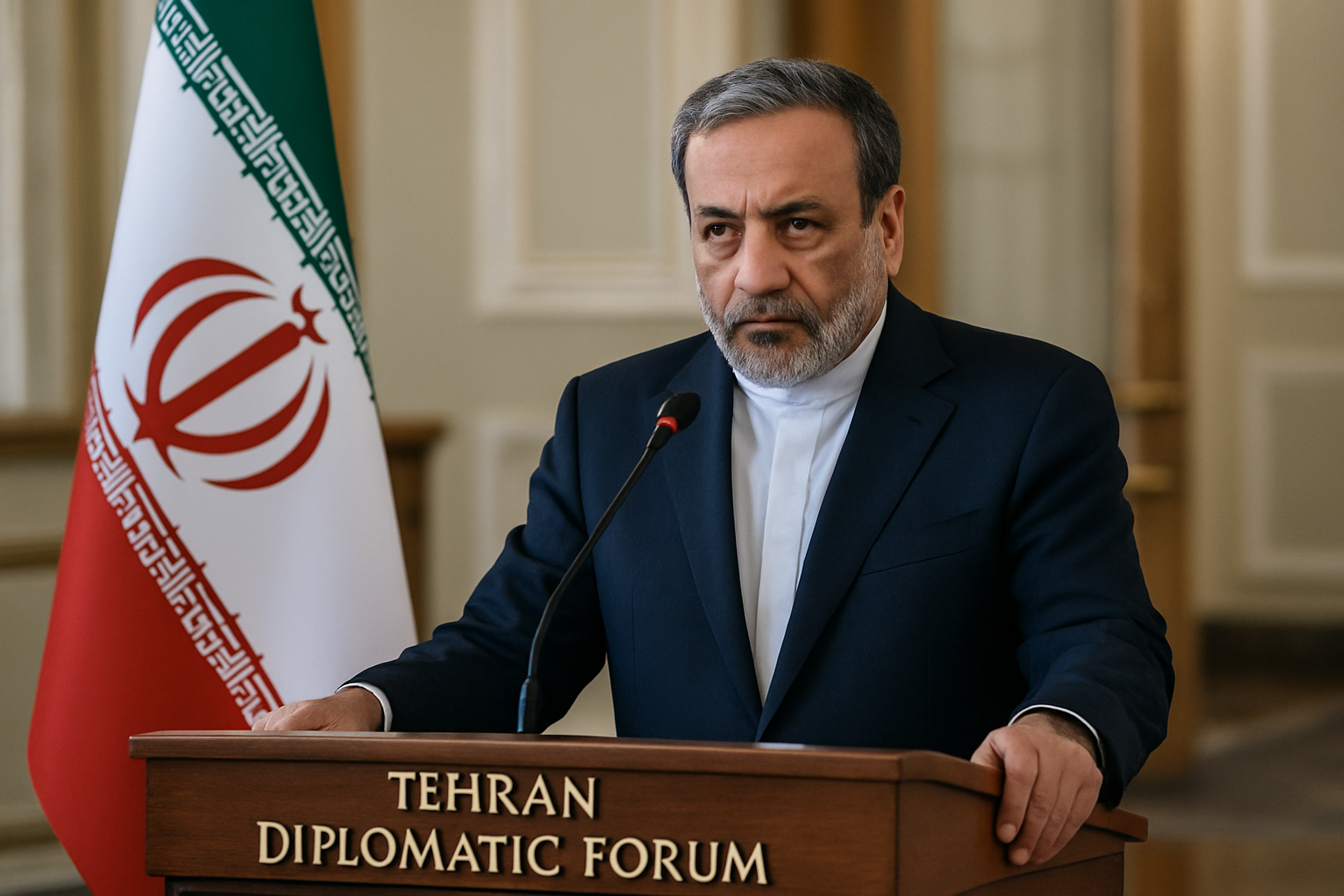
Iranian Foreign Minister Abbas Araghchi delivered a defiant message Sunday, declaring that Iran will never renounce its uranium enrichment program, even if war is "imposed" upon the Islamic Republic, despite mounting US military pressure and threats.
Speaking at a forum in Tehran, just two days after nuclear negotiations with the United States in Muscat, Oman, Araghchi emphasized Iran's unwavering position on what it considers its "inalienable right" to nuclear technology. The statement represents a significant hardening of Iran's stance following what were initially described as talks with a "positive atmosphere."
Diplomatic Breakthrough Turns Contentious
The February 7 talks in Oman, mediated by Sultan Haitham bin Tariq, had initially raised hopes for a diplomatic breakthrough. President Trump declared the negotiations "very good" and said Iran was "very eager to make a deal." However, Araghchi's latest comments reveal the profound challenges that remain in reaching any nuclear agreement.
Iran's position centers on maintaining its uranium enrichment capabilities at current levels of 60% purity—significantly above the 3.67% limit set by the 2015 Joint Comprehensive Plan of Action (JCPOA) but still below the 90% threshold considered weapons-grade. This represents a dramatic escalation from Iran's pre-2018 nuclear activities when the JCPOA was still in effect.
"American military pressure does not intimidate the Islamic Republic"
— Abbas Araghchi, Iranian Foreign Minister
Escalating Military Tensions
The diplomatic rhetoric comes against a backdrop of heightened military tensions in the Persian Gulf region. Recent incidents include a US F-35C fighter jet from the USS Abraham Lincoln shooting down an Iranian Shahed-139 drone that aggressively approached the aircraft carrier in the Arabian Sea, approximately 800 kilometers from Iran's coast.
On the same day, Islamic Revolutionary Guard Corps (IRGC) vessels harassed a US-flagged tanker in the Strait of Hormuz, through which 40% of global oil transit passes. These incidents occurred even as diplomatic talks were underway, highlighting the complex dual-track approach both nations are pursuing.
Regional Powers Rally Behind Diplomacy
Despite the military posturing, an unprecedented coalition of regional powers—including Saudi Arabia, the UAE, Qatar, and Egypt—has thrown its support behind the diplomatic process. This remarkable Middle Eastern consensus reflects the region's investment in preventing a military confrontation that could destabilize energy markets and maritime security.
Oman's role as neutral mediator has proven crucial, leveraging its historical experience in facilitating the original 2015 JCPOA negotiations. The sultanate's diplomatic channels have enabled structured dialogue despite the significant trust deficit between Washington and Tehran.
Nuclear Program at Critical Juncture
Iran's nuclear advancement since the 2018 JCPOA collapse has been substantial. Intelligence reports suggest Iran may possess enough enriched uranium for multiple weapons if weaponized, though there is no evidence the Islamic Republic has made the decision to pursue nuclear weapons.
Sources close to the negotiations indicate that Iran has considered potential concessions, including a three-year uranium enrichment halt and transferring existing stockpiles to a third country, likely Russia. However, Araghchi's latest statements suggest these possibilities may be off the table under current circumstances.
Fundamental Scope Disagreements
A core obstacle to progress remains the fundamental disagreement over negotiation scope. Iran has established "red lines" excluding ballistic missiles and regional proxy activities, demanding nuclear-only compartmentalized talks. The United States, however, insists any comprehensive agreement must address Iran's missile program, support for regional armed groups, and human rights record.
US Secretary of State Marco Rubio has maintained that addressing only nuclear issues while ignoring missiles and proxy threats would be insufficient for American security concerns. This position creates a structural impasse that has complicated nuclear diplomacy for over a decade.
Domestic Pressure and Economic Reality
Iran faces severe domestic pressures that theoretically should incentive compromise. The Islamic Republic has experienced over 42,000 protest arrests following widespread demonstrations, while crippling international sanctions have created an economic crisis affecting millions of Iranian citizens.
These pressures represent what analysts describe as a "regime survival imperative" for sanctions relief. However, Araghchi's defiant stance suggests Iran's leadership believes maintaining nuclear capabilities is more crucial for survival than economic relief through sanctions removal.
International Arms Control Context
The Iran nuclear crisis unfolds against a broader breakdown in global arms control architecture. The New START treaty between the United States and Russia expired February 5, 2026, marking the first time in over 50 years without binding nuclear limits between superpowers. This creates additional urgency for preventing Iranian nuclear weapons development.
China's nuclear expansion, from approximately 350 warheads in 2020 to over 500 currently, has complicated prospects for any trilateral nuclear frameworks. President Trump has insisted any future agreements must include Chinese participation, though Beijing has rejected such proposals.
Economic Pressure Continues
Even as diplomatic talks proceed, the Trump administration has maintained its "maximum pressure" campaign. Hours after declaring the Oman talks successful, Trump signed executive orders threatening 25% tariffs on countries conducting business with Iran, demonstrating the dual-track approach of engagement backed by economic coercion.
Oil markets have responded to the escalating tensions, with prices rising over $1 per barrel following Araghchi's latest statements. Energy analysts warn that any military confrontation could send oil prices significantly higher, affecting global economic recovery efforts.
Israeli Concerns Mount
Israeli officials have expressed concerns about any nuclear-only agreement that fails to address Iran's missile program and regional proxy network. Israeli Prime Minister Benjamin Netanyahu is scheduled to meet with President Trump on February 11, specifically to coordinate positions on Iran nuclear talks.
Israel views incomplete agreements that address only nuclear issues while excluding missile and proxy threats as insufficient for addressing what it considers existential security challenges from Iran's regional activities.
Next Steps and Future Prospects
Both sides have agreed to continue negotiations "early next week," though the venue and specific agenda remain undetermined. The success of Omani mediation suggests future rounds may continue in Muscat, though some officials have indicated talks could potentially move to a US venue.
The coming negotiations will test whether innovative diplomatic solutions can bridge decade-old challenges or whether this represents another false start in nuclear crisis resolution. The international community is watching closely for either a genuine breakthrough or continued deadlock that could accelerate military solutions.
For Iran, Araghchi's hard-line stance reflects a calculation that maintaining nuclear leverage is more valuable than potential sanctions relief. For the United States, the challenge remains finding sufficient pressure to achieve nuclear concessions without triggering the regional war that could destabilize global energy markets and Middle Eastern security.
The stakes could not be higher: success could prevent a regional conflict and provide a diplomatic template for nuclear crisis resolution, while failure may accelerate toward military confrontation that could reshape Middle Eastern geopolitics for decades to come.