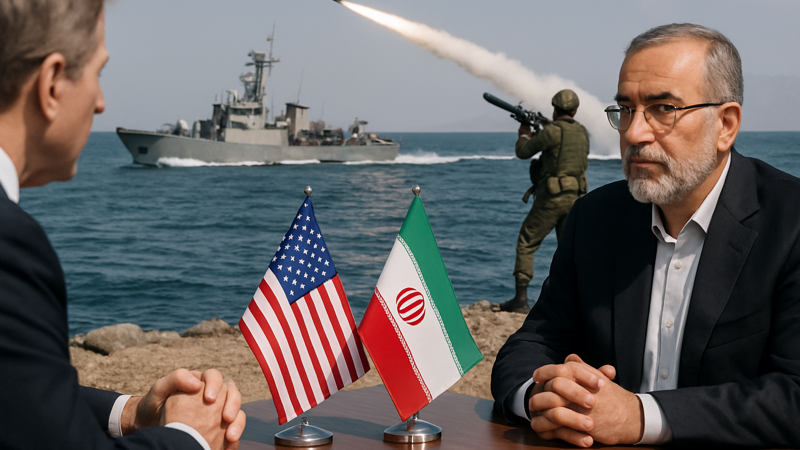
Iran announced its willingness to pursue nuclear compromises while simultaneously launching extensive military exercises in the Strait of Hormuz, underscoring the complex dynamics surrounding ongoing diplomatic negotiations with the United States and mounting regional tensions.
Iranian Foreign Minister Abbas Araghchi arrived in Geneva for a crucial second round of nuclear negotiations with the United States, representing a significant diplomatic evolution from the initial talks held in Muscat, Oman. The venue change from Gulf to European territory signals growing international momentum, with Switzerland officially supporting the negotiations while Oman continues its essential mediation role.
Nuclear Talks Show Signs of Progress
Iranian officials have indicated a more flexible stance on nuclear issues, with Deputy Foreign Minister Majid Takht-Ravanchi stating in a BBC interview that Iran is "ready to consider compromises to reach nuclear deal if US willing to discuss lifting sanctions." This represents a notable shift from previous hardline positions, though fundamental disagreements persist.
The talks have been mediated by Oman, leveraging its historical neutral role from the successful 2015 Joint Comprehensive Plan of Action (JCPOA) negotiations. Multiple sources confirm that Iran is considering significant concessions, including a potential three-year uranium enrichment halt and transferring existing stockpiles to Russia.
"A cautious evaluation is that (...) the US position on the Iranian nuclear issue has become more realistic."
— Esmail Baqai, Iranian Foreign Ministry Spokesman
However, substantial obstacles remain. Iran continues uranium enrichment at 60% purity, significantly above the 3.67% limit set by the JCPOA and approaching the 90% threshold needed for weapons-grade material. Intelligence assessments suggest Iran possesses sufficient enriched uranium for multiple nuclear weapons if weaponized.
Military Exercises Heighten Regional Tensions
Even as diplomatic talks progress, Iran's Revolutionary Guard Corps (IRGC) has commenced large-scale military exercises in the strategically vital Strait of Hormuz. The drills, conducted in the Persian Gulf and Sea of Oman, aim to enhance combat readiness against what Tehran describes as "potential security and military threats."
The timing of these exercises is particularly significant, occurring simultaneously with the diplomatic push in Switzerland. The Strait of Hormuz serves as a critical chokepoint for global energy supplies, with approximately 40% of the world's oil transit passing through this narrow waterway.
Recent military incidents have added to regional tensions. A US F-35C fighter jet from the USS Abraham Lincoln shot down an Iranian Shahed-139 drone in the Arabian Sea after it aggressively approached the carrier. The same period saw IRGC vessels harass US-flagged tankers in the Strait of Hormuz, causing oil prices to rise by over $1 per barrel.
Scope Disagreements Persist
Despite the diplomatic momentum, fundamental disagreements over the scope of negotiations continue to pose challenges. Iran maintains that ballistic missiles and regional proxy activities are "red lines" that must be excluded from nuclear-only talks, demanding a compartmentalized approach.
Conversely, US Secretary of State Marco Rubio insists on a comprehensive agreement that addresses Iran's missile program, support for armed groups, and human rights record. This structural disagreement has been a persistent obstacle in nuclear diplomacy since the JCPOA's collapse in 2018.
Unprecedented Regional Support
One of the most remarkable aspects of the current diplomatic effort is the unprecedented regional coalition supporting the negotiation process. Saudi Arabia, the United Arab Emirates, Qatar, and Egypt have all endorsed diplomatic engagement, representing extraordinary Middle Eastern consensus on preventing military confrontation.
This regional backing reflects shared concerns about the consequences of conflict escalation, particularly given the Persian Gulf's central role in global energy markets. The unified stance suggests a mature recognition that regional stability serves all parties' economic and security interests.
Domestic Pressures Shape Positions
Both Iran and the United States face significant domestic pressures that influence their negotiating positions. Iran confronts severe economic sanctions and has arrested over 42,000 protesters since 2022, creating regime survival imperatives that favor sanctions relief through diplomatic compromise.
However, Iranian leadership appears to prioritize maintaining nuclear capabilities over immediate economic relief, calculating that technological advancement provides long-term leverage. This dynamic is reflected in Foreign Minister Araghchi's declaration that Iran will "never abandon uranium enrichment even if war is imposed."
The Trump administration must balance Republican pressure from lawmakers who view any engagement as appeasement against the potential for a significant foreign policy victory. The dual-track approach of maintaining maximum pressure through tariffs on Iran-trading countries while engaging diplomatically demonstrates this complex political calculus.
International Context Adds Urgency
The Iran nuclear crisis unfolds against a broader backdrop of international nuclear governance challenges. The New START treaty between the United States and Russia expired on February 5, 2026, marking the first time in over 50 years without nuclear constraints between the superpowers.
China's rapid nuclear expansion, from approximately 350 to over 500 warheads, further complicates multilateral arms control frameworks. UN Secretary-General António Guterres has warned that nuclear risks are "higher than they have been in decades," lending additional urgency to resolving the Iranian situation through diplomatic means.
Verification Challenges
Any potential agreement would face unprecedented verification challenges due to Iran's significant nuclear advancement since 2018. The country has deployed advanced centrifuge technology and expanded its nuclear infrastructure far beyond what existed during the original JCPOA.
The 60% uranium enrichment capability and sophisticated facilities would require monitoring mechanisms exceeding the complexity of previous agreements. Technical implementation would likely require years of careful oversight and trust-building between historically antagonistic parties.
Economic Incentives and Energy Cooperation
Iran has signaled interest in comprehensive economic cooperation as part of any nuclear agreement. Iranian Deputy Foreign Minister Hamid Ghanbari emphasized that discussions should include energy, mining, and aircraft sectors, arguing that mutual economic benefits would make any accord more durable.
The potential for energy cooperation is particularly significant given global market volatility and the strategic importance of Persian Gulf resources. However, India's recent confiscation of three US-sanctioned tankers linked to Iranian oil demonstrates the complex enforcement challenges surrounding current sanctions regimes.
Looking Ahead
The coming weeks will prove decisive for determining whether innovative diplomatic solutions can bridge decade-old challenges or whether the talks represent another false start in nuclear crisis resolution. The framework establishment achieved in previous rounds represents genuine progress, despite fundamental positions remaining largely unchanged.
Success could prevent regional warfare that would destabilize global energy markets, provide a diplomatic template for 21st-century nuclear crisis resolution, and strengthen international non-proliferation norms. Failure might accelerate military solutions that could reshape Middle Eastern geopolitics for decades, encourage nuclear proliferation elsewhere, and undermine diplomatic credibility for resolving territorial and security disputes worldwide.
The dual dynamics of diplomatic engagement and military posturing reflect the complex reality of modern international relations, where negotiations must proceed against a backdrop of strategic competition and security dilemmas. As Iran continues its nuclear talks while conducting military exercises, the international community watches closely for signs of breakthrough or escalation in one of the world's most consequential diplomatic challenges.