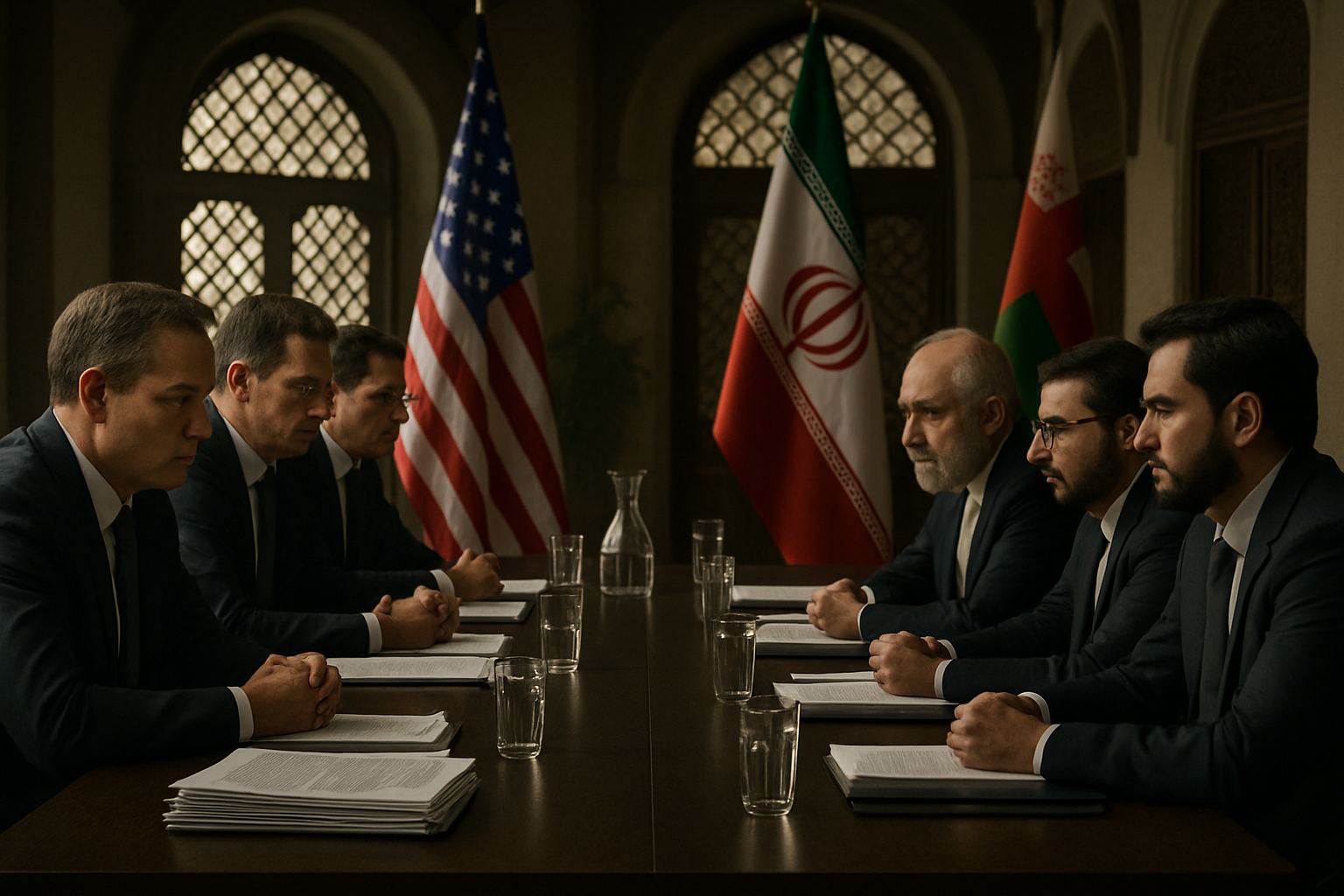
President Donald Trump expressed dissatisfaction with Iran's conduct in nuclear negotiations Friday, declaring he is "not happy" with the talks despite Omani mediators reporting significant progress on uranium enrichment agreements and asserting that a breakthrough deal is within reach.
The contrasting assessments highlight the complex and volatile nature of the high-stakes negotiations currently underway in Geneva, where Iran and the United States are attempting to forge a new nuclear agreement nearly eight years after the collapse of the Joint Comprehensive Plan of Action (JCPOA).
Trump's Growing Frustration
Speaking aboard Air Force One, President Trump issued his strongest criticism yet of Iran's negotiating approach following the third round of Geneva talks. "We haven't made a final decision yet," Trump stated regarding potential military action, adding that he is "not exactly happy" with Iran's stance in the discussions.
The President's comments represent a significant deterioration from earlier optimism, when he had described the talks as "very good" with Iran being "very eager to make a deal." Trump has previously warned of "consequences" if Iran fails to reach an agreement, while deploying an unprecedented dual-carrier naval force to the Middle East.
"I don't think they want the consequences of not making a deal. We haven't made a final decision yet, but we're not exactly happy with the way Iran is negotiating."
— President Donald Trump
Omani Optimism Amid Crisis
Contrasting sharply with Trump's assessment, Omani Foreign Minister Badr al-Busaidi reported "significant progress" following the latest round of talks in Geneva. Oman, serving as the primary mediator alongside Switzerland, has been instrumental in facilitating these negotiations since they began in February.
Iranian Foreign Minister Abbas Araghchi has maintained that a nuclear deal is "within reach," describing the talks as achieving "broad agreement on guiding principles" - the most substantial diplomatic progress since the JCPOA collapsed in 2018. Technical discussions are now scheduled to continue in Vienna next week at the International Atomic Energy Agency (IAEA) headquarters.
The negotiations have evolved from initial meetings in Muscat to the current Geneva venue, signaling growing international investment in finding a diplomatic solution to prevent military confrontation.
Nuclear Status Remains Critical
At the heart of the negotiations lies Iran's continued uranium enrichment at 60% purity, significantly above the 3.67% limit established in the original JCPOA and dangerously approaching the 90% threshold required for weapons-grade material. Former IAEA inspector Dr. Yusri Abu Shadi has confirmed that Iran possesses over 400 kilograms of enriched uranium, making nuclear weapons "easily achievable."
Iran has signaled potential willingness to make concessions, with President Masoud Pezeshkian declaring Iran "open to verification" - a major policy shift from previous positions. Reports suggest Iran is considering a three-year uranium enrichment halt and transfer of existing stockpiles to Russia as confidence-building measures.
However, Iranian officials maintain their "inalienable right" to nuclear technology, with Araghchi declaring Iran would "never abandon enrichment even if war is imposed."
Fundamental Disagreements Persist
Despite framework progress, fundamental disagreements over the scope of any agreement continue to threaten a breakthrough. Iran insists on nuclear-only discussions, excluding ballistic missiles and regional proxy activities as "red lines" that cannot be negotiated.
US Secretary of State Marco Rubio maintains that any comprehensive agreement must address Iran's missile program, support for armed groups, and human rights record - the same structural disagreement that has prevented breakthrough attempts for over a decade.
Israeli Prime Minister Benjamin Netanyahu, coordinating closely with Trump, has emphasized that any deal must include "limiting ballistic missiles and ending Iranian axis support," viewing nuclear-only frameworks as insufficient for addressing existential security threats from Iran's integrated missile and proxy network including Hezbollah, Hamas, and the Houthis.
Unprecedented Military Buildup
The diplomatic talks are occurring against the backdrop of the largest US military presence in the Middle East since the 2003 Iraq invasion. Trump has deployed both the USS Gerald R. Ford and USS Abraham Lincoln carrier strike groups to the region, positioning approximately one-third of the active US Navy fleet just 800 kilometers from Iran's coast.
Military tensions have escalated with recent incidents including US F-35C fighter jets shooting down Iranian Shahed-139 drones and Iranian Revolutionary Guard Corps (IRGC) vessels harassing US tankers in the Strait of Hormuz, through which 40% of global oil transit passes. Oil prices have risen by over $1 per barrel due to these tensions.
Pentagon officials have confirmed preparations for "potentially weeks-long operations against Iran," with strike scenarios ranging from targeted nuclear facility attacks to broader Revolutionary Guard infrastructure campaigns.
Regional Coalition Support
Despite the escalating tensions, an unprecedented regional coalition continues to support the diplomatic process. Saudi Arabia, the UAE, Qatar, and Egypt - traditionally opposing powers in Middle Eastern politics - have all endorsed the negotiation framework, creating extraordinary consensus for preventing military confrontation.
This regional backing is driven by shared concerns over Persian Gulf stability and energy security, as military conflict could severely disrupt global oil markets and destabilize the broader Middle East.
International Travel Warnings Escalate
The deteriorating situation has prompted multiple countries to issue urgent travel advisories for the Middle East region. The United Kingdom, France, Germany, and Poland have warned against travel to Israel, while Cyprus has advised avoiding Iran and Gaza entirely.
US Ambassador to Israel Mike Huckabee has authorized the departure of non-essential embassy personnel and their families, telling staff wanting to leave to "do so today." Turkish Airlines has canceled flights to Tehran, and multiple Western governments are preparing for potential embassy evacuations.
Domestic Pressures on All Sides
The negotiations are complicated by severe domestic pressures facing all parties. Iran has arrested over 42,000 protesters since 2022, with Nobel Peace Prize laureate Narges Mohammadi sentenced to additional prison time during the current talks. Despite economic sanctions creating a regime survival crisis, Iranian leadership continues to prioritize nuclear capabilities over sanctions relief.
Trump faces pressure from Republican hawks who view engagement with Iran as appeasement, while simultaneously seeking a foreign policy victory that could cement his diplomatic legacy. The administration maintains "maximum pressure" through economic sanctions while pursuing negotiations.
Global Nuclear Governance Crisis
These talks are occurring within a broader nuclear governance crisis. The New START treaty between the United States and Russia expired on February 5, marking the first time in over 50 years without nuclear constraints between the superpowers. China is rapidly expanding its nuclear arsenal from 350 to over 500 warheads, while UN Secretary-General António Guterres has warned that nuclear risks are at their "highest level in decades."
Success in the Iran negotiations could provide a template for 21st-century nuclear crisis resolution, while failure might accelerate military solutions and encourage nuclear proliferation elsewhere.
Vienna Technical Discussions Critical
Next week's technical discussions in Vienna at IAEA headquarters will prove critical in determining whether the Geneva framework can translate into substantive agreements. These talks will address verification protocols, sanctions relief mechanisms, and implementation timelines for any potential deal.
The Vienna phase represents a crucial test of whether innovative diplomatic solutions can bridge decade-old challenges or whether the current framework represents another false start in nuclear crisis resolution.
Stakes Reach Maximum Level
The stakes of these negotiations extend far beyond bilateral US-Iran relations. Success could prevent a regional war that would destabilize global energy markets, provide a diplomatic template for nuclear crisis resolution, and strengthen international non-proliferation norms.
Failure, however, could accelerate military solutions that reshape Middle Eastern geopolitics for decades, encourage nuclear proliferation elsewhere, and undermine diplomatic credibility for resolving territorial and security disputes worldwide.
As technical teams prepare for Vienna discussions next week, the international community watches closely to see whether diplomatic innovation can overcome fundamental disagreements that have persisted for over a decade, or whether the region will drift toward military confrontation with global implications.
The coming days will prove decisive in determining whether this latest diplomatic effort represents a genuine breakthrough toward preventing nuclear proliferation and regional conflict, or marks another chapter in the protracted crisis that has defined US-Iran relations since the Islamic Revolution of 1979.