Iran's Foreign Minister Abbas Araghchi has confirmed that Tehran is prepared to facilitate the safe passage of Japanese vessels through the Strait of Hormuz, offering a potential breakthrough in the ongoing global energy crisis that has seen oil prices surge past $110 per barrel for the first time since 2022.
Speaking to Kyodo News in a Friday telephone interview, Araghchi emphasized that Iran has not closed the strategic waterway. "We have not closed the strait. It is open," the Foreign Minister declared, while confirming that negotiations with Japan regarding safe passage arrangements are currently ongoing.
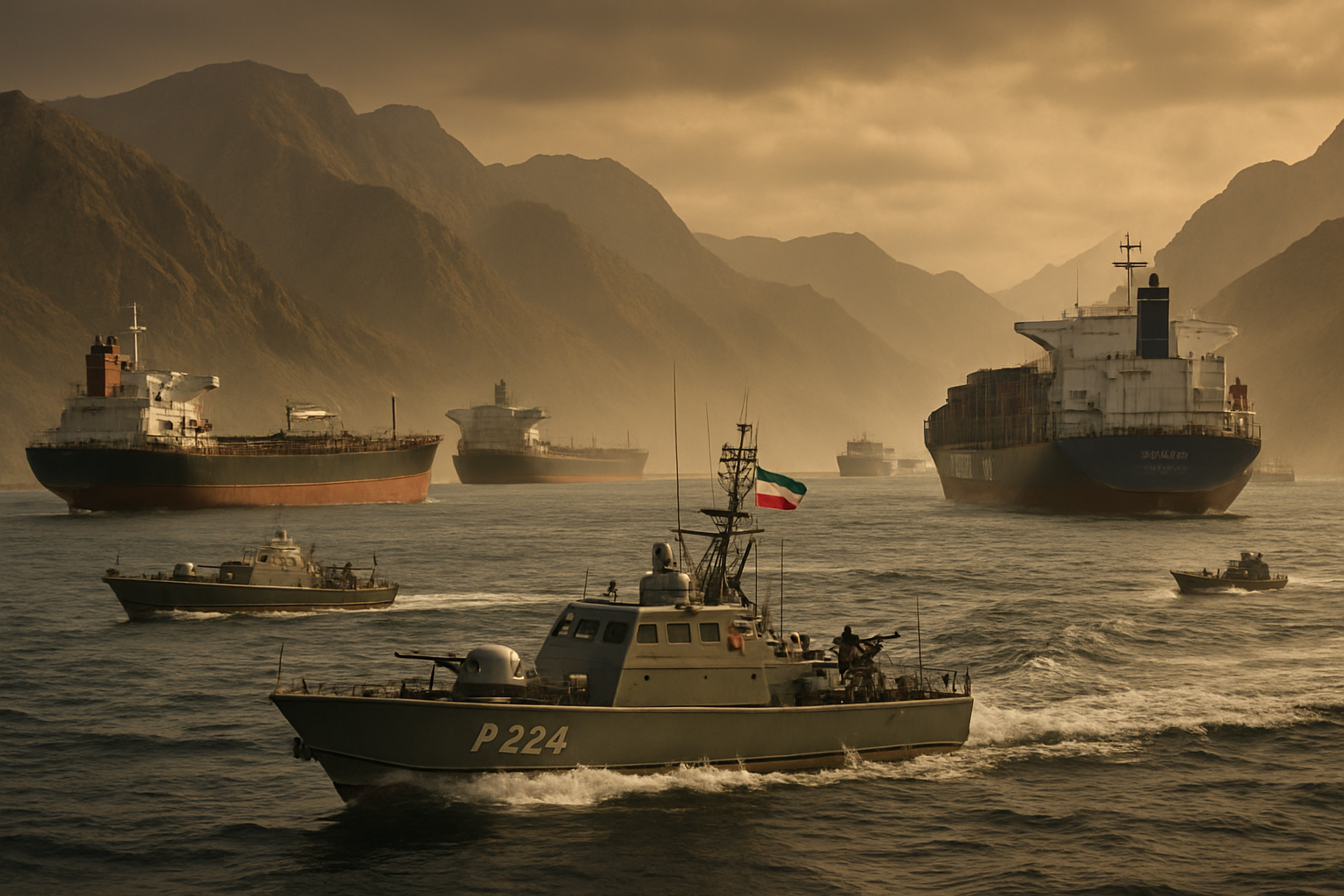
The offer comes as the world grapples with the most severe energy crisis since the 1970s oil shocks, triggered by Iran's Revolutionary Guard declaring the 21-mile Strait of Hormuz "unsafe for shipping" following the escalation of the US-Israeli "Operation Epic Fury" military campaign. The waterway, which handles approximately 40% of the world's seaborne oil transit, has effectively been blockaded, creating unprecedented global supply disruptions.
Critical Lifeline for Japan's Energy Security
Japan's vulnerability in this crisis cannot be overstated. The nation imports approximately 95% of its oil from the Middle East, with roughly 70% of those shipments transiting through the Strait of Hormuz. This dependency has made Japan one of the most exposed major economies to the current disruption.
Iranian Ambassador to Britain Ali Mousavi, who also serves as Iran's permanent representative to the International Maritime Organization (IMO), confirmed Iran's readiness to facilitate vessel passage "provided that it is coordinated with Iranian authorities and conducted with full respect for its sovereignty and security." These comments were made during the 36th Extraordinary Session of the IMO Council, held to address the deteriorating situation in the Gulf region.
Foreign Minister Toshimitsu Motegi has been directly involved in the negotiations with Tehran, though neither Japan's foreign ministry nor the Prime Minister's Office responded to requests for comment on Saturday regarding the specific details of the talks.
UN and International Response
The crisis has prompted unprecedented international coordination efforts. UN Secretary-General António Guterres, speaking to Politico, indicated that the United Nations could play a role in ensuring the safety of maritime traffic through the strategic waterway, underscoring the global significance of the current situation.
The International Energy Agency (IEA) has announced the largest strategic petroleum reserve release in its 50-year history, with 32 member countries contributing 400 million barrels - more than double the 182.7 million barrels released during the 2022 Ukraine crisis. Japan has committed to releasing 80 million barrels starting March 16, marking the first such deployment since the 2011 Fukushima disaster.
Global Energy Market Chaos
The market impact has been devastating. Brent crude peaked at $119.50 per barrel, while West Texas Intermediate reached $108.15, representing an 18.98% single-day jump - the largest on record. Natural gas prices have exploded by 24% in Europe and 78% in the United States, reaching €47.32 per megawatt-hour, the highest level since February 2025.
Qatar, which provides approximately 20% of global LNG exports, has been forced to halt production at its critical Ras Laffan and Mesaid facilities following Iranian attacks. Qatar Energy Minister Saad Al Kaabi has warned that Gulf states may be forced to declare force majeure "within weeks" if the situation continues, potentially driving oil prices to $150 per barrel and threatening to "bring down the economies of the world."
Major shipping companies including Maersk and MSC have completely suspended operations in the Persian Gulf, leaving more than 150 oil and LNG tankers stranded with billions of dollars worth of cargo. Iran has deployed an estimated 2,000-6,000 naval mines using small vessels throughout the waterway, prompting US forces to destroy 28 Iranian mine-laying ships in response.
Broader Regional Impact
The crisis extends far beyond energy markets. The aviation industry has suffered unprecedented disruption, with over 18,000 flights cancelled worldwide - the most extensive cancellations since COVID-19. Eight countries have simultaneously closed their airspace, including Iran, Iraq, Israel, UAE, Qatar, Syria, Kuwait, and Bahrain. Dubai International Airport, the world's busiest with 86 million passengers annually, remains shut down due to missile damage.
Financial markets have crashed globally, with Pakistan's KSE-100 index recording its largest single-day decline in history at -8.97%, while South Korea's KOSPI fell 12%, triggering circuit breakers and pushing the Korean won to a 17-year low. Central banks, including the European Central Bank and Bank of Japan, are coordinating emergency liquidity measures, though traditional monetary policy has limited effectiveness against such structural geopolitical disruptions.
Diplomatic Breakdown Context
The current crisis stems from the complete collapse of US-Iran nuclear negotiations, despite what had been described as a "broad agreement on guiding principles" - representing the most progress since the 2018 JCPOA collapse. The fundamental disagreement centered on scope: Iran sought to exclude ballistic missiles and proxy forces as "red lines" while limiting discussions to nuclear issues only, versus US demands for comprehensive talks covering missiles, armed groups, and human rights.
This diplomatic breakdown led to Operation Epic Fury, the largest US-Israeli coordinated military operation since 2003, which in turn prompted Iran's retaliation through "Operation True Promise 4," under which the Revolutionary Guard declared that "no red lines remain."
Consumer Impact Worldwide
The human cost of this crisis is being felt by consumers worldwide. Bangladesh has implemented fuel rationing for its 170 million citizens, while Pakistan has introduced wartime austerity measures including four-day government work weeks, with fuel prices reaching Rs321.17 per liter - the highest in South Asia.
"In Sweden, we're seeing electricity price increases of 10-20 öre and gasoline increases of 1-2 kronor per liter, with the Malmö region most exposed due to continental European market integration."
— Energy Market Analyst Samuel Ciszuk
Ireland faces heating oil prices approaching €2 per liter, which officials have denounced as "brazen rip-offs," while Austria has seen fuel costs rise 20%. Hungary has implemented immediate price caps on gasoline and diesel to counter what officials called "war-driven price explosions."
Nuclear Governance Crisis
The timing of this crisis coincides with a broader nuclear governance breakdown. The New START treaty between the US and Russia expired on February 5, marking the first time in over 50 years without nuclear constraints between the superpowers. Meanwhile, Iran continues uranium enrichment at 60% purity with over 400 kilograms of weapons-grade material - sufficient for multiple nuclear weapons.
UN Secretary-General Guterres has declared that nuclear risks are at their "highest in decades," describing the current situation as the "greatest test of multilateral cooperation and crisis management in the modern era."
Template-Setting Implications
Energy security experts warn that this crisis exposes fundamental vulnerabilities in the global energy architecture. The 21-mile Strait of Hormuz represents a single-point failure for modern logistics with no realistic alternatives to handle the diverted volume.
Samuel Ciszuk, a leading energy security analyst, describes this as "the most severe energy security crisis in decades, exposing single-chokepoint vulnerabilities." Financial analyst Damien Boey notes that "the situation is going on longer than initially thought, with financial markets representing the ultimate constraint on prolonged conflict."
The crisis has accelerated discussions about energy architecture transformation, though experts acknowledge that supply diversification and renewable transitions require years or decades to implement. However, the urgency has been dramatically accelerated by current events.
Looking Forward
Iran's offer to facilitate Japanese shipping represents a potential diplomatic opening in what has become the most dangerous international crisis since the end of the Cold War. The success or failure of these negotiations could provide a framework for future nuclear crisis resolution or, conversely, accelerate military solutions that could reshape Middle Eastern geopolitics for decades.
The recovery timeline remains uncertain, as it depends on military operations resolution and diplomatic normalization rather than predictable weather patterns or technical repairs. Aviation industries cannot maintain long-term scheduling with closed airspace, while energy markets remain volatile with critical transit routes blocked.
March 2026 represents a watershed moment in establishing a new paradigm for energy security planning, requiring fundamental transformation to reduce dependence on strategic chokepoints. The implications extend decades beyond current events, potentially determining the framework for diplomatic versus military solutions in 21st-century international crisis management.
As negotiations between Iran and Japan continue, the world watches to see whether this bilateral arrangement could provide a model for broader conflict resolution, or whether it represents merely a temporary respite in what has become the most consequential energy crisis of the modern era.