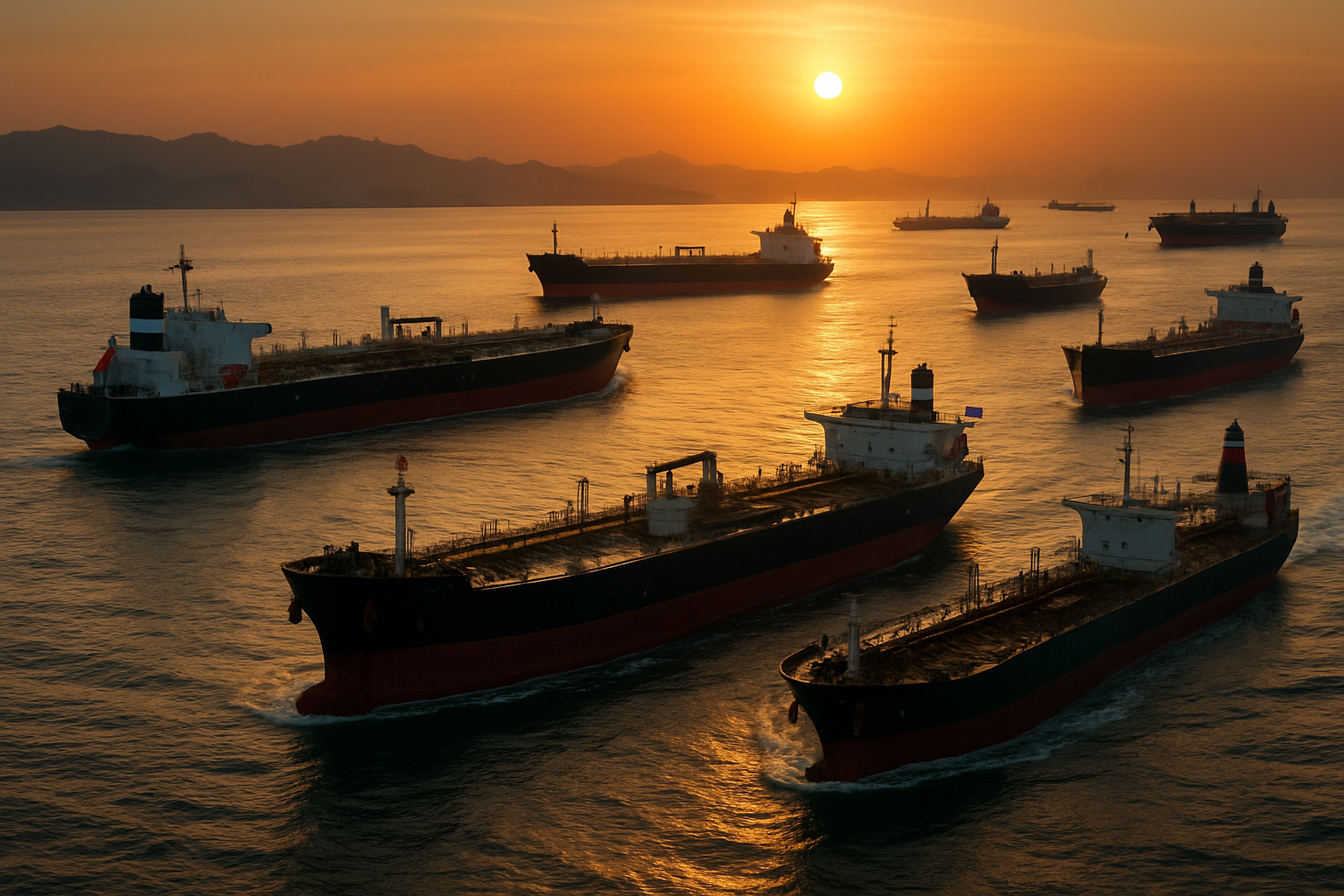
Iran's Foreign Minister Abbas Araghchi announced Friday that the Strait of Hormuz is "completely open" for all commercial vessels during the ongoing Israel-Lebanon ceasefire, while President Trump claimed a comprehensive nuclear deal with Tehran could be reached "within a day or two."
The dramatic developments on April 17, 2026, mark a potential turning point in one of the most severe global energy crises since the 1970s oil shocks. The strategic waterway, which handles 40% of global seaborne oil transit through its critical 21-mile chokepoint, had been effectively closed since Iran's Revolutionary Guard declared it "unsafe for shipping" in February.
Strait Reopening Linked to Lebanon Ceasefire
Araghchi's announcement came directly in response to the 10-day ceasefire agreement between Israel and Iran-backed Hezbollah in Lebanon. "The passage of all commercial vessels through the Strait of Hormuz is now completely open for the remaining period of the ceasefire," the Iranian foreign minister stated on social media platform X.
The reopening follows coordinated routes announced by Iran's Ports and Maritime Organization, though a senior Iranian military official confirmed that military vessels remain barred from transit, with only non-military ships permitted through approved routes subject to Revolutionary Guard Navy authorization.
Oil markets responded immediately to the news, with Brent crude falling over 10% below $90 per barrel from previous crisis peaks of $119.50. Stock markets rallied globally as supply risks diminished, offering relief after months of unprecedented volatility.
Trump's Nuclear Deal Optimism
Speaking to reporters, President Trump expressed unprecedented optimism about nuclear negotiations with Iran. "I think we're going to make a deal with Iran in a day or two," Trump told Axios in an interview, representing his most specific timeline yet for resolving the nuclear standoff.
Trump claimed Iran has agreed to suspend its nuclear program and suggested weekend negotiations could begin. "They agreed to give us back the nuclear material," the president stated, referring to Iran's stockpiles of uranium enriched to 60% purity - approaching weapons-grade levels.
The claims represent a dramatic shift from the complete breakdown of diplomatic talks that preceded the current crisis. Previous negotiations in Geneva had achieved what Iranian officials called "broad agreement on guiding principles" - the most progress since the 2018 JCPOA collapse - but fundamental disagreements over Iran's ballistic missile program and regional proxy forces remained unresolved.
Global Crisis Context
The Hormuz closure had created the most severe energy disruption in decades, forcing the International Energy Agency to coordinate its largest strategic petroleum reserve release in 50 years - 400 million barrels from 32 countries. The crisis affected everything from aviation, with over 18,000 flights cancelled, to consumer fuel prices worldwide.
Bangladesh implemented fuel rationing for 170 million people, while Pakistan introduced wartime austerity measures including four-day government work weeks. European nations deployed emergency interventions, with France sending 500 fuel station inspectors to prevent price manipulation.
Major shipping companies Maersk and MSC had suspended all Persian Gulf operations, leaving over 150 oil and LNG tankers stranded with billions in cargo value. The crisis exposed the dangerous vulnerabilities of global supply chains dependent on single strategic chokepoints.
European and International Response
European leaders welcomed the Hormuz reopening but emphasized the need for sustained security. French President Emmanuel Macron and UK Prime Minister Keir Starmer hosted a video conference with 49 countries discussing multinational naval force deployment to protect shipping once regional tensions stabilize.
EU foreign policy chief Kaja Kallas stressed that international law requires free transit through global waterways, warning against weaponizing shipping routes as a "dangerous precedent" for international commerce.
Cyprus Foreign Minister Constantinos Kombos participated in the international coordination efforts, representing President Nikos Christodoulides in discussions focused on maritime security and freedom of navigation through the critical waterway.
Persistent Challenges and US Naval Blockade
Despite the Hormuz reopening, significant obstacles remain. Trump emphasized that the US naval blockade of Iranian ports "will remain in full force" until a comprehensive agreement addressing Iran's nuclear program and regional activities is reached.
Iran has warned it may reconsider cooperation if the blockade continues, creating potential flashpoints that could reignite the crisis. Tehran demands comprehensive regional arrangements ending warfare "from Lebanon to Red Sea" rather than temporary measures.
The nuclear status remains critical, with Iran possessing over 400 kilograms of uranium enriched to 60% purity - sufficient material for multiple nuclear weapons if weaponized. Former IAEA inspector Dr. Yusri Abu Shadi confirms current stockpiles make weapons development "easily achievable."
Regional Coalition Under Strain
The crisis severely tested the unprecedented Middle Eastern coalition of Saudi Arabia, UAE, Qatar, and Egypt that had backed diplomatic efforts to prevent military confrontation. Iranian attacks during "Operation True Promise 4" resulted in casualties across Gulf states: one civilian killed in Abu Dhabi, 32 injured in Kuwait airport strikes, and eight wounded in Qatar despite Patriot missile interceptions.
Egyptian President Abdel Fattah el-Sisi's warnings of "comprehensive chaos" spreading across "sisterly countries" were heeded, with the coalition maintaining unity throughout the crisis despite the severe provocations.
Nuclear Diplomacy Window
The Lebanon ceasefire creates a critical diplomatic window for addressing the nuclear standoff. The crisis emerged from the complete breakdown of US-Iran nuclear talks despite achieving what officials called the most progress since the 2018 JCPOA collapse.
Fundamental disagreements persist, with Iran maintaining ballistic missiles and regional proxy forces as "red lines" excluded from nuclear-only talks, while the US demands comprehensive agreements including missiles, armed groups, and human rights - the same structural obstacle preventing breakthroughs for over a decade.
The broader nuclear governance crisis adds urgency, with the New START treaty having expired in February 2026, marking the first time in over 50 years without US-Russia nuclear constraints, while China expands its nuclear arsenal.
Economic Recovery Prospects
Market relief was immediate but analysts warn full recovery will require months. The Aviation industry faces particular challenges resuming Middle East air corridor operations after the unprecedented closure of eight countries' airspace created an "aviation black hole" between Europe and Asia.
Consumer relief is expected gradually as supply chains and energy markets stabilize. Countries like Bangladesh are reviewing fuel rationing affecting 170 million people, while Pakistan considers reversing wartime austerity measures that pushed fuel to record highs.
The crisis exposed fundamental vulnerabilities in global energy architecture, with the 21-mile Strait of Hormuz representing a single-point failure for modern logistics with no realistic alternatives. Strategic petroleum reserves proved effective as temporary buffers but highlighted the urgent need for supply diversification and renewable energy transitions.
Template-Setting Significance
The Hormuz crisis represents what UN Secretary-General António Guterres called "the greatest test of multilateral cooperation in crisis management of the modern era." The reopening demonstrates that diplomatic solutions remain possible even in the darkest hours when stakes affect energy security, nuclear governance, and international law enforcement simultaneously.
Success in converting the temporary ceasefire into lasting stability frameworks could provide a template for 21st-century conflict resolution, showing that innovative diplomatic approaches can prevent military confrontation even when traditional mechanisms fail.
However, fundamental political challenges remain largely unresolved. The coming days will determine whether this development marks the foundation for broader de-escalation or represents merely a temporary pause in what has been the most dangerous international crisis since the Cold War, with implications extending decades beyond current events for global energy security and international stability mechanisms.