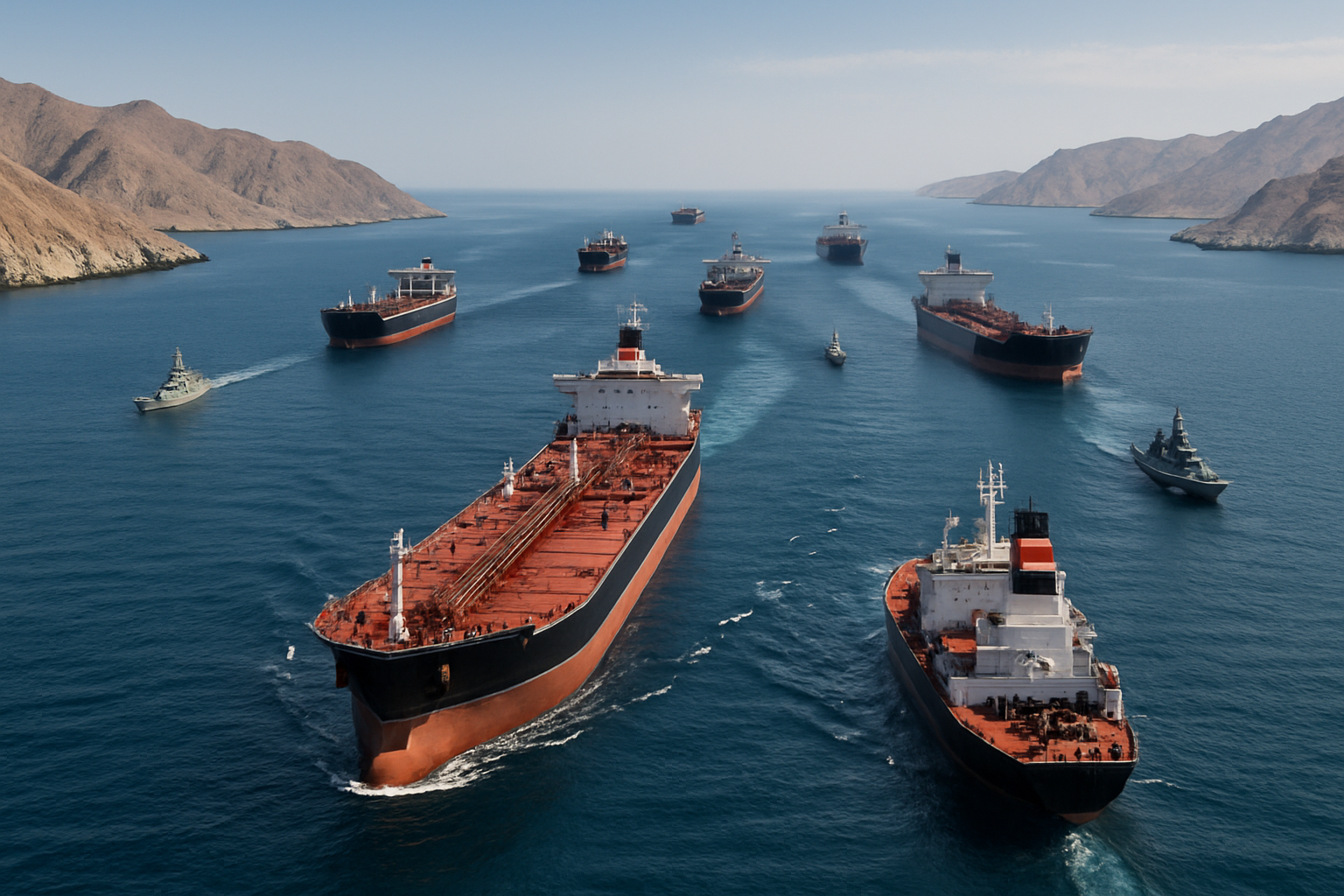
Iran's Foreign Minister Abbas Araghchi announced Friday that the Strait of Hormuz will remain fully open to commercial shipping during the Israel-Lebanon ceasefire, marking a significant development in the ongoing regional crisis that has disrupted global energy markets for weeks.
The announcement comes as a 10-day ceasefire between Israel and Lebanon went into effect, providing what many hope will be a crucial diplomatic window. However, the situation remains complex, with President Donald Trump simultaneously claiming credit for Iran's decision while declaring that the US naval blockade of Iranian ports will continue until a comprehensive agreement is reached.
Iran's Strategic Announcement
In a statement posted on social media platform X, Foreign Minister Araghchi confirmed that "passage for all commercial vessels through the Strait of Hormuz is declared completely open for the remaining period of the ceasefire." The announcement specifically referenced the ceasefire in Lebanon as the catalyst for this decision.
Araghchi emphasized that ship transit would follow "the coordinated route previously announced by Iran's Ports and Maritime Organization," indicating that while the waterway is open, Iranian authorities maintain oversight of the passage protocols.
The Strait of Hormuz, a 21-mile-wide waterway at the mouth of the Persian Gulf, serves as a critical chokepoint for global energy supplies, handling approximately 40% of the world's seaborne oil transit. The strait's closure during recent tensions had caused significant disruptions to international shipping and energy markets.
Trump's Response and Continued Pressure
President Trump quickly responded to Iran's announcement with characteristic enthusiasm, posting on Truth Social: "IRAN HAS JUST ANNOUNCED THAT THE STRAIT OF IRAN IS FULLY OPEN AND READY FOR FULL PASSAGE. THANK YOU!"
However, Trump also made clear that the United States would maintain its economic pressure on Iran. In subsequent statements, he declared that the US naval blockade of Iranian ports would "remain in full force" until Tehran reaches a comprehensive deal with Washington that addresses not only the current crisis but also Iran's nuclear program and regional activities.
"The Strait of Hormuz is fully open and ready for business and unlimited passage, but the naval blockade will continue," Trump stated, emphasizing the conditional nature of any normalization in US-Iran relations.
Market Response and Economic Impact
Financial markets responded positively to the news of the strait's reopening. Oil prices, which had surged during the crisis to levels not seen since 2022, fell sharply on Friday. Brent crude dropped more than 10% to trade below $90 per barrel, while West Texas Intermediate also posted significant declines.
The energy market volatility has been one of the most visible consequences of the regional tensions. During the height of the crisis, oil prices had reached as high as $119.50 per barrel for Brent crude, prompting the International Energy Agency to coordinate the largest strategic petroleum reserve release in 50 years, involving 400 million barrels from 32 countries.
Stock markets also rallied on the news, with Asian markets leading gains as investors viewed the strait's reopening as reducing immediate supply risks for global commerce and energy flows.
Impact on Global Trade
The strait's closure had created severe disruptions across multiple industries. Major shipping companies including Maersk and MSC had suspended operations in the Persian Gulf, leaving over 150 tankers stranded with billions of dollars worth of cargo. The aviation industry was also severely affected, with more than 18,000 flights cancelled worldwide at the height of the crisis.
European and International Response
European leaders welcomed Iran's announcement while calling for broader regional de-escalation. French President Emmanuel Macron and British Prime Minister Keir Starmer hosted a video conference with European allies to discuss the possible deployment of a multinational force to secure the Strait of Hormuz once broader regional tensions are resolved.
The European Union's foreign policy chief, Kaja Kallas, emphasized that "according to international law, transit through waterways like the Strait of Hormuz must remain free and unrestricted." She warned against any attempts to weaponize international shipping routes, calling such actions a "dangerous precedent."
Nordic leaders from Finland, Norway, Sweden, and Denmark issued a joint statement welcoming Iran's announcement and expressing support for international efforts to ensure freedom of navigation in the strategic waterway.
NATO and Alliance Dynamics
The crisis has revealed tensions within Western alliances over how to respond to Iranian actions. While some NATO allies have been supportive of diplomatic engagement, others have been more cautious about military involvement in the Gulf region.
Trump's administration has been critical of NATO's response, with the president stating that the alliance should "stay away" from the Hormuz situation, describing previous NATO efforts as ineffective.
Background: Recent Tensions and Diplomatic Efforts
The current crisis has its roots in the collapse of previous diplomatic initiatives. Earlier efforts, including Pakistan-mediated talks in Islamabad, had achieved temporary ceasefires but failed to resolve fundamental disagreements between the US and Iran over nuclear issues and regional conflicts.
The Pakistan mediation effort, led by Prime Minister Shehbaz Sharif and Field Marshal Asim Munir, had been particularly notable as it represented the most direct US-Iran diplomatic engagement in decades. However, those talks ultimately collapsed over disagreements about Iran's nuclear program and the scope of any potential agreement.
Iran has maintained that it will not abandon its uranium enrichment program, currently at 60% purity with an estimated 400+ kilograms of weapons-grade material. The US has demanded firm commitments from Iran to halt its nuclear weapons development capabilities as part of any comprehensive agreement.
Lebanon Ceasefire as Catalyst
The current opening of the Strait of Hormuz is specifically tied to the Lebanon ceasefire, which represents a significant but fragile diplomatic achievement. The 10-day truce between Israel and Iran-backed Hezbollah provides a window for broader regional de-escalation.
However, the ceasefire's sustainability remains uncertain. Previous agreements have collapsed due to violations or disagreements over implementation. The current arrangement faces similar challenges, with various parties having different interpretations of what the ceasefire covers and requires.
Iranian officials have indicated that the strait's openness is contingent on the ceasefire holding and broader progress toward regional stability. Any resumption of hostilities could quickly reverse the current positive developments.
Ongoing Challenges and Future Prospects
Despite the positive development of the strait's reopening, significant challenges remain. The US naval blockade of Iranian ports continues, creating ongoing tensions and economic pressure on Iran. Tehran has warned that it may reconsider its cooperation if the blockade is not lifted.
The situation is further complicated by Iran's demands for comprehensive regional peace arrangements that would address not just the immediate crisis but also longer-term security concerns. Iranian officials have rejected temporary measures in favor of broader agreements that would end what they describe as regional warfare "from Lebanon to the Red Sea."
International observers note that while the strait's reopening is a positive step, it does not address the underlying geopolitical tensions that created the crisis. Nuclear negotiations, regional proxy conflicts, and broader US-Iran relations remain unresolved issues that could easily reignite tensions.
Economic Recovery Timeline
Analysts suggest that even with the strait's reopening, full recovery of global supply chains and energy markets will take time. The aviation industry, which was severely disrupted during the crisis, faces particular challenges in resuming normal operations across Middle Eastern air corridors.
Consumer relief is expected to be gradual, with fuel prices and energy costs likely to decline slowly as markets stabilize and shipping operations resume normal patterns. Countries that implemented emergency measures, such as fuel rationing and emergency reserves deployment, will need time to normalize their energy policies.
Looking Ahead
The reopening of the Strait of Hormuz during the Lebanon ceasefire represents a crucial test of whether diplomatic progress can be sustained amid ongoing regional tensions. While markets have responded positively to reduced immediate risks, the underlying political challenges that created the crisis remain largely unresolved.
The coming days will be critical in determining whether this development can serve as a foundation for broader regional de-escalation or whether it merely represents a temporary pause in a longer-term conflict. The sustainability of both the Lebanon ceasefire and the strait's operational status will likely depend on progress toward addressing the fundamental disagreements between the US, Iran, and their respective regional allies.
International diplomatic efforts continue, with various mediators working to build on the current momentum. However, the complexity of the regional situation, involving multiple conflicts and competing interests, suggests that achieving lasting stability will require sustained commitment from all parties involved.