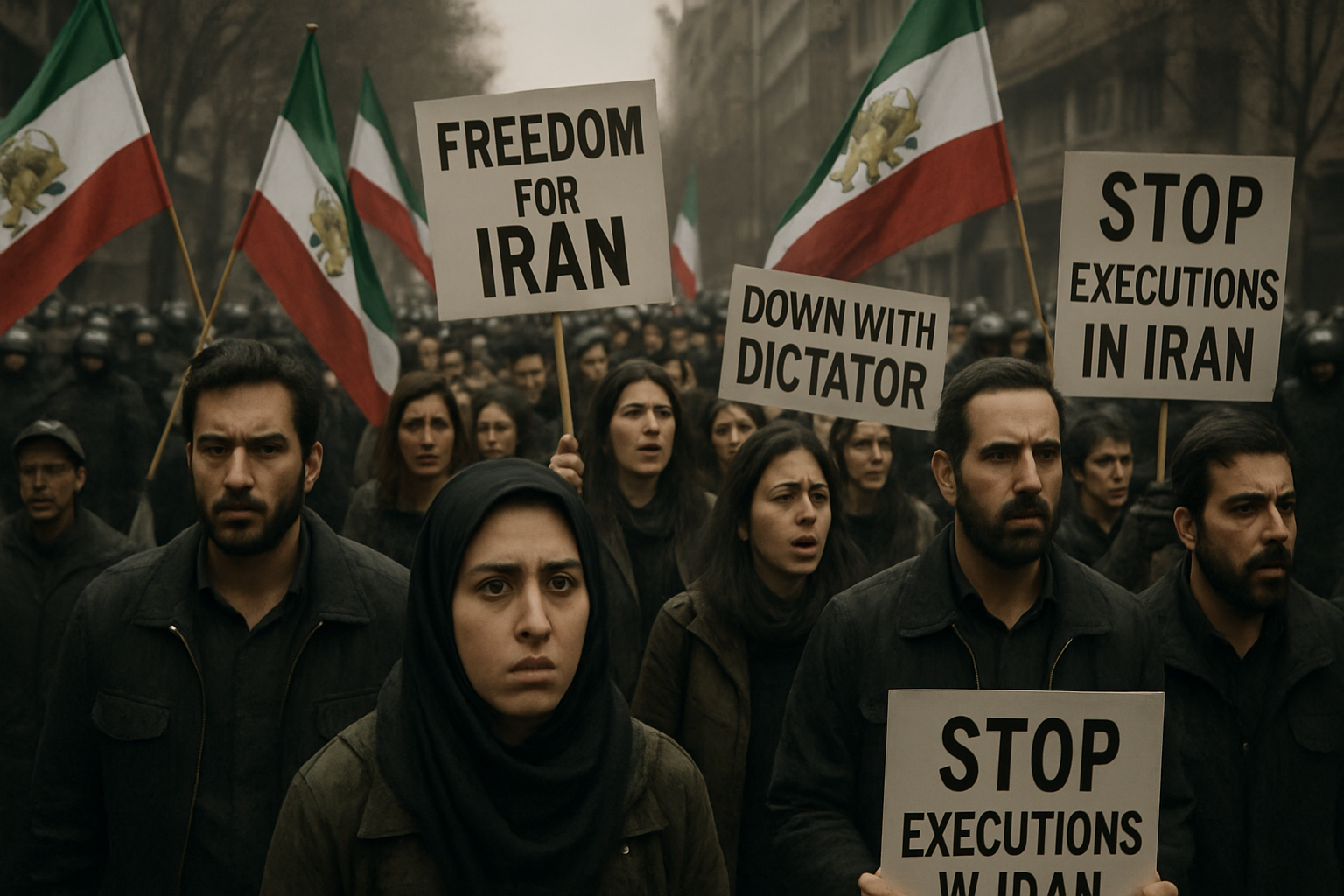
Iran has released three prominent reformist politicians on bail following their arrest during a sweeping government operation last week, according to reports from Bosnia and Herzegovina, as the Islamic Republic faces mounting international pressure from both ongoing nuclear negotiations with the United States and massive overseas demonstrations.
The release comes as Iran confronts multiple crises simultaneously: historic nuclear talks in Oman with the Trump administration, overwhelming domestic protest arrests exceeding 42,000 people, and what Swedish sources describe as an estimated 80,000 protesters demonstrating against Iran's government in international venues.
Opposition Leaders Released Amid Crackdown
The three reformist politicians, whose names have not yet been disclosed by Iranian authorities, were detained during what sources describe as a "massive arrest operation" targeting opposition figures throughout the country. Their release on bail represents a rare concession by the hardline government, which has maintained an iron grip on political dissent since the nationwide protests that erupted in 2022.
The timing of the releases is particularly significant, occurring as Iran faces unprecedented pressure on multiple fronts. The government's decision to grant bail suggests internal recognition that the current trajectory of repression may be unsustainable given the international spotlight on Iran's human rights record during sensitive diplomatic negotiations.
Nuclear Negotiations Create Diplomatic Pressure
The releases coincide with critical nuclear negotiations between Iran and the United States, which resumed February 7 in Muscat, Oman, marking the most significant diplomatic engagement since the JCPOA collapse in 2018. These talks have created a complex dynamic where international attention on Iran's nuclear program has inadvertently increased scrutiny of domestic political repression.
Iranian Foreign Minister Abbas Araghchi has described the nuclear talks as maintaining a "positive atmosphere" despite fundamental disagreements over scope. Iran insists on nuclear-only discussions while excluding ballistic missiles and regional proxy activities as "red lines." The United States, led by Secretary of State Marco Rubio, demands a comprehensive agreement addressing missiles, armed groups, and notably, human rights conditions.
The human rights component of US demands has become increasingly significant as the Biden administration's successor continues maximum pressure tactics while simultaneously pursuing diplomatic engagement. This dual approach has created space for international pressure regarding political prisoners and opposition treatment.
Massive International Demonstrations
According to Swedish media reports, an estimated 80,000 demonstrators have taken to the streets internationally in opposition to Iran's government, representing one of the largest diaspora mobilizations in recent memory. These demonstrations have occurred across multiple countries, creating a sustained international campaign highlighting Iran's domestic repression while nuclear negotiations proceed.
The scale of international protests reflects the Iranian diaspora's coordination in applying pressure during this critical diplomatic moment. Protesters have specifically focused on drawing attention to the plight of political prisoners and the broader crackdown on civil society that has characterized the Islamic Republic's response to domestic opposition since 2022.
"The international community cannot ignore the systematic persecution of Iranian civil society while engaging in nuclear diplomacy."
— International Human Rights Advocate
Domestic Crisis Escalates
Iran faces its worst domestic crisis in decades, with confirmed protest arrests exceeding 42,000 people since the nationwide uprising began in 2022. The government's response has included systematic suppression of civil society organizations, mass detentions, and harsh sentences for political activists.
The recent sentencing of Nobel Peace Prize laureate Narges Mohammadi to an additional 7.5 years in prison exemplifies the government's approach to dissent. Mohammadi, who received the Nobel Prize in 2023 for her advocacy for women's rights and opposition to oppression, was sentenced for "gathering and collusion" and "propaganda activities" related to her attendance at a memorial ceremony.
The timing of both Mohammadi's sentencing and the opposition leaders' release demonstrates the Iranian government's complex calculations as it navigates international pressure while maintaining domestic control. The regime appears to be applying selective pressure and concessions as leverage in both domestic and international negotiations.
Regional Coalition Supports Diplomatic Process
An unprecedented regional coalition including Saudi Arabia, UAE, Qatar, and Egypt has emerged in support of the diplomatic process between Iran and the United States. This remarkable Middle Eastern consensus represents a significant shift toward preventing military confrontation while addressing nuclear proliferation concerns through negotiated solutions.
Oman's role as neutral mediator has proven essential, leveraging its historical experience from the 2015 JCPOA negotiations. The Sultanate's diplomatic capital has enabled structured dialogue despite the significant trust deficit between Iranian and American negotiators.
The regional support creates additional pressure on Iran to demonstrate good faith not only in nuclear negotiations but also in domestic governance. Regional partners have privately indicated that sustainable agreements require addressing the full scope of concerns, including human rights conditions that affect regional stability.
Military Tensions Persist
Despite diplomatic engagement, military tensions continue to escalate in the region. Recent incidents include a US F-35C fighter jet shooting down an Iranian Shahed-139 drone that approached the USS Abraham Lincoln in the Arabian Sea, and IRGC vessels harassing US-flagged tankers in the Strait of Hormuz.
These incidents have occurred simultaneously with diplomatic progress, creating a complex dual-track approach where military deterrence operates alongside negotiated engagement. Oil prices have risen over $1 per barrel in response to these tensions, reflecting market concerns about potential escalation affecting the 40% of global oil transit that passes through the Persian Gulf.
The Trump administration has deployed unprecedented naval assets to the region, with reports indicating consideration of a second aircraft carrier deployment to join the USS Abraham Lincoln. This military positioning serves both as deterrence and as leverage in ongoing negotiations.
Nuclear Program Status
Iran currently enriches uranium at 60% purity, significantly exceeding the 3.67% limit established under the JCPOA and approaching the 90% threshold required for weapons-grade material. Intelligence assessments suggest Iran possesses sufficient enriched uranium for multiple weapons if the decision were made to weaponize.
Reports indicate Iran may consider significant concessions, including a three-year enrichment halt and transfer of existing stockpiles to Russia. However, hardline statements from Iranian officials, including Araghchi's declaration that Iran will "never abandon enrichment even if war is imposed," suggest such compromises remain uncertain.
The advanced state of Iran's nuclear program creates urgency for diplomatic resolution while simultaneously providing the regime with leverage in negotiations. The technical complexity of any verification regime would far exceed the original JCPOA given Iran's expanded capabilities since 2018.
International Stakes and Implications
The current crisis occurs against the backdrop of broader nuclear governance challenges, including the February 5 expiration of the New START treaty between the United States and Russia - the first time in over 50 years that these powers lack nuclear constraints agreements. China's nuclear expansion and Iran's advancing program create a complex multilateral challenge for global nuclear governance.
Success in Iran negotiations could provide a template for 21st-century nuclear crisis resolution, while failure may accelerate military solutions that could reshape Middle Eastern geopolitics for decades. UN Secretary-General António Guterres has warned that nuclear risks are "higher than they have been for decades."
The intersection of human rights concerns with nuclear negotiations creates precedent for comprehensive approaches to international agreements. The inclusion of domestic governance issues in nuclear diplomacy represents a significant evolution in how the international community addresses authoritarian regimes with strategic weapons capabilities.
Looking Ahead
The coming weeks will prove decisive for multiple intersecting crises. Nuclear negotiations are scheduled to continue with both sides agreeing to maintain the Omani mediation framework despite fundamental disagreements over scope and substance.
The release of three opposition leaders represents a tactical concession by the Iranian government, but the broader trajectory of domestic repression continues. The regime's calculations appear focused on managing international pressure while maintaining sufficient domestic control to navigate the diplomatic process from a position of strength.
The unprecedented scale of international demonstrations creates sustained external pressure that Iranian negotiators must factor into their diplomatic strategy. The diaspora campaign has successfully linked nuclear negotiations to human rights concerns, creating additional complexity for any potential agreement.
Regional partners continue to support diplomatic engagement while privately emphasizing the necessity of comprehensive solutions that address the full range of security and governance challenges. The remarkable Middle Eastern consensus supporting negotiations provides a foundation for sustainable agreements but also creates expectations for meaningful progress on multiple fronts.
The ultimate test will be whether innovative diplomatic solutions can bridge decade-old challenges or whether the current engagement represents another false start in the cycle of escalation and negotiation that has characterized US-Iran relations since the JCPOA collapse. The stakes extend far beyond bilateral relations to encompass regional war prevention, global nuclear governance, and international law enforcement for territorial sovereignty principles.