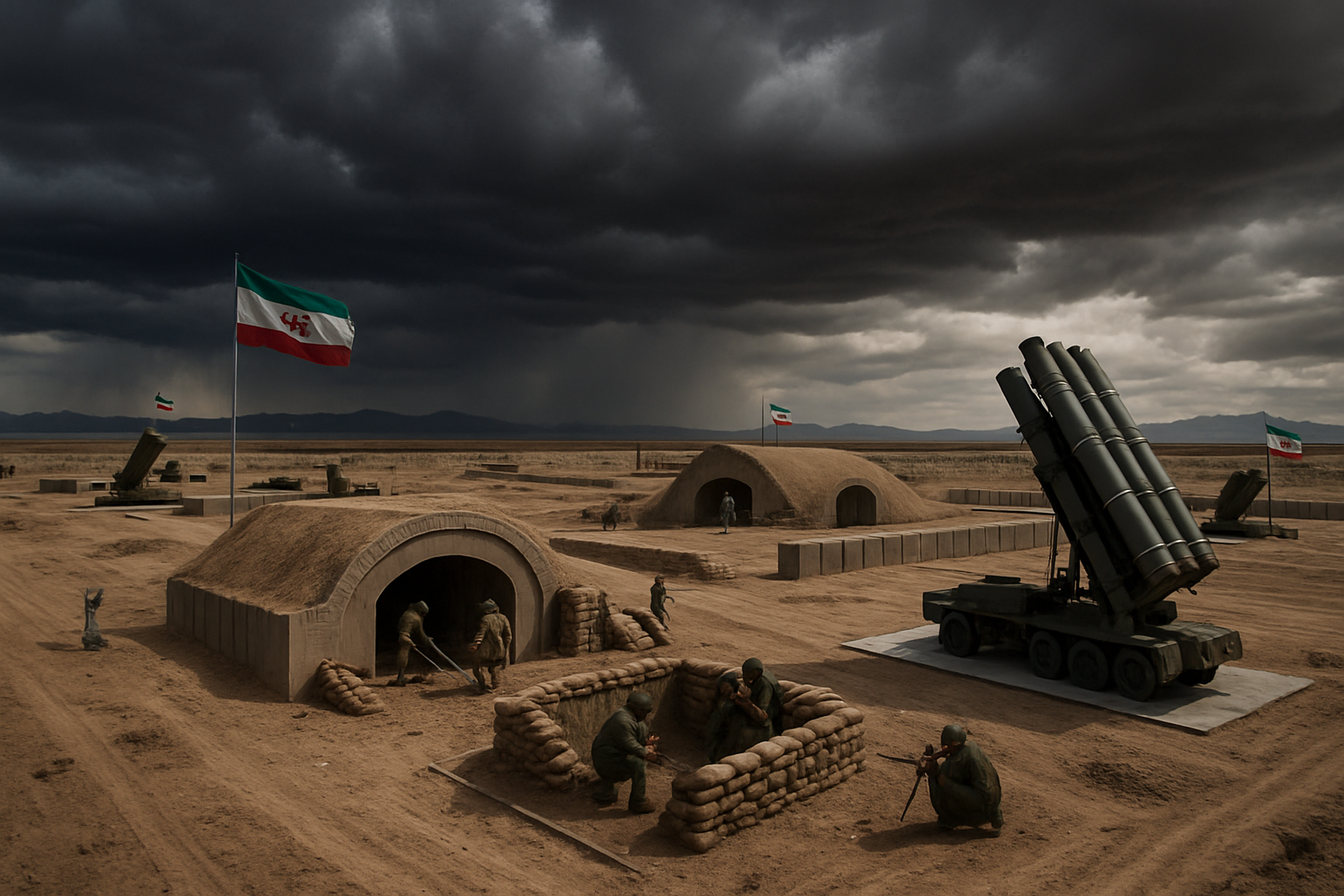
Iran is undertaking extensive military preparations against a potential US strike while simultaneously rebuilding missile facilities, according to multiple intelligence sources and satellite imagery analysis, as the Trump administration weighs military options amid stalled nuclear negotiations.
Swedish media DN reported that satellite images show Iran reconstructing missile installations while strengthening air defense systems around nuclear facilities. "Missile installations are being rebuilt while nuclear facilities receive reinforced protection against air strikes," CNN reported, citing intelligence assessments that Iran is preparing both militarily and psychologically for an American attack.
The defensive preparations come as tensions have reached their highest point since the 1979 Iranian Revolution, with President Trump issuing increasingly explicit warnings about potential military action if nuclear talks fail.
Trump's Historic Ultimatum
President Trump has issued an unprecedented 10-day ultimatum to Iran, warning that the world will learn "over the next 10 days" whether negotiations succeed or military action begins. Speaking at the Board of Peace inaugural meeting, Trump declared that "bad things will happen" if no meaningful nuclear deal is reached.
The ultimatum represents the most explicit deadline Trump has given Iran, escalating from his previous warnings that included calling Iranian government overthrow "the best thing that could happen" - his most direct regime change advocacy since taking office.
"I don't think they want the consequences of not making a deal."
— President Donald Trump, aboard Air Force One
Pentagon officials have briefed the White House that military forces could be ready for weekend strikes, with scenarios ranging from targeted nuclear facilities to broader Revolutionary Guard infrastructure campaigns expecting "weeks-long operations" with Iranian retaliation cycles.
Unprecedented Military Buildup
The United States has deployed its largest Middle East naval presence since the 2003 Iraq invasion, with the dual-carrier strike force USS Gerald R. Ford and USS Abraham Lincoln positioned approximately 800 kilometers from Iran's coast. This represents roughly one-third of the active U.S. Navy fleet concentrated in the region.
Military incidents have escalated in recent weeks, with an F-35C from the USS Abraham Lincoln shooting down an Iranian Shahed-139 drone that approached the carrier group. Iranian Revolutionary Guard Corps (IRGC) vessels have also harassed U.S. tankers in the Strait of Hormuz, which handles 40% of global oil transit, causing oil prices to rise by more than $1 per barrel.
Iran has responded by warning the United Nations that all U.S. military bases and facilities in the Middle East would become "legitimate targets" if America attacks Iran, according to a formal letter delivered by Iranian UN Ambassador Amir Saeid Iravani to Secretary-General António Guterres.
Iran's Internal Preparations
Mohammad Fazlhashemi, an Iran expert cited by Swedish media, reported that military preparations are accompanied by psychological readiness among the Iranian population. "It's the only thing everyone talks about," he told DN, describing how Iranians are mentally preparing for potential American strikes.
Swedish sources revealed a stark perspective from inside Iran, with one contact named Amir telling SvD: "We are ashamed to be alive. Many openly hope that the US will attack." The quote reflects the desperation felt by some Iranians following what sources describe as January massacres and continued government crackdowns.
The internal situation has deteriorated significantly, with over 42,000 arrests documented since the 2022 uprising. Nobel Peace Prize laureate Narges Mohammadi was sentenced to an additional 7.5 years in prison during the current diplomatic talks, demonstrating the regime's prioritization of domestic control over international progress.
Geneva Diplomatic Breakthrough Amid Crisis
Despite military preparations on both sides, diplomatic efforts continue through Switzerland-Oman mediation in Geneva. Iranian Foreign Minister Abbas Araghchi announced achieving "broad agreement on guiding principles" with the United States - the most significant diplomatic progress since the JCPOA collapse in 2018.
The framework breakthrough has established a foundation for "working on the text of a potential agreement," representing an evolution from previous talks in Muscat to European neutral territory, signaling growing international investment in diplomatic resolution.
However, fundamental scope disagreements persist. Iran maintains that ballistic missiles and regional proxy activities are "red lines" excluded from nuclear-only talks, while U.S. Secretary Marco Rubio insists any comprehensive agreement must address missiles, armed groups, and human rights.
Nuclear Status Reaches Critical Point
Iran continues enriching uranium at 60% purity, significantly above the 3.67% limit established in the original JCPOA and approaching the 90% weapons-grade threshold. Intelligence assessments confirm Iran possesses sufficient enriched uranium for multiple weapons if weaponized.
Araghchi has maintained that Iran will "never abandon enrichment even if war is imposed," despite diplomatic engagement and potential concessions being discussed, including a possible 3-year enrichment halt and stockpile transfer to Russia.
Unprecedented Regional Coalition
An extraordinary development in the crisis has been the formation of an unprecedented Middle Eastern coalition supporting diplomatic resolution. Saudi Arabia, the UAE, Qatar, and Egypt have all backed the negotiation process, creating remarkable consensus for preventing military confrontation.
This regional unity is driven by energy security concerns, as the Persian Gulf handles 40% of global oil transit, and any military conflict could destabilize worldwide supply chains with implications extending far beyond the immediate region.
Oman has played a crucial mediating role, leveraging its historical neutrality and successful facilitation of the 2015 JCPOA negotiations. The sultanate's diplomatic expertise has proven essential for maintaining structured dialogue despite persistent trust deficits.
Israeli Coordination and Security Concerns
Israeli Prime Minister Benjamin Netanyahu has conducted extensive coordination with President Trump, emphasizing Israeli red lines that require any agreement to include "limiting ballistic missiles and ending Iranian axis support." Israel views nuclear-only frameworks as insufficient for addressing existential security threats from Iran's integrated missile and proxy network, including Hezbollah, Hamas, and the Houthis.
The Israeli position has significantly influenced U.S. negotiating positions, with comprehensive security arrangements viewed as necessary for sustainable regional stability rather than limited nuclear agreements that leave other threats unaddressed.
International Nuclear Governance Crisis
The Iran crisis occurs within a broader context of nuclear governance breakdown. The New START treaty between the U.S. and Russia expired on February 5, marking the first time in over 50 years without nuclear constraints between the superpowers. China's nuclear expansion and the UN Secretary-General's warning that nuclear risks are "at their highest in decades" create additional urgency.
Success in resolving the Iran crisis could provide a template for 21st-century nuclear crisis resolution, while failure may encourage proliferation elsewhere and undermine diplomatic credibility for resolving territorial and security disputes globally.
Economic and Humanitarian Pressures
Iran faces severe domestic pressures from both sanctions and social unrest. The regime survival crisis has created pressure for sanctions relief, but Iranian leadership appears to prioritize nuclear capabilities over economic recovery through diplomatic compromise.
The Trump administration maintains its "maximum pressure" campaign, threatening 25% tariffs on countries trading with Iran while simultaneously engaging in diplomatic negotiations. This dual-track approach combines economic coercion with selective engagement.
Verification Challenges
Any potential agreement faces unprecedented technical challenges. Iran's nuclear infrastructure has significantly expanded since 2018, with advanced centrifuge technology, sophisticated facilities, and dispersed capabilities requiring monitoring mechanisms that exceed the original JCPOA's complexity.
The International Atomic Energy Agency's inspections have been suspended since November 2025, with IAEA Director Rafael Grossi meeting with Araghchi on February 16 to discuss resuming access to damaged monitoring equipment and facilities.
Global Stakes and Implications
The coming weeks represent a template-setting moment for international conflict resolution in the multipolar era. Success could prevent a regional war that would destabilize energy markets globally, provide diplomatic precedent for nuclear crisis management, and strengthen non-proliferation norms.
Failure may accelerate military solutions that could reshape Middle Eastern geopolitics for decades, encourage nuclear proliferation elsewhere, and undermine diplomatic credibility for resolving territorial sovereignty disputes worldwide.
European evacuation warnings from Sweden and Serbia urging their citizens to leave Iran immediately signal the international community's growing concern about the deteriorating security situation.
As Iran expert Mohammad Fazlhashemi noted, the current situation has created a psychological environment where military confrontation dominates public discourse on both sides. The narrow window for diplomatic resolution appears to be closing as military preparations intensify and ultimatums create pressure for decisive action.
The world watches as President Trump weighs his historic decision on military authorization, with implications extending decades beyond the current administration and affecting global approaches to nuclear crisis resolution, regional stability, and international law enforcement in the 21st century.