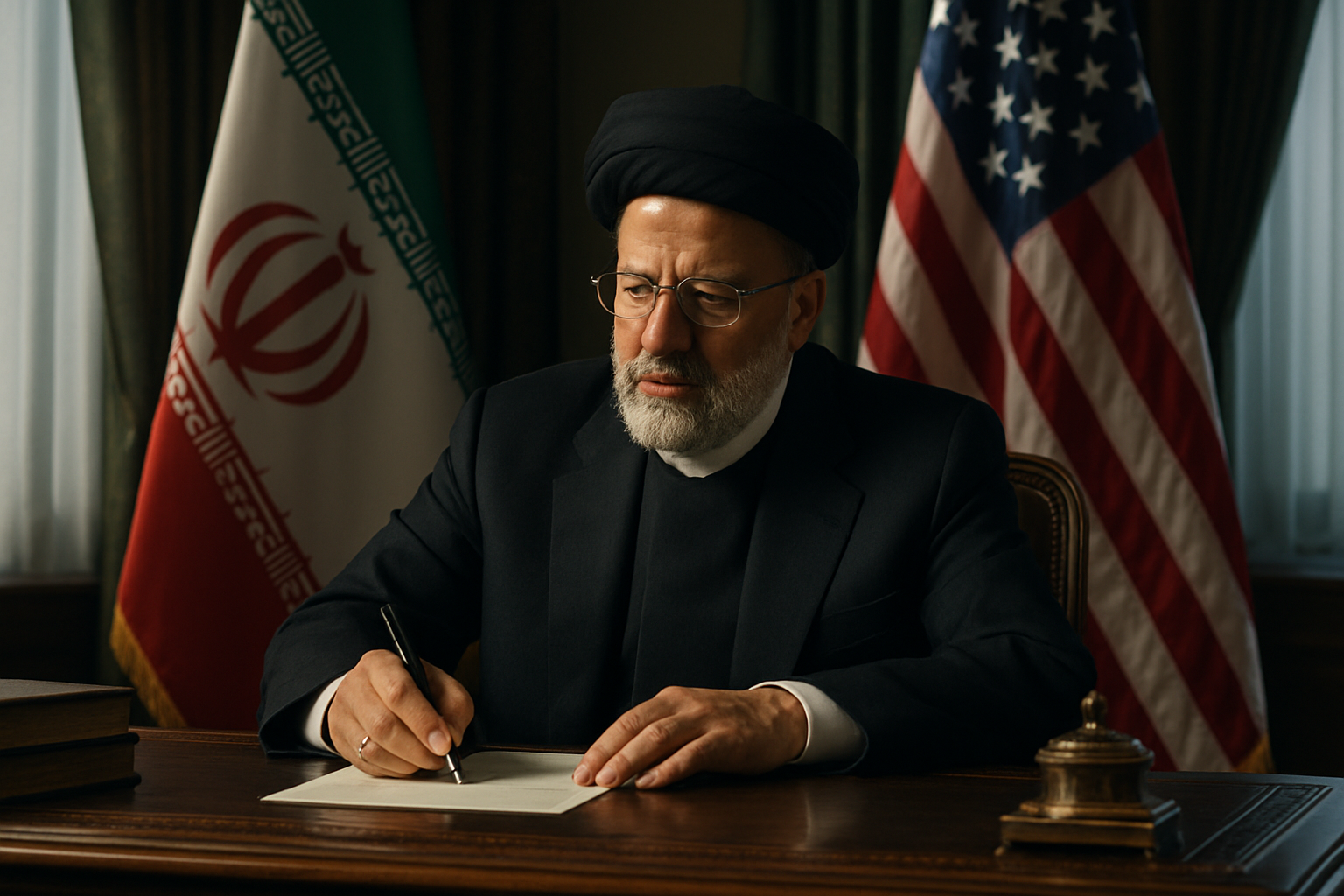
In an unprecedented diplomatic overture, Iranian President Masoud Pezeshkian has released a comprehensive open letter directly addressing the American people, denying Iranian hostility toward ordinary Americans while questioning US war objectives and challenging what he describes as Israeli manipulation of American foreign policy.
The letter, published Wednesday evening via Iranian state television Press TV and distributed through multiple international channels, represents one of the most direct communications from an Iranian leader to the American public since the 1979 Islamic Revolution. The timing coincides with heightened tensions following the March 2026 crisis that fundamentally altered Middle Eastern geopolitics.
Direct Appeal to American Citizens
Opening with traditional Islamic greeting "In the name of God, the Compassionate, the Merciful," President Pezeshkian addressed "the people of the United States of America, and to all those who, amid a flood of distortions and manufactured narratives, continue to seek the truth and aspire to a better life."
"Iran — by this very name, character, and identity — is one of the oldest continuous civilizations in human history. Despite its historical and geographical advantages at various times, Iran has never, in its modern history, chosen the path of aggression, expansion, colonialism, or domination."
— President Masoud Pezeshkian, Open Letter to Americans
The Iranian president emphasized that his country harbors no animosity toward ordinary American citizens, stating unequivocally that Iran "does not hate regular Americans." This message appears designed to distinguish between the Iranian government's position toward the American people versus US government policies.
Questioning the "Iranian Threat" Narrative
Pezeshkian directly challenged what he termed the manufactured nature of the "Iranian threat," arguing that this narrative has been constructed to serve specific political and economic interests. The letter calls on Americans to "look beyond political rhetoric" and reconsider their perspective on Iran's international role.
According to multiple international sources, the president specifically questioned whether Israel has manipulated American foreign policy, asking rhetorically: "Is it not obvious that Israel now aims to fight Iran to the last American soldier?" This represents one of the most direct accusations of Israeli influence over US military decision-making from a sitting Iranian leader.
The letter argues that the portrayal of Iran as a security threat results from "the political and economic whims of the powerful," suggesting that the threat perception has been deliberately constructed rather than based on genuine Iranian aggressive intentions.
Context of Ongoing Regional Crisis
The letter's release comes during what UN Secretary-General António Guterres has described as "the greatest test of multilateral cooperation and crisis management in the modern era." The March 2026 events fundamentally altered regional dynamics, with Iran now under a military governance structure following the unprecedented hereditary succession to Supreme Leader.
Current regional tensions stem from the complete breakdown of nuclear diplomacy despite achieving what was described as "broad agreement on guiding principles" in Geneva talks - the most progress in US-Iran relations since the 2018 collapse of the Joint Comprehensive Plan of Action (JCPOA).
Historical Precedent and Diplomatic Significance
The direct communication to the American people echoes historical precedents of Iranian leaders attempting to bypass government-to-government channels during periods of heightened tension. However, the comprehensive nature of this letter and its wide distribution through multiple media channels marks an escalation in Iran's public diplomacy efforts.
Norwegian sources describe this as a "textbook example of so-called public diplomacy," representing Iran's attempt to influence American public opinion directly rather than working through traditional diplomatic channels that have proven ineffective.
Regional and International Reactions
The letter's publication has prompted varied international responses. European diplomatic sources suggest concern about the precedent of direct leader-to-population communication during active tensions, while regional powers view it as Iran's attempt to establish alternative diplomatic channels.
The timing - released hours before an anticipated major US policy address - appears strategically calculated to maximize international attention and potentially influence American public discourse about Middle Eastern policy.
Energy Security and Global Implications
The diplomatic initiative occurs against a backdrop of significant global economic consequences from regional tensions. Oil prices have experienced extreme volatility, with the critical Strait of Hormuz - carrying 40% of global seaborne oil transit - becoming a focal point of international concern.
Current disruptions to global supply chains, particularly affecting automotive, electronics, and textiles manufacturing dependent on Gulf logistics networks, have demonstrated the interconnected nature of regional conflicts and worldwide economic stability.
Nuclear Program and International Law
The letter indirectly addresses Iran's nuclear program, with Pezeshkian maintaining that despite external pressures and sanctions, Iran has consistently operated within international legal frameworks. This comes as Iran continues uranium enrichment at 60% purity levels, with international monitors reporting over 400 kilograms of weapons-grade material - sufficient for multiple nuclear weapons if weaponized.
The breakdown of nuclear negotiations, despite initial progress, highlighted fundamental disagreements over scope: Iran insisted on nuclear-only discussions excluding ballistic missiles and regional proxy activities, while the US demanded comprehensive agreements covering all aspects of Iranian regional policy.
Congressional and Public Opinion Impact
The letter's release coincides with unprecedented congressional scrutiny of current Middle Eastern policy, with bipartisan lawmakers demanding clear strategy explanations and expressing concern about potential military escalation. Recent polling indicates historically low American support for Middle Eastern military interventions, with only 25% of Americans supporting current policies.
Financial markets have responded to regional tensions as what analysts describe as the "ultimate constraint" on further escalation, with major indices experiencing significant volatility and international investors seeking stability amid geopolitical uncertainty.
Template-Setting Implications for 21st Century Diplomacy
The Iranian president's direct appeal to the American people represents what diplomatic experts describe as a "template-setting" moment for 21st-century international relations. The rapid transition from promising diplomatic frameworks to heightened tensions demonstrates what the UN Secretary-General has characterized as the "fragility of crisis management in the multipolar era."
Success in containing current tensions could provide frameworks for future nuclear crisis resolution and diplomatic innovation. Conversely, failure might accelerate the precedence of military solutions over diplomatic engagement, potentially reshaping international approaches to territorial and nuclear disputes globally.
Looking Forward: Diplomatic Opportunities and Challenges
The letter concludes by framing the current moment as "fateful" for both nations, emphasizing the choice between "confrontation and dialogue." This messaging appears designed to create space for potential diplomatic engagement while appealing directly to American public opinion to influence policy directions.
Regional mediation efforts, including initiatives by Pakistan, Turkey, and other regional powers, continue seeking diplomatic solutions. However, the fundamental structural disagreements that led to the breakdown of previous negotiations remain largely unresolved.
As international observers note, the stakes extend far beyond bilateral US-Iran relations to include global energy security, nuclear governance credibility, international law enforcement mechanisms, and the sustainability of post-World War II international order principles - all being tested simultaneously during this critical period in international relations.