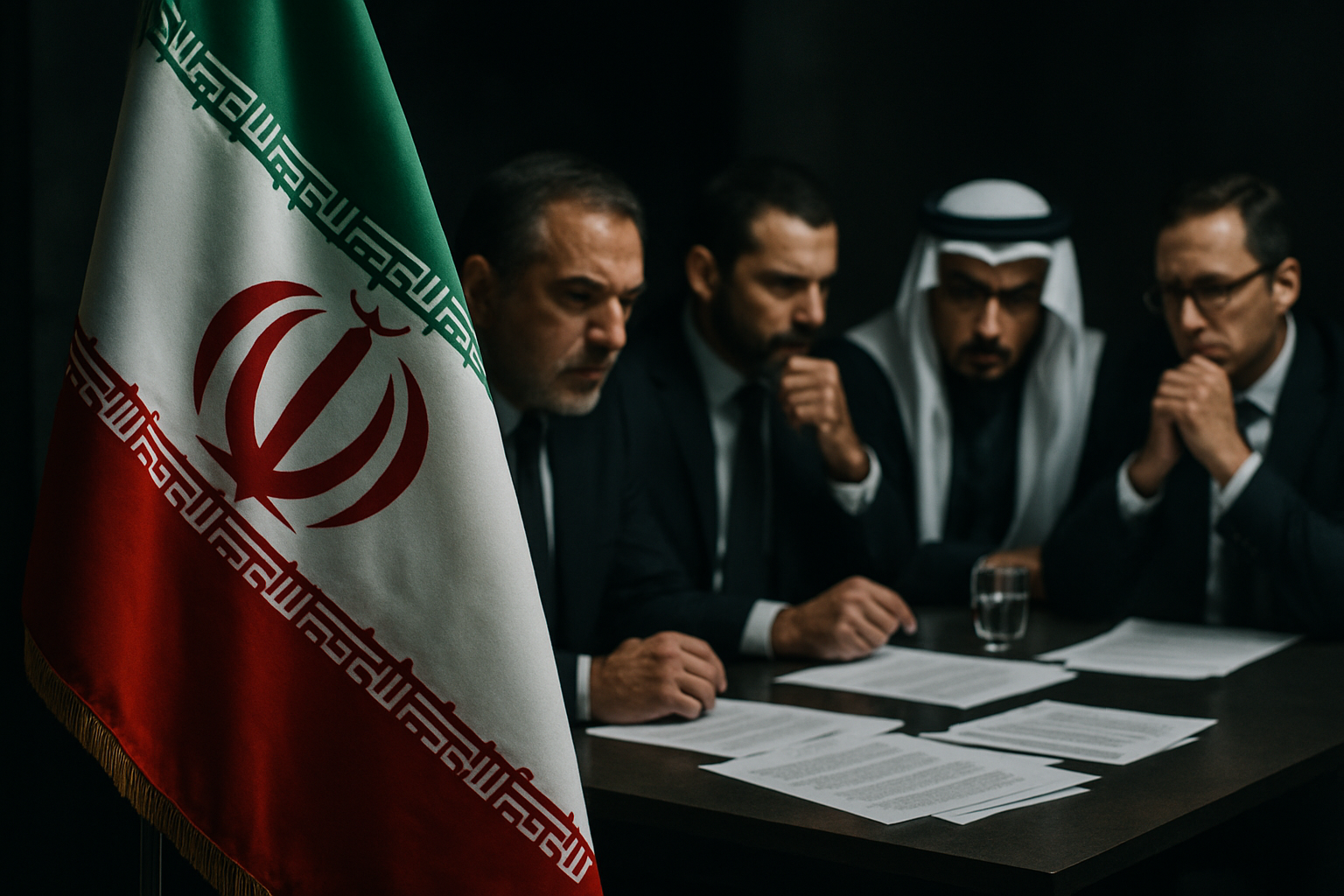
Iran has categorically rejected a comprehensive 15-point peace plan from the United States while setting forth five stringent conditions of its own to end the escalating Middle East conflict, marking what could be the last diplomatic opportunity before regional warfare spirals beyond control.
The dramatic rebuff came as tensions reached a critical juncture, with global aviation disrupted by 18,000+ flight cancellations and oil prices surging past $100 per barrel amid fears of a broader regional war that has already claimed hundreds of civilian lives and displaced hundreds of thousands across the Middle East.
Iran's Five Demands for Peace
According to multiple international sources, including Bulgarian media and Pakistani officials, Iran has laid out five non-negotiable conditions for ending hostilities:
- Complete cessation of all "aggression and killings" by enemy forces
- Concrete guarantees preventing any future military action against Iran
- Full war damage reparations from the United States and Israel
- End to warfare on all fronts, including against "resistance groups" such as Hezbollah, Hamas, and Shia militias in Iraq
- Recognition of Iranian sovereignty over the Strait of Hormuz
A senior Iranian official speaking to Press TV declared that Iran "will not allow US President Donald Trump to dictate the timing of the war's end," adding that Tehran will determine when hostilities conclude.
Trump's 15-Point Plan Dismissed
The rejected American proposal, reportedly transmitted through Pakistani intermediaries, addressed Iran's nuclear program, ballistic missiles, regional proxy activities, and the reopening of the strategically vital Strait of Hormuz, which controls 40% of global oil transit.
Iran's state-controlled Fars news agency swiftly labeled the US plan as "excessive" and "unbalanced," calling American proposals "unreal demands." Iranian authorities described the framework as fundamentally flawed, prioritizing Western interests over regional sovereignty.
"Iran will decide when a ceasefire happens, and there will be no negotiations before that."
— Senior Iranian Official, speaking to Press TV
The diplomatic rejection comes despite Pakistan's formal offer to host peace talks in Islamabad, with Prime Minister Shehbaz Sharif calling for "meaningful and conclusive talks" to achieve a "comprehensive settlement."
Global Crisis Intensifies
The diplomatic breakdown has triggered unprecedented global disruption. Aviation networks across eight Middle Eastern countries remain shuttered simultaneously, creating what experts describe as an "aviation black hole" affecting critical Europe-Asia trade corridors.
Energy markets have responded with alarm, as Iran's effective closure of the Strait of Hormuz through naval mining has stranded over 150 tankers carrying billions of dollars in cargo. The International Energy Agency has authorized the largest strategic oil reserve release in its 50-year history to counteract supply disruptions.
Natural gas prices have surged 24% in Europe and 78% in the United States, while Qatar has halted liquefied natural gas production, threatening European energy security amid ongoing winter conditions.
Military Escalation Continues
Iran's Revolutionary Guard Corps has maintained "Operation True Promise 4," systematic strikes across the region under the banner that "no red lines remain." The campaign has resulted in casualties across multiple Gulf states:
- UAE: 1 civilian killed in Abu Dhabi from missile debris, Dubai International Airport remains shuttered
- Kuwait: 32 foreign nationals injured in drone strikes on Kuwait Airport
- Qatar: 8 civilians wounded despite successful Patriot missile interceptions of 65 incoming missiles and 12 drones
- Cyprus: RAF Akrotiri base struck, marking the first attack on European territory since World War II
The conflict has drawn unprecedented naval response from European powers, with HMS Dragon, Spanish frigates, and vessels from Italy, France, the Netherlands, and Greece deploying to protect Cyprus and demonstrate European resolve.
Iranian Leadership Transition
The crisis unfolds amid a historic succession in Iranian leadership following the March 1 death of Supreme Leader Ali Khamenei. His son, Mojtaba Khamenei, has emerged as the favored successor in what would represent the first hereditary transition in the Islamic Republic's 47-year history.
US intelligence assessments suggest that Revolutionary Guard influence has reached unprecedented levels, potentially marking a shift from traditional clerical governance to direct military control of the state apparatus.
Congressional and International Pressure
American lawmakers are applying increasing pressure on the Trump administration, with only 25% public support for military operations representing "almost unprecedented" early-stage unpopularity. Senator Richard Blumenthal expressed being "more concerned than ever" about potential ground troop deployment.
Operation Epic Fury, the largest US-Israeli coordinated campaign since 2003, has cost $27 billion in its initial weeks while running at $1 billion daily. Pentagon officials have quietly prepared for operations extending through September, far beyond the administration's initial four-to-six-week timeline.
Humanitarian Crisis Mounting
The conflict has generated the largest coordinated international evacuation since the Arab Spring of 2011. Australia reports 115,000 nationals trapped in the region, while Germany has 30,000 stranded tourists. The European Union activated its ESTIA emergency evacuation protocol for Cyprus for the first time in the bloc's history.
Iranian Red Crescent officials report over 787 civilian casualties from US-Israeli strikes, including the devastating Minab school attack that killed between 53-85 students and staff, drawing international condemnation and potential war crimes investigations.
Nuclear Dimensions
The diplomatic breakdown is particularly significant given the broader nuclear governance crisis. The New START treaty between the United States and Russia expired in February 2026, marking the first time in over 50 years that the world's two largest nuclear powers operate without arms control constraints.
Iran continues uranium enrichment at 60% purity, approaching the 90% weapons-grade threshold, with an estimated 400+ kilograms of enriched material sufficient for multiple nuclear weapons if weaponized.
Regional Coalition Under Strain
The crisis has severely tested an unprecedented Middle Eastern coalition that had backed diplomatic solutions. Saudi Arabia, the UAE, Qatar, and Egypt had formed remarkable consensus supporting negotiations, but Iranian retaliation targeting their territories has strained this unity.
Egyptian President Abdel Fattah el-Sisi condemned attacks on "sisterly Arab countries," warning of "comprehensive chaos" spreading across the region. Multiple Arab League emergency sessions have been convened as the coalition faces the difficult choice between maintaining US alliance relationships and protecting against Iranian retaliation.
"We are the ones who will determine the end of the war."
— Iranian Revolutionary Guard Corps Statement
Template-Setting Moment
UN Secretary-General António Guterres has described the crisis as the "greatest test of multilateral cooperation in the modern era," emphasizing that the rapid transition from diplomatic breakthrough to military escalation demonstrates the fragility of crisis management mechanisms in the multipolar era.
The stakes extend far beyond the immediate region, potentially setting precedents for 21st-century conflict resolution, nuclear governance credibility, and international law enforcement that could influence global stability for decades.
Looking Ahead
With Iran's five conditions representing a fundamental rejection of Western terms and Trump's apparent reluctance to accept Iranian demands for war reparations and Strait of Hormuz control, the diplomatic window appears to be rapidly closing.
Pakistan's mediation offer represents potentially the last major diplomatic opening before the crisis escalates into the broader regional war that international observers have desperately sought to prevent. The coming days may determine whether innovative diplomatic solutions can bridge these fundamental disagreements or whether the Middle East faces its most destructive conflict in generations.
The failure of negotiations could reshape Middle Eastern geopolitics for decades while potentially accelerating military approaches to international disputes worldwide, undermining the diplomatic credibility essential for peaceful resolution of future territorial and nuclear conflicts globally.