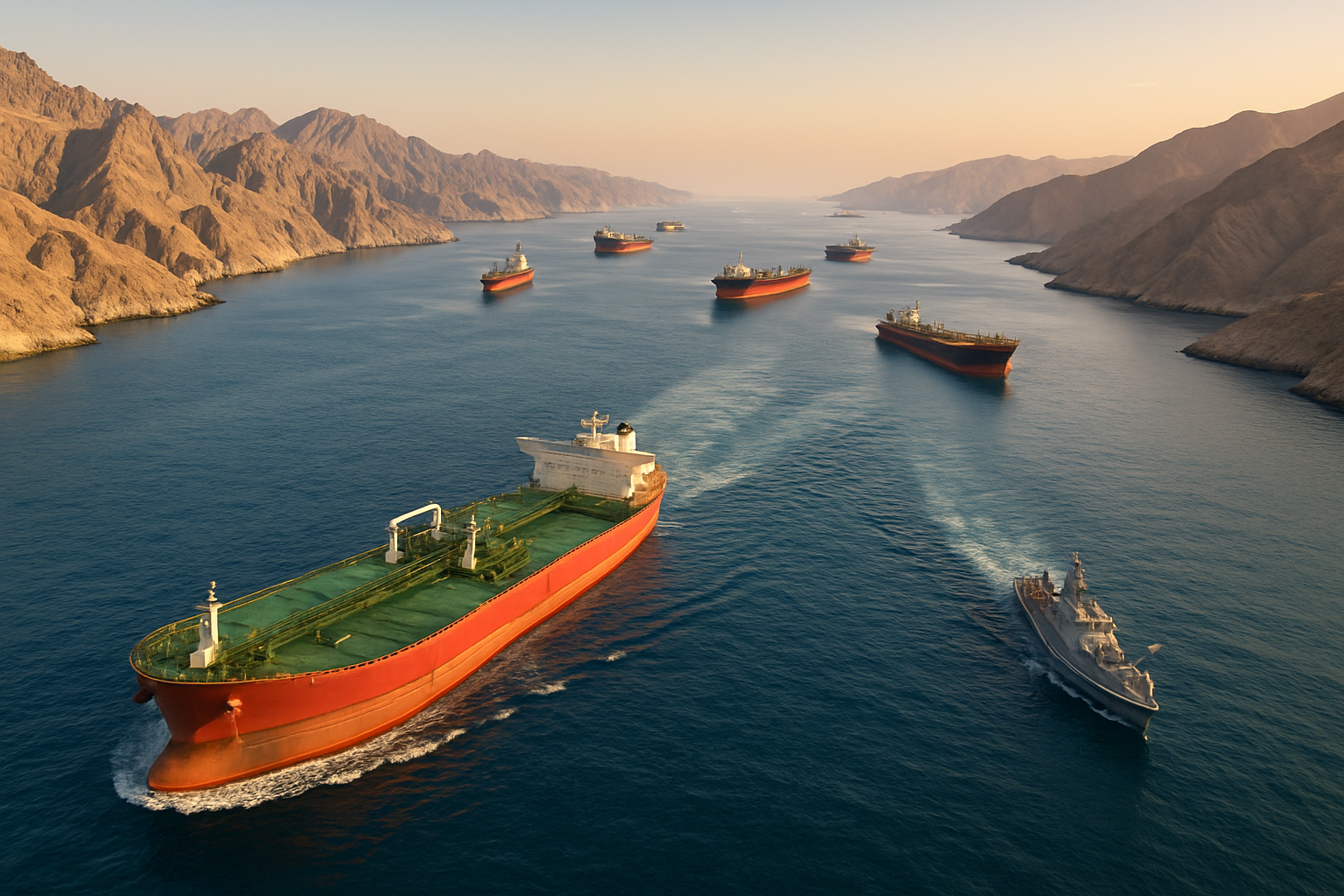
Iran's announcement on Friday that the critical Strait of Hormuz would reopen to commercial shipping during the Israel-Lebanon ceasefire has sparked renewed diplomatic momentum between Tehran and Washington, though significant disagreements persist over nuclear materials and the scope of any potential agreement.
Iranian Foreign Minister Abbas Araghchi confirmed that commercial vessels would be permitted passage through the strategic waterway "in coordination with Iranian armed forces" for the duration of the current ceasefire. The 21-mile strait, which handles 40% of global seaborne oil transit, has been effectively closed since Iran's Revolutionary Guard declared it "unsafe for shipping" in March 2026 amid escalating tensions.
Trump Claims Nuclear Breakthrough Amid Iranian Denials
President Donald Trump took to Truth Social to suggest that a peace deal could be reached "soon," claiming that Iran had agreed to surrender its stockpiles of enriched uranium. "They agreed to give us back the nuclear material," Trump posted, expressing optimism about weekend negotiations.
However, Iran's Foreign Ministry swiftly rejected Trump's claims, stating unequivocally that the country's stockpile of enriched uranium would not be transferred "anywhere." The contradiction highlights the persistent gulf between the two sides despite renewed diplomatic engagement.
"Iran's enriched uranium will not be transferred anywhere, contrary to what Donald Trump claims."
— Iranian Foreign Ministry Spokesperson
Iranian officials have consistently maintained that uranium enrichment is an "inalienable right" under international law, with the country currently enriching uranium at 60% purity—significantly above the 3.67% limit established under the 2015 Joint Comprehensive Plan of Action (JCPOA).
Oil Markets React to Hormuz Reopening
Global oil and gas prices tumbled dramatically following Iran's announcement of the strait's reopening. Brent crude, which had peaked at $119.50 during the crisis, fell below $100 per barrel for the first time since the conflict began. Natural gas prices, which had surged 24% in Europe and 78% in the United States during the blockade, also declined sharply.
The reopening comes after months of the most severe energy crisis since the 1970s oil shocks, which saw the International Energy Agency deploy its largest-ever strategic petroleum reserve release of 400 million barrels from 32 countries. Aviation industry disruptions canceled over 18,000 flights globally, while major shipping companies like Maersk and MSC suspended operations in the Persian Gulf.
Continuing US Naval Blockade Creates Complications
Despite Iran's gesture of reopening the strait, the United States maintains its naval blockade of Iranian ports, which Tehran has demanded must end as a precondition for sustained passage. Iran's top nuclear negotiator has threatened to close the strait again if the US blockade continues, creating a diplomatic standoff.
The USS Gerald Ford, America's most advanced aircraft carrier, is reportedly returning to the Middle East as a third carrier heads to the region, underscoring the continued military tensions despite diplomatic progress. This unprecedented naval presence demonstrates the delicate balance between diplomatic engagement and military deterrence.
Historical Context of Failed Negotiations
The current diplomatic efforts take place against the backdrop of multiple previous negotiation failures. Since February 2026, talks have moved from Oman to Geneva, achieving what both sides described as "broad agreement on guiding principles"—the most significant progress since the JCPOA collapsed in 2018.
However, fundamental disagreements persist over the scope of any agreement. Iran maintains that ballistic missiles and regional proxy activities are "red lines" that must be excluded from nuclear-only talks. The United States, led by Secretary of State Marco Rubio, insists on comprehensive agreements that address missiles, armed groups, and human rights issues.
The Pakistan Mediation Framework
Pakistan has emerged as a crucial mediator, with Prime Minister Shehbaz Sharif and Field Marshal Asim Munir facilitating communication through an innovative "message relay system" that has proven effective when direct dialogue proves impossible. This middle-power diplomacy represents a new template for crisis management in an increasingly multipolar world.
Regional Coalition Under Strain
The crisis has severely tested an unprecedented regional coalition that includes Saudi Arabia, the UAE, Qatar, and Egypt—all backing the diplomatic process. However, Iran's "Operation True Promise 4" attacks have targeted coalition member territories, with casualties reported in the UAE (1 killed in Abu Dhabi), Kuwait (32 injured in airport strikes), and Qatar (8 wounded despite Patriot missile interceptions).
Egyptian President Abdel Fattah el-Sisi has condemned attacks on "sisterly countries" and warned of potential "comprehensive chaos" if escalation continues, highlighting the fragility of regional consensus.
Nuclear Governance Crisis
The Iran nuclear crisis unfolds against a broader collapse of global nuclear governance. The New START treaty between the United States and Russia expired in February 2026—the first time in over 50 years that the two nuclear superpowers operate without arms control constraints. Meanwhile, China continues its nuclear expansion, and Iran possesses over 400 kilograms of weapons-grade uranium, sufficient for multiple nuclear weapons if weaponized.
UN Secretary-General António Guterres has described the current nuclear risks as the "highest in decades," calling the situation "the greatest test of multilateral cooperation in the modern era."
Economic Stakes and Global Impact
The economic implications extend far beyond energy markets. The Persian Gulf serves as a critical trade hub for consumer goods and industrial materials worldwide, with the Strait of Hormuz representing a dangerous single-point failure in modern logistics. Countries from Bangladesh to Bosnia-Herzegovina have implemented fuel rationing and emergency measures during the crisis.
Financial markets have experienced severe volatility, with Pakistan's stock exchange recording its largest single-day decline in history and South Korea implementing circuit breakers as the won hit 17-year lows. Central banks have coordinated emergency liquidity measures, though traditional monetary policy has proven limited against structural geopolitical disruptions.
Looking Forward: Diplomacy vs. Military Solutions
The Strait of Hormuz reopening represents a crucial test of whether diplomatic innovation can bridge decade-old challenges or whether the fundamental positions remain irreconcilable. Success could prevent regional war and provide a template for 21st-century nuclear crisis resolution. Failure may accelerate military solutions, encourage global nuclear proliferation, and undermine diplomatic credibility worldwide.
Iran seeks a memorandum to stabilize the current truce and provide 30-40 additional days for deeper negotiations, while the United States appears committed to maintaining pressure until comprehensive agreements are reached. The coming days will prove decisive for determining whether this diplomatic opening represents a genuine breakthrough or another false start in the complex US-Iran relationship.
As oil tankers begin moving through the strait under Iranian coordination, the world watches to see whether this gesture of good faith can translate into lasting diplomatic progress or whether the structural disagreements that have persisted for over a decade will once again prove insurmountable.