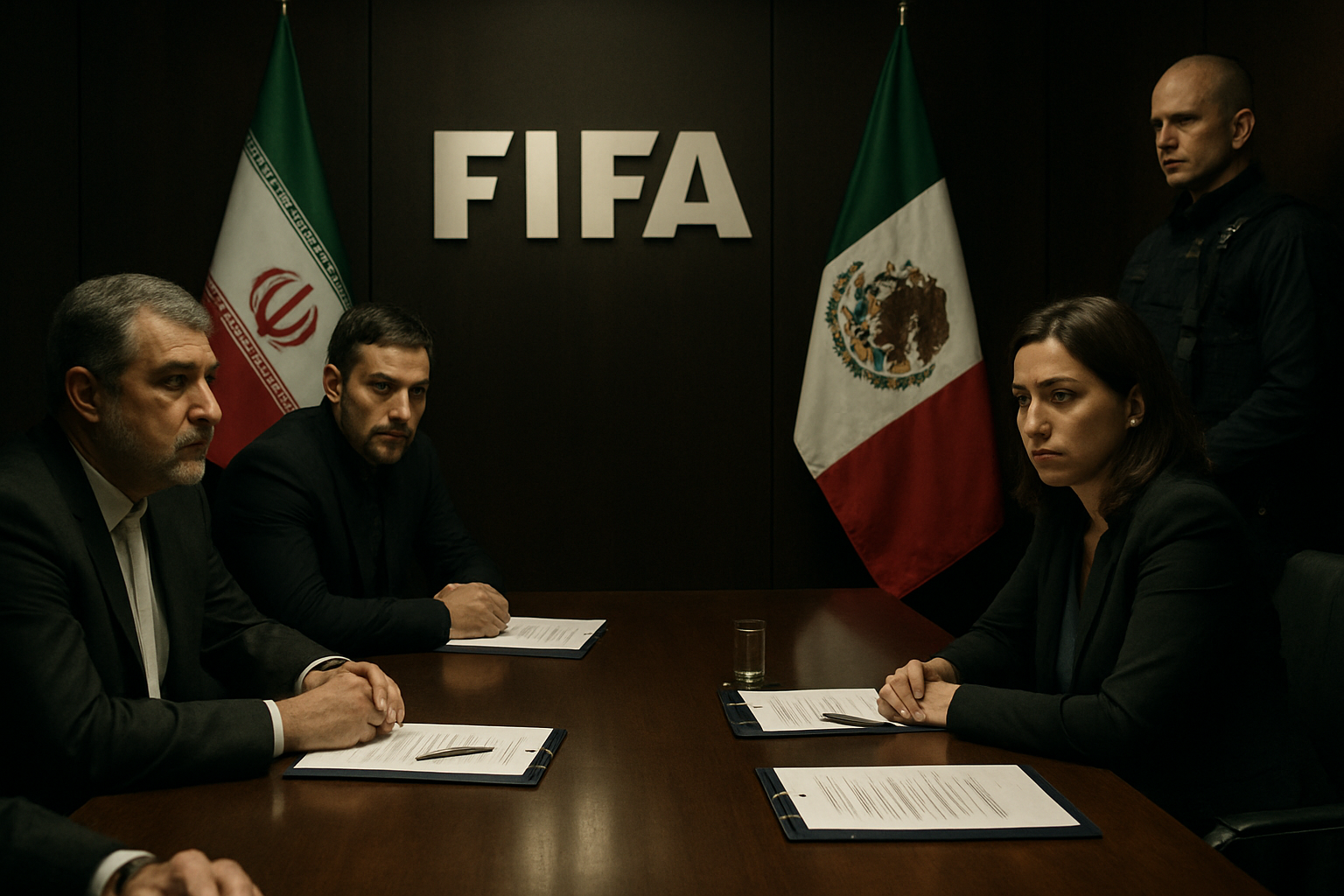
FIFA has reportedly dismissed Iran's unprecedented request to relocate their three 2026 World Cup group stage matches from United States venues to Mexico, according to multiple international reports, marking the first time in World Cup history that a qualified nation has sought venue changes due to geopolitical tensions with a host country.
Iranian Football Federation President Mehdi Tadj confirmed on Tuesday that his organization was "negotiating" with FIFA to move Iran's Group G matches from scheduled US venues to Mexican territory, citing concerns over player safety amid ongoing tensions between Iran and the United States. However, FIFA has seemingly dismissed the proposal, according to reports from The Guardian and other international outlets.
Unprecedented Request in World Cup History
Iran's request represents an extraordinary situation for FIFA, which has historically maintained that qualified teams must play in their assigned venues regardless of political circumstances. The Iranian national team is scheduled to face New Zealand on June 15 at Inglewood, California, Belgium on June 21 at the same venue, and Egypt on June 26 in Seattle - all matches that would now remain in US territory.
The request comes amid the most complex geopolitical crisis in decades, following the death of Iranian Supreme Leader Ali Khamenei on March 1, 2026, during Operation Epic Fury, and subsequent military escalation between Iran and the United States. This has created an unprecedented situation where a qualified World Cup team seeks to avoid playing in a host nation due to security concerns.
"The Iranian FA's president said his organisation was negotiating with FIFA on relocating his country's matches to ensure player safety,"
— Irish Breaking News Report
Mexico's Supportive Position
Mexican President Claudia Sheinbaum publicly stated that Mexico would have "no inconvenience" hosting Iran's matches if FIFA approved the venue change. This position demonstrates Mexico's willingness to serve as an alternative host despite its own recent security challenges, including the deployment of 100,000 security personnel for World Cup operations following the death of cartel leader "El Mencho" in February 2026.
Iran specifically requested that all three matches be moved to Mexican venues, including Estadio Azteca in Mexico City, BBVA Stadium in Monterrey, or Estadio Akron in Guadalajara. Mexico emerged as the logical diplomatic alternative, having maintained neutral relations in the US-Iran conflict while successfully managing its own security crisis through the largest security operation in the country's history.
FIFA's Institutional Challenge
FIFA faces an unprecedented institutional challenge in balancing its commitment to political neutrality with legitimate security concerns. The organization has historically maintained that football transcends political boundaries, but the current situation tests this principle in ways never before encountered.
The world football governing body requested detailed security reports from all three host nations (US, Canada, and Mexico) following the Iranian request. However, FIFA appears to maintain confidence in US security capabilities while acknowledging the complexity of the situation, according to sources familiar with the organization's position.
Tournament Logistics and Commercial Impact
The 2026 World Cup is already the most complex in history, featuring 48 teams across 104 matches in three countries for the first time. Any venue changes would significantly impact Group G opponents Belgium, New Zealand, and Egypt, along with broadcasters, ticketholders, and overall tournament logistics.
Moving Iran's matches from premium US markets like Los Angeles and Seattle to Mexican venues could affect FIFA's revenue projections, while also disrupting the carefully planned logistics of the expanded tournament format. The Los Angeles area's "Tehrangeles" community - over 200,000 Iranian-Americans - had anticipated supporting their national team in the host country.
EU Commissioner Raises Safety Concerns
Adding to the security discourse, EU Commissioner Glenn Micallef voiced concerns regarding safety and security in both the US and Mexico amid the ongoing global tensions. His comments in a Politico interview highlighted European officials' awareness of the deteriorating security environment affecting the World Cup preparations.
These concerns reflect broader international apprehensions about hosting major sporting events during periods of intense geopolitical instability, when the intersection of sports and politics becomes unavoidable.
Historical Context and Broader Implications
Iran's situation occurs within the context of the most dangerous international crisis since the Cold War, with over 18,000 flights cancelled worldwide, Dubai International Airport shut down, and oil prices surging past $80 per barrel due to the closure of the Strait of Hormuz affecting 40% of global oil transit.
The Iranian women's national team separately sought asylum in Australia after being labeled "wartime traitors" by Iranian state television, highlighting the broader pressures facing Iranian athletes during this unprecedented period of international tension.
Template-Setting Precedent
FIFA's decision on Iran's request will establish critical precedents for how international sporting events navigate geopolitical tensions in the 21st century. The resolution affects not only the 2026 World Cup but potentially influences future international sports competitions facing similar political challenges.
The situation tests FIFA's foundational principle that football transcends political boundaries while confronting the reality that security concerns and geopolitical conflicts increasingly impact international sporting events in an interconnected but volatile world.
Tournament Preparation Continues
Despite the ongoing controversy, World Cup preparations continue across all three host nations. The tournament, beginning June 11, 2026, at Estadio Azteca in Mexico City and concluding July 19 at New York New Jersey Stadium, represents FIFA's most ambitious project with nearly 2 million tickets already sold in the first two phases.
The outcome of Iran's venue request - whether ultimately successful or dismissed - will be determined in the coming weeks as the 100-day countdown to the tournament continues. The decision will influence not only the immediate logistics of the 2026 World Cup but establish lasting precedents for international sports governance in an era of increasing geopolitical complexity.