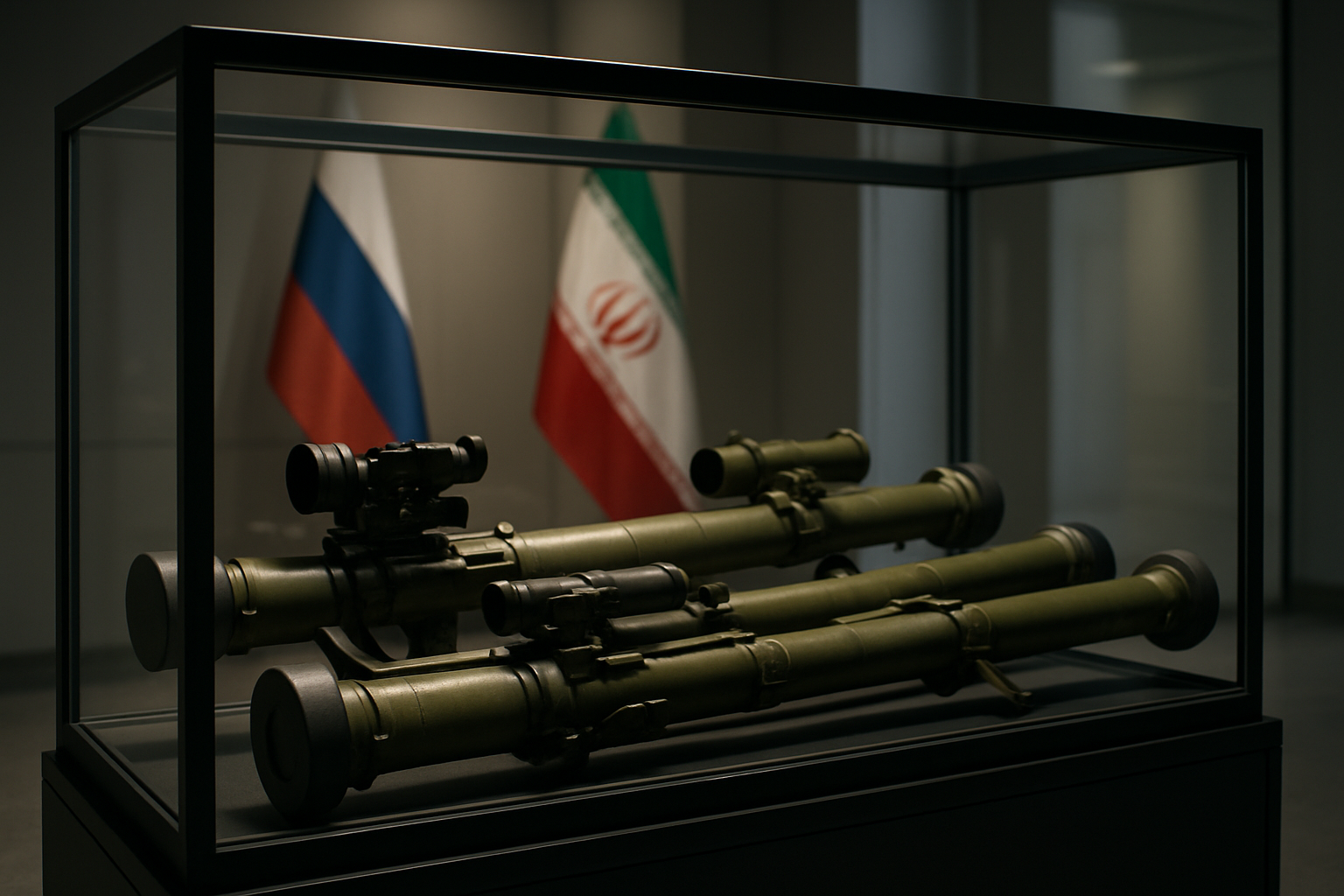
Iran has signed a confidential €500 million ($589 million) arms agreement with Russia to acquire thousands of advanced shoulder-fired air defense missiles, according to leaked Russian documents obtained by the Financial Times, marking a significant expansion of military cooperation between the two sanctioned nations.
The agreement, signed in Moscow in December 2025, commits Russia to deliver 500 man-portable "Verba" launch units and 2,500 "9M336" missiles over three years through 2029, according to multiple sources familiar with the deal. The sophisticated weapon systems are designed to replenish Iran's air defense capabilities, which were severely damaged during military confrontations with Israel in 2025.
Secret Deal Details Emerge
The contract was negotiated between Russian state arms exporter Rosoboronexport and the Moscow representative of Iran's Ministry of Defense and Armed Forces Logistics (MODAFL), sources revealed. Tehran formally requested the systems in July 2025, with deliveries scheduled in three tranches running from 2027 through 2029.
The Verba system represents some of Russia's most advanced portable air defense technology. These man-portable air-defense systems (MANPADS) are specifically designed to counter aircraft, helicopters, and unmanned aerial vehicles at close range, providing critical defensive capabilities for ground forces and strategic installations.
"This agreement represents a significant escalation in Iran-Russia military cooperation at a time when both nations face unprecedented international pressure and sanctions."
— Defense analyst familiar with the intelligence
Iran's urgent need for air defense replenishment stems from extensive damage sustained during 2025 military operations with Israel. U.S. forces struck three Iranian air defense installations in June 2025, while Israeli operations further degraded Iran's defensive capabilities throughout the year.
Strategic Implications for Regional Security
The arms deal comes at a critical moment in Middle East geopolitics, coinciding with ongoing U.S.-Iran nuclear negotiations in Geneva. While Iranian Foreign Minister Abbas Araghchi announced "broad agreement on guiding principles" in recent diplomatic talks, fundamental disagreements persist over Iran's ballistic missile programs and regional proxy activities.
Iran maintains these weapons systems as "red lines" excluded from nuclear-only negotiations, while the United States under Secretary Marco Rubio demands comprehensive agreements addressing missiles, armed groups, and human rights concerns. The new Russian arms agreement effectively strengthens Iran's position in refusing to negotiate away its defensive capabilities.
The timing is particularly sensitive given President Trump's deployment of two aircraft carrier strike groups to the Persian Gulf - the USS Gerald R. Ford and USS Abraham Lincoln - representing the largest U.S. naval presence in the region in years. This unprecedented military buildup occurs as Trump issued explicit warnings that Iran faces "consequences" if no meaningful nuclear deal is reached.
Russia's Strategic Calculations
For Russia, the arms deal serves multiple strategic objectives. Moscow gains crucial foreign currency revenue of €500 million while strengthening ties with a key regional partner facing similar Western sanctions. The agreement also demonstrates Russia's continued ability to project military influence globally despite ongoing conflict in Ukraine.
Russian defense exports have become increasingly important as traditional European customers ceased purchases following the 2022 invasion of Ukraine. Iran, along with North Korea and China, now represents one of Russia's most reliable defense partners, with cooperation extending beyond simple arms sales to technology transfer and joint military operations.
The Verba missiles will significantly enhance Iran's ability to defend against airborne threats, potentially complicating any future military operations by Israel or the United States. The systems' mobility and advanced targeting capabilities make them particularly effective against precision-guided munitions and drone swarms.
International Response and Sanctions Concerns
The revealed agreement likely violates multiple international sanctions regimes targeting both Iran and Russia's defense sectors. European Union sanctions specifically prohibit the sale of military equipment to Iran, while U.S. sanctions target Russian defense exports.
However, enforcement remains challenging given both nations' existing isolation from Western financial systems and their development of alternative payment mechanisms. Iran and Russia have increasingly conducted trade in national currencies and through barter arrangements to circumvent sanctions.
"This deal demonstrates how sanctioned nations are creating parallel defense markets beyond Western control, potentially reshaping global arms trade patterns."
— International sanctions expert
The regional implications extend beyond Iran's borders. Saudi Arabia, the UAE, Qatar, and Egypt have all expressed support for diplomatic resolution of the Iranian nuclear crisis, viewing the arms buildup with concern. These nations fear that enhanced Iranian defensive capabilities could embolden more aggressive regional policies.
Nuclear Negotiations Context
The arms deal revelation comes as nuclear talks with Iran have achieved their most significant progress since the 2018 collapse of the Joint Comprehensive Plan of Action (JCPOA). Recent Geneva negotiations established frameworks for potential agreement, including Iran's openness to enhanced verification measures.
However, Iran continues enriching uranium to 60% purity - approaching the 90% threshold needed for weapons-grade material. Intelligence assessments suggest Iran possesses sufficient enriched uranium for multiple nuclear weapons if weaponized, adding urgency to diplomatic efforts.
The expiration of the New START treaty between the United States and Russia on February 5, 2026, has created an unprecedented nuclear governance crisis. For the first time in over 50 years, the world's two largest nuclear powers operate without bilateral arms control constraints, while Iran's nuclear program advances and regional tensions escalate.
Future Implications
The Iran-Russia arms deal represents more than a simple weapons transaction - it signals a fundamental realignment of global defense relationships. As traditional Western allies impose increasing sanctions, target nations are developing alternative security architectures.
For Iran, the Verba missiles provide crucial defensive capabilities while negotiations continue. The weapons' 2027-2029 delivery timeline suggests Iranian planning for long-term regional confrontation regardless of diplomatic outcomes. The portable nature of these systems makes them particularly valuable for protecting dispersed nuclear facilities and military installations.
Military analysts note that modern air defense systems require extensive training and logistical support. The three-year delivery schedule allows for gradual personnel training and integration with existing Iranian defense networks, maximizing operational effectiveness.
The deal also raises questions about potential technology transfer beyond the immediate weapons sale. Russian-Iranian military cooperation has historically included technical assistance, maintenance support, and sometimes domestic production licensing, potentially giving Iran long-term defensive manufacturing capabilities.
As regional tensions remain high and nuclear negotiations face uncertain prospects, the €500 million arms agreement between Iran and Russia represents a significant development that will shape Middle East security dynamics for years to come. The success or failure of ongoing diplomatic initiatives will largely determine whether these defensive systems contribute to regional stability or further military escalation.