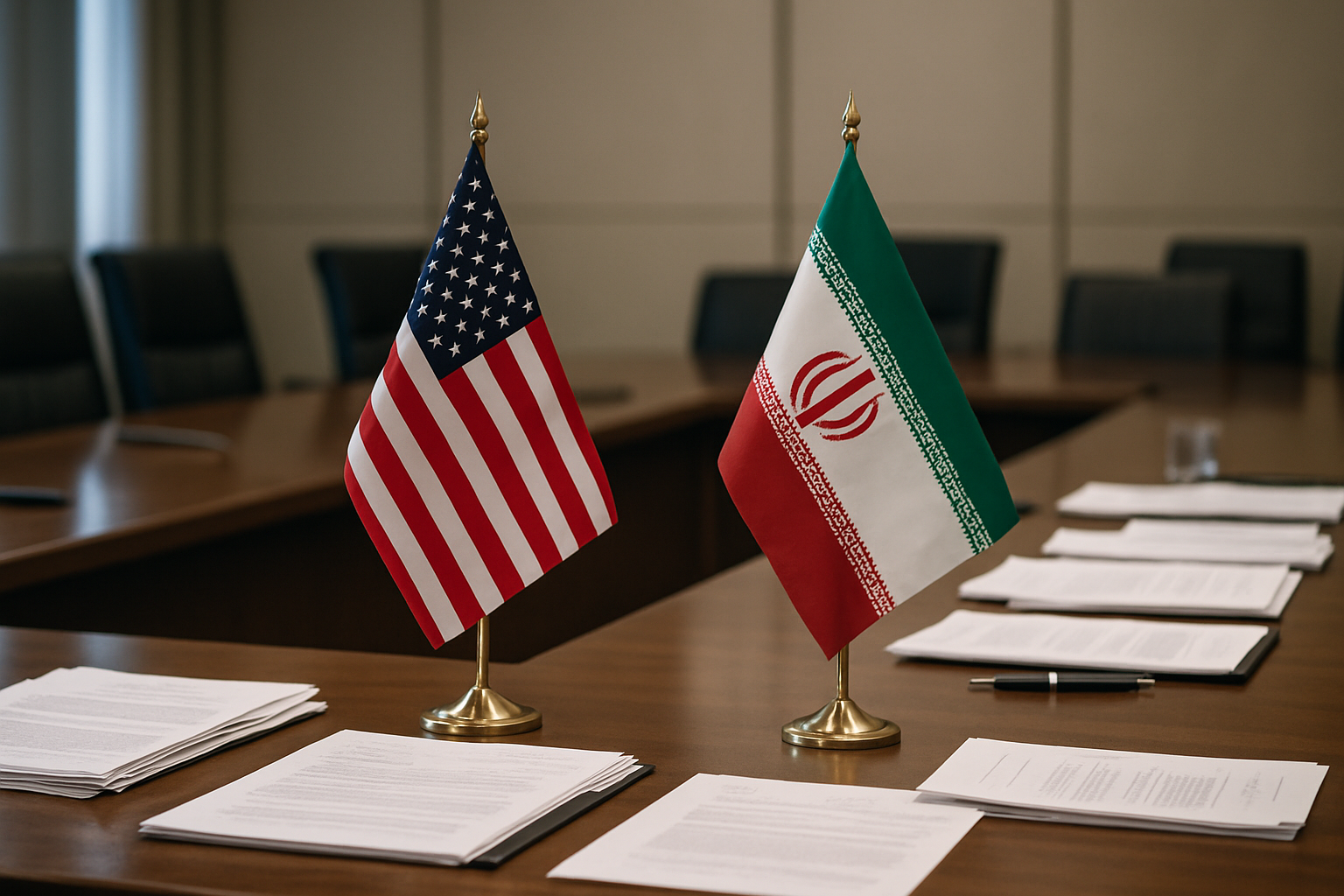
Iran has signaled potential willingness to make nuclear compromises in ongoing negotiations with the United States, even as American negotiators warn President Trump that reaching a comprehensive agreement remains "extremely difficult, possibly impossible" amid continued military escalation and fundamental disagreements over scope.
Iranian Deputy Foreign Minister Majid Takht-Ravanchi told the BBC that Iran is "ready to consider compromises to reach a nuclear deal with the United States if Washington is willing to discuss lifting sanctions." The statement comes as the second round of nuclear talks is confirmed for Geneva next week, with Switzerland and Oman facilitating the most significant US-Iran diplomatic engagement since the 2018 collapse of the Joint Comprehensive Plan of Action (JCPOA).
Dual-Track Strategy: Diplomacy Under Military Pressure
The diplomatic overture unfolds against a backdrop of unprecedented military escalation. The Trump administration has deployed two aircraft carriers - the USS Gerald R. Ford and USS Abraham Lincoln - creating the largest US naval presence in the Middle East in recent years. The dual-carrier strike force, positioned approximately 800 kilometers from Iran's coast, represents both a deterrent and strike-ready capability if negotiations fail.
President Trump has made his most explicit regime change comments yet, declaring that "change in power in Iran would be the best thing that could happen" while simultaneously insisting that nuclear negotiations "must continue." This dual-track approach combines maximum pressure with selective engagement, reflecting the administration's calculation that economic coercion and military deterrence can enhance diplomatic leverage.
"[Initial talks went] more or less in a positive direction, but it is too early to judge. The ball is in America's court."
— Majid Takht-Ravanchi, Iranian Deputy Foreign Minister
Fundamental Scope Disagreements Persist
Despite the diplomatic opening, fundamental disagreements remain over the scope of any potential agreement. Iran maintains that ballistic missiles and regional proxy activities are "red lines" excluded from nuclear-only talks, while US Secretary of State Marco Rubio insists any comprehensive agreement must address Iran's missile program, support for armed groups, and human rights record.
Iranian Foreign Minister Abbas Araghchi has declared that Iran will "never abandon uranium enrichment even if war is imposed," maintaining that uranium enrichment is an "inalienable right." Iran currently enriches uranium at 60% purity - significantly above the 3.67% limit established under the JCPOA and approaching the 90% threshold required for weapons-grade material.
US negotiators Steve Witkoff and Jared Kushner reportedly told Trump that achieving a satisfactory agreement with Tehran addressing all American concerns may prove insurmountable given Iran's hardline positions on key issues beyond the nuclear program.
Regional Coalition Supports Diplomatic Process
An unprecedented regional coalition - including Saudi Arabia, the UAE, Qatar, and Egypt - is backing the diplomatic process, representing remarkable Middle Eastern consensus for preventing military confrontation. This support reflects regional investment in stability, particularly given that the Persian Gulf handles 40% of global oil transit.
Oman's neutral mediation, leveraging its historical role in the 2015 JCPOA negotiations, has proven essential for maintaining structured dialogue despite significant trust deficits. The venue evolution from Muscat to Geneva signals growing diplomatic seriousness while maintaining neutral territory advantages.
Nuclear Capabilities and Potential Concessions
Intelligence reports suggest Iran possesses sufficient enriched uranium for multiple nuclear weapons if weaponized, creating urgency for any diplomatic resolution. However, Iranian officials have reportedly indicated potential willingness to consider a three-year uranium enrichment halt and transfer of existing stockpiles to Russia as part of broader sanctions relief.
Any agreement would require unprecedented verification mechanisms given Iran's advanced centrifuge technology and expanded nuclear infrastructure developed since 2018 - technical complexity far exceeding the original JCPOA framework.
Domestic Pressures Shape Calculations
Iran faces severe domestic pressure with over 42,000 protest arrests since 2022 and devastating economic sanctions creating regime survival imperatives. However, the government appears to prioritize nuclear capabilities over economic relief, calculating that nuclear leverage provides better long-term security than sanctions removal without corresponding strategic gains.
The Trump administration faces its own pressures, balancing Republican hawks who view engagement as appeasement against foreign policy victory needs. Recent congressional pushback on trade policies suggests potential legislative challenges to any Iran agreement perceived as insufficiently comprehensive.
Military Incidents Complicate Diplomacy
Military tensions continue alongside diplomatic engagement. A US F-35C fighter jet from the USS Abraham Lincoln recently shot down an Iranian Shahed-139 drone that aggressively approached the carrier, while Islamic Revolutionary Guard Corps vessels have harassed US-flagged tankers in the Strait of Hormuz. Oil prices have risen over $1 per barrel on these incidents, demonstrating market sensitivity to escalation risks.
The military incidents occur as both sides maintain readiness for broader confrontation while pursuing negotiated solutions - a delicate balance that could easily tip toward conflict if diplomatic progress stalls.
International Context Adds Urgency
The negotiations unfold amid a broader nuclear governance crisis. The New START treaty between the US and Russia expired February 5, marking the first time in over 50 years without nuclear arms control constraints between the superpowers. UN Secretary-General António Guterres has warned that nuclear weapon use risks are "higher than at any time in decades."
China's nuclear expansion and the breakdown of multilateral arms control mechanisms create additional pressure for successful diplomatic resolution of the Iran nuclear crisis as a template for 21st-century conflict prevention.
Israeli Concerns Over Incomplete Agreements
Israeli Prime Minister Benjamin Netanyahu, in recent coordination meetings with Trump, has emphasized that "all negotiations must include limiting ballistic missiles, ending support for Iranian axis" activities. Israel views nuclear-only agreements as insufficient for addressing existential security threats from Iran's integrated missile and proxy network, including Hezbollah, Hamas, and the Houthis.
This creates additional complexity for US negotiators, who must balance Israeli security concerns with Iranian red lines while pursuing agreements that can gain Congressional approval.
Stakes and Strategic Implications
The coming weeks represent a critical test of whether innovative diplomatic solutions can bridge decade-old challenges or whether fundamental disagreements will force a return to military options. Success could prevent a regional war that would destabilize global energy markets, provide a diplomatic template for modern nuclear crises, and strengthen international non-proliferation norms.
Failure might accelerate military confrontation, potentially reshaping Middle Eastern geopolitics for decades while encouraging nuclear proliferation elsewhere and undermining diplomatic credibility for resolving territorial and nuclear disputes globally.
The Geneva talks next week will determine whether the framework established through Omani mediation can translate into substantive progress on uranium enrichment limits, sanctions relief mechanisms, and broader security arrangements - or whether this diplomatic opportunity will join the long list of failed attempts to resolve one of the world's most dangerous nuclear standoffs.
As Iranian officials signal potential flexibility while maintaining core positions, and American officials combine engagement with unprecedented military pressure, the international community watches for signs that diplomacy can succeed where previous efforts have failed in addressing Iran's nuclear ambitions through negotiated compromise rather than military confrontation.