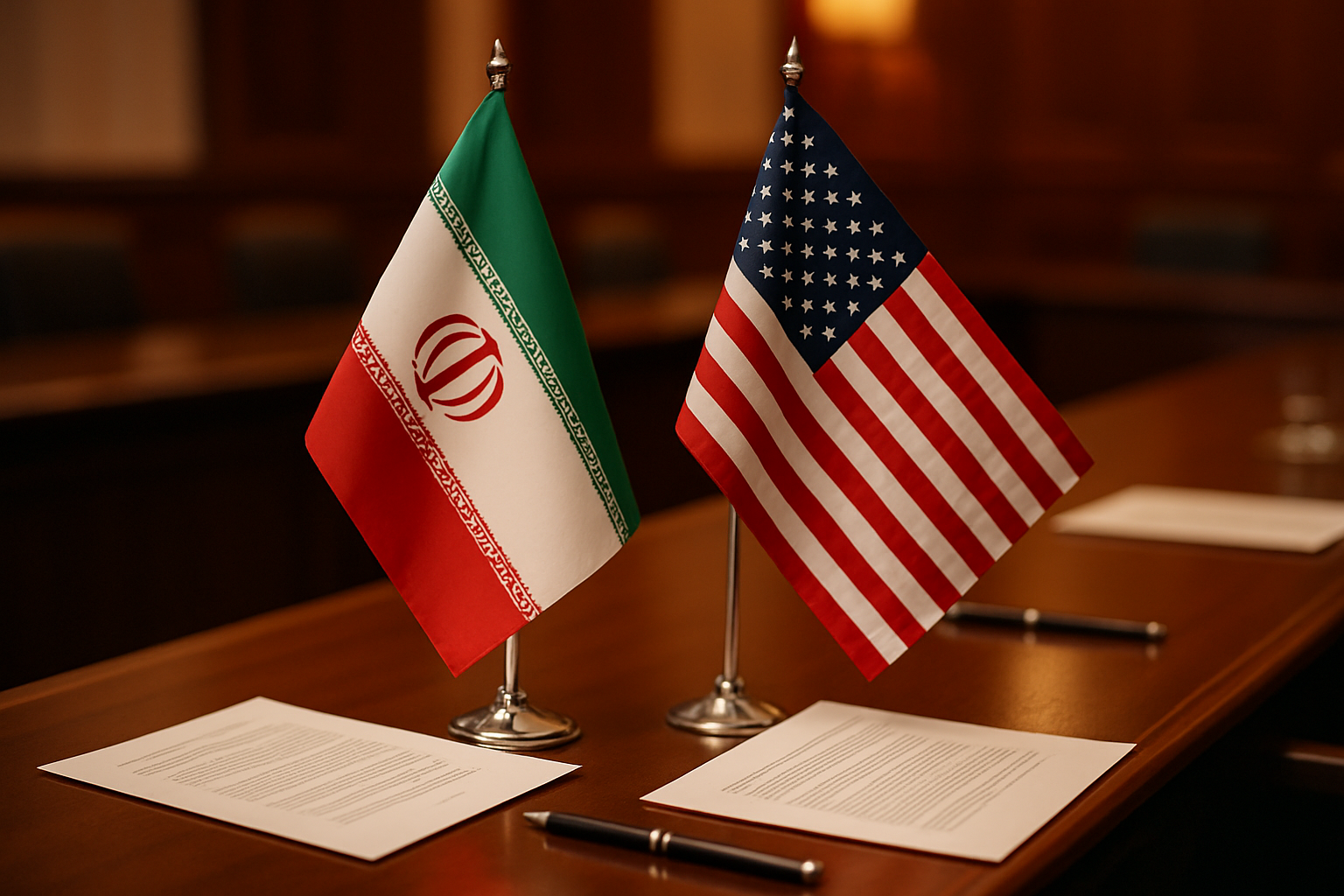
Iranian President Masoud Pezeshkian has signaled Tehran's readiness to pursue "fair and equitable" nuclear negotiations with the United States, marking a significant diplomatic breakthrough amid escalating regional tensions and ongoing domestic unrest.
In a statement posted on X (formerly Twitter) on Tuesday, February 3, 2026, Pezeshkian announced he had instructed Foreign Minister Abbas Araghchi to prepare the groundwork for potential talks, responding to what he described as demands from "friendly regional countries" and a suggestion from President Trump for renewed dialogue.
"Taking into account demands from friendly regional countries to respond to the US President's suggestion for talks, I instructed the foreign minister to prepare the ground for equitable and fair negotiations," Pezeshkian wrote, adding that such talks could proceed "should an atmosphere free of threats and unreasonable expectations arise."
Diplomatic Framework Taking Shape
The announcement represents a major policy shift for the reformist president, who has spent recent weeks warning that domestic turmoil had spiraled beyond his control. According to reports from French media outlet France 24, the negotiations are expected to take place in Turkey, with the apparent backing of Supreme Leader Ayatollah Ali Khamenei.
Multiple sources confirm that preliminary discussions have already begun, with Iranian officials examining several diplomatic processes proposed by regional countries to ease tensions with Washington. Saudi Arabia's official news agency reported that Iran expects "progress on a framework to restart nuclear talks" as both sides appear to be pulling back from military confrontation.
Turkey has emerged as the primary venue for potential talks, with the United Arab Emirates serving as an alternative location. The diplomatic initiative has garnered support from several regional powers, including Egypt and Qatar, suggesting broader Middle Eastern consensus on preventing further escalation.
Context of Regional Tensions
The diplomatic opening occurs against a backdrop of severe military tensions between Iran and the United States. The USS Abraham Lincoln carrier strike group remains deployed in the Arabian Sea, while Iran has conducted naval exercises in the strategically vital Strait of Hormuz featuring live-fire drills.
Supreme Leader Khamenei had previously warned of a "regional war" if the United States attacked Iran, while the Islamic Revolutionary Guard Corps (IRGC) claimed to have "action plans for hostile scenarios." These tensions have been exacerbated by Iran's ongoing crackdown on domestic protests, which has resulted in over 42,000 arrests and significant international condemnation.
The diplomatic moment comes as both sides face mounting pressure from international allies. European Union nations recently designated the IRGC as a terrorist organization, prompting Iran to reciprocate by declaring all EU military forces as terrorist groups. This tit-for-tat escalation has complicated broader international efforts to de-escalate regional tensions.
Historical Precedent and Stakes
Any renewed nuclear negotiations would represent the most significant diplomatic engagement between Iran and the United States since the collapse of the Joint Comprehensive Plan of Action (JCPOA) in 2018. The original nuclear deal, negotiated during the Obama administration, unraveled after President Trump's first administration withdrew and reimposed sanctions under a "maximum pressure" campaign.
According to reports citing Iranian officials, Tehran is considering substantial concessions as part of a potential new agreement. The New York Times reported that two Iranian officials suggested Iran might transfer enriched uranium to Russia and potentially shut down significant portions of its nuclear program in exchange for sanctions relief and security guarantees.
The stakes for both sides are considerable. For Iran, successful negotiations could provide crucial economic relief through sanctions lifting, while potentially helping to stabilize the domestic situation. For the United States, a diplomatic resolution could prevent a military confrontation that many analysts believe could destabilize the entire Middle East region.
Regional Support and International Implications
The involvement of regional powers in facilitating these potential talks represents a significant development in Middle Eastern diplomacy. Countries that have historically been adversaries, including Saudi Arabia and Iran, appear to be working through intermediaries to prevent regional escalation.
Gulf officials have reportedly urged Iran to rebuild relations with the United States through diplomatic channels, while also emphasizing that any nuclear talks should focus exclusively on the nuclear program rather than Iran's missile capabilities or regional proxy activities. This limitation could prove to be a significant sticking point, as Israel and other regional allies have consistently emphasized the importance of addressing Iran's broader destabilizing activities.
Bangladesh's official reporting emphasized Iran's insistence that talks remain narrowly focused on nuclear issues, avoiding broader regional security concerns that have been central to previous diplomatic failures.
Domestic Political Dynamics
The timing of Pezeshkian's announcement is particularly significant given Iran's current domestic crisis. The reformist president has faced mounting pressure from ongoing protests and international isolation, with his administration struggling to manage both economic sanctions and popular unrest.
According to reports from New Zealand media, Pezeshkian's statement marked "a major turn" for a leader who had "broadly warned Iranians for weeks that the turmoil in his country had gone beyond his control." This suggests that diplomatic engagement with the United States may represent a crucial lifeline for his administration's political survival.
The president's careful language about avoiding "threats and unreasonable expectations" appears designed to address domestic hardliner concerns while keeping diplomatic channels open. By framing the initiative as responding to regional pressure rather than internal weakness, Pezeshkian may be attempting to maintain support from conservative elements within Iran's political establishment.
Trump Administration Response
While President Trump has previously expressed hope for diplomatic engagement with Iran, his administration's response to Pezeshkian's overture will be crucial for determining whether talks actually materialize. Trump has maintained a tough stance on Iran while suggesting openness to negotiation, creating both opportunities and risks for diplomatic progress.
The involvement of US Special Envoy Steve Witkoff, who has been active in Middle Eastern diplomacy, suggests that the Trump administration may view Iran negotiations as part of broader regional stabilization efforts. However, domestic political pressures and concerns from allies like Israel could complicate any potential agreement.
Challenges Ahead
Despite the diplomatic opening, significant obstacles remain for any successful negotiation. Iran's nuclear program has advanced considerably since the JCPOA's collapse, with higher levels of uranium enrichment and expanded centrifuge capabilities presenting complex technical challenges for any new agreement.
Regional security concerns also loom large, particularly regarding Iran's support for proxy groups throughout the Middle East and its missile program development. While Iran insists on limiting talks to nuclear issues, the United States and its allies are likely to demand broader concessions on regional activities.
The domestic situations in both countries add additional complexity. Iran's ongoing protest movement and economic crisis create pressure for quick results, while political divisions in the United States could affect the sustainability of any agreement reached.
As both sides navigate these diplomatic waters, the international community watches closely, hoping that dialogue can prevent military confrontation and contribute to broader regional stability. The success or failure of these potential talks could have far-reaching implications for Middle Eastern geopolitics and global nuclear non-proliferation efforts.