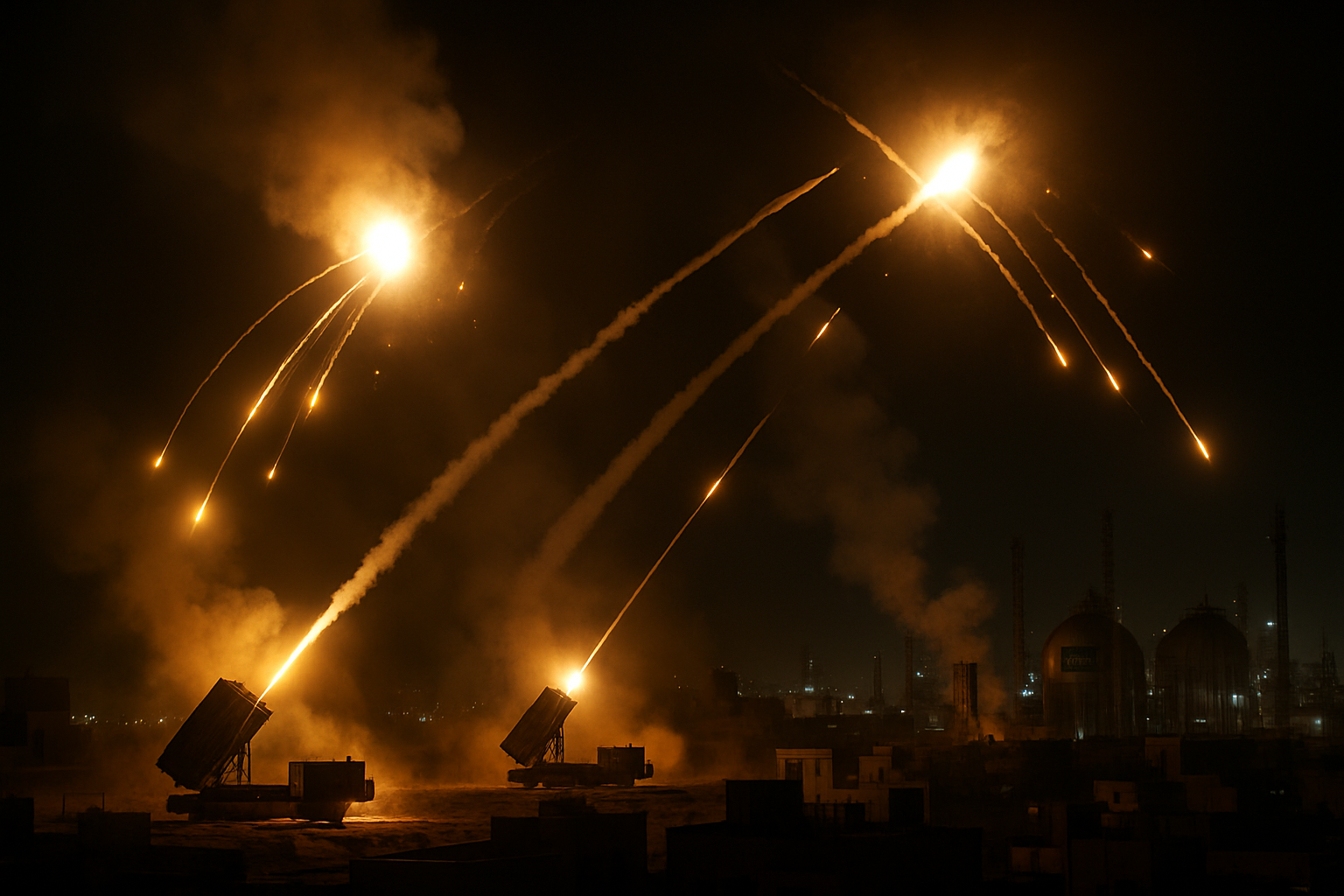
Iran launched a coordinated series of ballistic missile and drone attacks against Israeli and regional targets on April 6-7, 2026, while Saudi Arabia successfully intercepted 11 ballistic missiles targeting the Kingdom's Eastern Province, marking a dangerous escalation in the ongoing Middle East crisis that began in February.
The latest round of Iranian strikes represents a significant escalation in what has become the most dangerous international crisis since the Cold War, with systematic targeting of energy infrastructure and military installations across multiple countries simultaneously.
Saudi Defense Successfully Repels Iranian Attack
Saudi air defense systems demonstrated remarkable effectiveness as they intercepted and destroyed 11 ballistic missiles launched toward the Eastern Province in the early hours of April 7, according to Ministry of Defense spokesman Major General Turki Al-Maliki. The interceptions occurred in two waves, with four missiles initially destroyed before an additional seven ballistic missiles were eliminated in a subsequent barrage targeting the same region.
Debris from the intercepted missiles fell near energy facilities in the Eastern Province, prompting immediate damage assessments by Saudi authorities. The Saudi Civil Defense issued emergency alerts through the National Platform for Emergency Warning system, initially cautioning residents of potential danger before announcing the threat had passed.
"Authorities urged the public to follow official instructions, avoid gatherings at incident sites, refrain from filming, and stay clear of hazardous areas."
— Saudi Ministry of Defense Statement
The successful interception of the Iranian missiles represents a significant defensive achievement for the Kingdom, which has invested heavily in advanced air defense systems amid escalating regional tensions.
Iranian Strikes Target Multiple Regional Assets
According to Iranian Revolutionary Guard (IRGC) sources cited by Tasnim News Agency, the strikes targeted a broad range of military and infrastructure assets across the region. The IRGC claimed successful hits on aircraft at Ali Al Salem Airbase in Kuwait, military personnel in Petah Tikva, Israel, and industrial facilities in Beersheba.
The strikes represent part of Iran's ongoing "Operation True Promise 4," which the IRGC has conducted under a declared policy of "no red lines remain" since the death of Supreme Leader Ali Khamenei in March 2026.
In a separate development, an oil storage facility in Iran's Isfahan province came under attack, though damage assessments remain incomplete according to Al Hadath television reports. The targeting of energy infrastructure has become a central feature of the escalating conflict.
Regional Energy Infrastructure Under Threat
The latest attacks underscore the vulnerability of critical energy infrastructure across the Middle East. Israel has previously targeted Iran's South Pars gas field complex twice since the war began, including strikes on two petrochemical plants that represent a key component of Iran's energy sector and global supply chains.
The March 18 attack on the South Pars facility triggered widespread retaliatory strikes by Iran against energy infrastructure throughout the region, demonstrating how targeting energy assets has become a primary warfare strategy for both sides.

Global Aviation and Energy Markets Remain Disrupted
The ongoing conflict continues to severely impact global aviation networks, with over 18,000 flights cancelled worldwide since the crisis began. Dubai International Airport, the world's busiest with 86 million annual passengers, remains closed due to missile damage sustained in earlier attacks.
Oil prices have surged past $100 per barrel as Iran's mining of the Strait of Hormuz has effectively closed the critical waterway that handles 40% of global seaborne oil transit. The International Energy Agency has responded with the largest strategic petroleum reserve release in its 50-year history, releasing 400 million barrels from 32 countries.
Regional Coalition Under Strain
The systematic Iranian attacks have severely strained the unprecedented coalition of Arab states—including Saudi Arabia, the UAE, Qatar, and Egypt—that had previously supported diplomatic solutions to the nuclear crisis. Egyptian President Abdel Fattah al-Sisi condemned the attacks on "sisterly Arab countries," warning of "comprehensive chaos" spreading across the region.
Kuwait has been forced to relocate airline operations to Saudi Arabia due to repeated drone attacks, while the UAE continues to assess damage from earlier strikes that killed one civilian in Abu Dhabi and caused the shutdown of Dubai International Airport.
Escalating Humanitarian Crisis
The Iran Red Crescent has reported over 787 civilian casualties from US-Israeli strikes, including the devastating attack on Minab elementary school that killed between 53-85 students and staff. International human rights organizations continue to call for investigations into potential Geneva Conventions violations.
The conflict has triggered the largest international evacuation effort since the Arab Spring of 2011, with Australia attempting to evacuate 115,000 nationals and Germany coordinating the departure of 30,000 citizens from the region.
Nuclear Diplomacy Remains Collapsed
The current military escalation emerged from the complete breakdown of nuclear negotiations in February 2026, despite achieving what negotiators described as "broad agreement on guiding principles"—the most significant diplomatic progress since the JCPOA collapse in 2018.
The fundamental disagreement centered on scope: Iran excluded ballistic missiles and regional proxy support as "red lines" while demanding nuclear-only talks, while the United States insisted on comprehensive agreements covering missiles, armed groups, and human rights issues.
"Iran continues 60% uranium enrichment with over 400kg of weapons-grade material, sufficient for multiple nuclear weapons if weaponized."
— Nuclear Proliferation Assessment
Historical Significance and Global Implications
UN Secretary-General António Guterres has described the crisis as "the greatest test of multilateral cooperation and crisis management in the modern era." The rapid transition from diplomatic breakthrough to military confrontation demonstrates the fragility of crisis management mechanisms in the multipolar era.
The conflict occurs against the backdrop of broader nuclear governance challenges, including the February 5 expiration of the New START treaty—the first time in over 50 years that no US-Russia nuclear constraints are in place—and China's ongoing nuclear expansion.
Template-Setting Implications
The stakes extend far beyond the Middle East, as the international community grapples with regional war prevention, global energy security, nuclear governance credibility, and the enforcement of post-World War II international law principles. Success in containing the escalation could provide a framework for nuclear crisis resolution, while failure may accelerate military solutions and encourage proliferation globally.
The crisis has fundamental implications for 21st-century conflict resolution approaches, determining whether diplomatic or military solutions will serve as the precedent for future territorial and nuclear disputes worldwide.
Looking Ahead
As Iran continues its systematic targeting campaign and regional states strengthen their defensive postures, the international community faces critical decisions about containing what has become the most dangerous crisis since the end of the Cold War. The effectiveness of Saudi Arabia's missile defense demonstrates that regional states are adapting to the new threat environment, but the underlying drivers of conflict remain unresolved.
With energy infrastructure remaining under threat and nuclear diplomacy collapsed, the coming days will be crucial in determining whether this crisis can be contained or will spiral into a broader regional war with global implications extending decades beyond the current events.