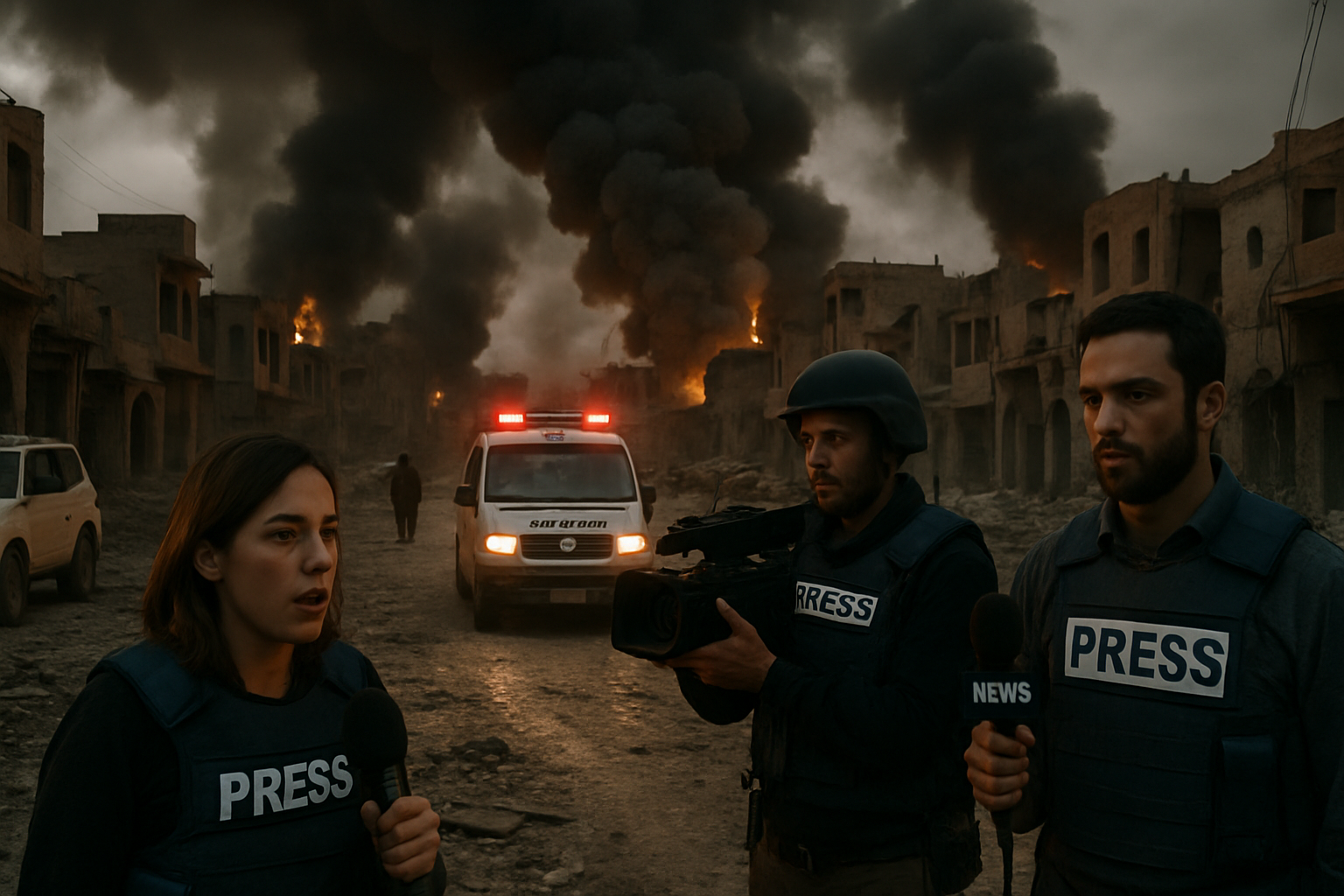
Iran launched devastating cluster warhead missile strikes against Tel Aviv overnight Tuesday, killing two civilians and wounding dozens more in what Tehran declared was direct retaliation for Israel's assassination of Iran's top security chief Ali Larijani.
The Islamic Revolutionary Guard Corps (IRGC) confirmed the attacks used advanced Khorramshahr-4 and Qadr missiles equipped with cluster warheads that disperse into multiple smaller explosives mid-air, making them extremely difficult to intercept. The strikes marked the most significant Iranian retaliation against Israeli population centers since the outbreak of the current Middle East war on March 1, 2026.
Iranian state television reported that the missiles successfully targeted neighborhoods near densely populated civilian and military areas of Tel Aviv, with the death toll bringing Israel's total casualties from the ongoing conflict to at least 14. The attacks specifically hit the Ramat Gan area south of Tel Aviv, where residential buildings sustained heavy damage.
Larijani Assassination Triggers Massive Response
The Iranian strikes came in direct response to Israel's confirmed assassination of Ali Larijani, Iran's 67-year-old Secretary of the Supreme National Security Council, who was killed alongside his son Morteza and security aide Ali Reza Bayat in coordinated airstrikes on Tehran's Pardis area. Iran's Supreme National Security Council officially confirmed Larijani's death, stating he was eliminated at his daughter's house.
Israeli Foreign Minister Gideon Saar claimed responsibility for the operation, boasting there had been a "$10 million bounty on Ali Larijani - we did it for free." The assassination removes one of Iran's most critical regime pillars during the country's most vulnerable period since the 1979 revolution.
Larijani was widely regarded as the "de facto leader" following the succession crisis that emerged after Supreme Leader Ali Khamenei's death on March 1. As the key architect of Iran's security policy, he was believed to be coordinating Tehran's war effort against the US-Israeli coalition forces.
US Strikes Iranian Missile Facilities
Simultaneously with Iran's Tel Aviv attacks, US forces launched precision strikes against Iranian missile installations near the strategically vital Strait of Hormuz. The US Central Command confirmed successful deployment of bunker-buster bombs designed to destroy fortified underground targets along Iran's coastal missile positions.
These American strikes targeted Iranian anti-ship missile capabilities that threaten the Strait of Hormuz, through which approximately 40% of global oil transits daily. Iran has effectively closed the waterway using an estimated 2,000-6,000 naval mines, creating a global energy crisis with oil prices surging past $100 per barrel.
The coordinated US-Israeli operations represent the continuation of "Operation Epic Fury," which has now cost $11.3 billion in its first week and resulted in over 18,000 flight cancellations worldwide as eight Middle Eastern countries maintain closed airspace.
Nuclear Facility Strike Raises Stakes
In a particularly alarming development, Iran's Bushehr nuclear power plant was struck by a projectile Tuesday evening, though Iranian authorities reported no damage to critical infrastructure or casualties. The International Atomic Energy Agency (IAEA) confirmed the incident and reiterated calls for "maximum restraint" to avoid nuclear accidents during the ongoing conflict.
IAEA Director General Rafael Grossi emphasized the unprecedented risks posed by active warfare near nuclear facilities, stating that any damage to Iran's nuclear infrastructure could have "irreversible consequences for the entire region." The Bushehr plant, built with Russian assistance, represents Iran's primary civilian nuclear facility.
Regional Coalition Under Severe Strain
The escalating violence has severely tested the previously unprecedented coalition of Saudi Arabia, UAE, Qatar, and Egypt that had supported diplomatic solutions. Egyptian President Abdel Fattah el-Sisi condemned Iranian attacks on "sisterly Arab countries," warning of "comprehensive chaos" spreading across the region.
Kuwait has relocated Jazeera Airways operations to Saudi Arabia due to repeated Iranian drone attacks on its international airport, while the UAE mourns its first civilian casualty from missile debris in Abu Dhabi. Qatar continues intercepting Iranian missiles with Patriot defense systems, with eight civilians injured from fragments.
European Territory Attacked
In an unprecedented escalation, Iranian drones struck RAF Akrotiri base in Cyprus - marking the first attack on European territory since World War II. This development prompted an immediate naval coalition response, with HMS Dragon, Spanish frigates, and vessels from Italy, France, Netherlands, and Greece deploying to protect European interests.
The European Union activated its ESTIA evacuation plan for Cyprus for the first time in the bloc's history, demonstrating how the Middle Eastern conflict is expanding beyond traditional regional boundaries.
Humanitarian Crisis Deepens
The Iran Red Crescent reports over 787 civilian casualties from US-Israeli strikes, with international condemnation growing over attacks on civilian infrastructure including the devastating Minab elementary school strike that killed 53-85 students and staff.
Lebanon has been drawn deeper into the conflict as Hezbollah abandoned its November 2024 ceasefire with Israel, resulting in over 826 Lebanese deaths and displacing 832,000 people. The systematic targeting of medical personnel - with 26 paramedics killed and 51 wounded - has raised serious concerns about Geneva Conventions violations.
International evacuations continue on a scale not seen since the 2011 Arab Spring, with Australia working to extract 115,000 trapped nationals and Germany attempting to repatriate 30,000 stranded tourists from the region.
Nuclear Diplomacy Completely Collapsed
The current military escalation emerged from the complete breakdown of nuclear negotiations in Geneva, despite achieving what Iranian Foreign Minister Abbas Araghchi called "broad agreement on guiding principles" - representing the most progress since the 2018 JCPOA collapse.
The fundamental disagreement proved insurmountable: Iran insisted on excluding ballistic missiles and regional proxies as "red lines" in nuclear-only talks, while the US demanded comprehensive agreements including missiles, armed groups, and human rights issues.
Iran continues enriching uranium to 60% purity with over 400 kilograms of weapons-grade material, sufficient for multiple nuclear weapons if weaponized. The crisis unfolds amid broader nuclear governance breakdown, as the New START treaty expired in February 2026 - the first time in over 50 years without US-Russia nuclear constraints.
Congressional Opposition Intensifies
US domestic pressure on the Trump administration continues mounting, with bipartisan lawmakers demanding answers about strategy, costs, and potential ground troop deployment. Senator Richard Blumenthal stated he is "more concerned than ever" about the possibility of American boots on the ground.
The conflict maintains "almost unprecedented" unpopularity for early-stage military operations, with only 25% of Americans supporting the strikes according to recent polling. Financial markets have emerged as the "ultimate constraint" on further escalation, with Pakistan's stock exchange suffering its largest single-day decline in history at -8.97%.
Pentagon officials have confirmed operations extending through September, far beyond the administration's initial 4-6 week timeline, raising questions about the true scope and duration of American military commitment.
Iranian Succession Crisis
The killing of Ali Larijani compounds Iran's constitutional crisis following Khamenei's death. Mojtaba Khamenei, the former Supreme Leader's son, has been appointed as successor in the Islamic Republic's first hereditary succession in its 47-year history.
CIA assessments suggest the Revolutionary Guards now exercise unprecedented control over Iranian governance, representing a historic shift from clerical to military leadership. This transformation occurs under active wartime conditions, fundamentally altering Iran's power structure during its most vulnerable period since 1979.
Global Energy Crisis
The International Energy Agency released a record 400 million barrels from strategic reserves - the largest intervention in the agency's 50-year history - as Iran's Strait of Hormuz closure continues disrupting global energy markets.
Airlines worldwide are implementing emergency fuel surcharges as jet fuel costs jumped from $85-90 to $150-200 per barrel. Natural gas prices have increased 24% in Europe and 78% in the United States, while Qatar has halted LNG production, threatening European energy supplies.
The Persian Gulf's role as a critical Asia-Europe trade hub has been completely compromised, with shipping giants Maersk and MSC suspending operations and over 150 tankers stranded with billions in cargo.
Template-Setting Crisis
UN Secretary-General António Guterres has described the current situation as "the greatest test of multilateral cooperation and crisis management in the modern era." The rapid transition from diplomatic breakthrough to military confrontation demonstrates the fragility of crisis management in the multipolar international system.
The stakes extend far beyond the Middle East, encompassing regional war prevention, global energy security, nuclear governance credibility, and international law enforcement. The outcome will establish precedents for 21st-century conflict resolution approaches that could influence international relations for decades.
Looking Forward
As the conflict enters its 19th day, the international community faces unprecedented challenges in containing what has become the most dangerous crisis since the Cold War's end. Trump's demands for Iran's "unconditional surrender" and claims of the right to personally choose Iran's next Supreme Leader have eliminated diplomatic solution possibilities.
The coming days will be decisive in determining whether the crisis remains a contained regional confrontation or escalates into a broader Middle Eastern war with worldwide implications affecting energy markets, supply chains, and fundamental international stability mechanisms.
The successful assassination of Ali Larijani, combined with Iran's cluster warhead retaliation against Tel Aviv, represents a dangerous new phase in a conflict that has already reshaped global energy architecture, aviation networks, and diplomatic precedents with implications extending far beyond current events.