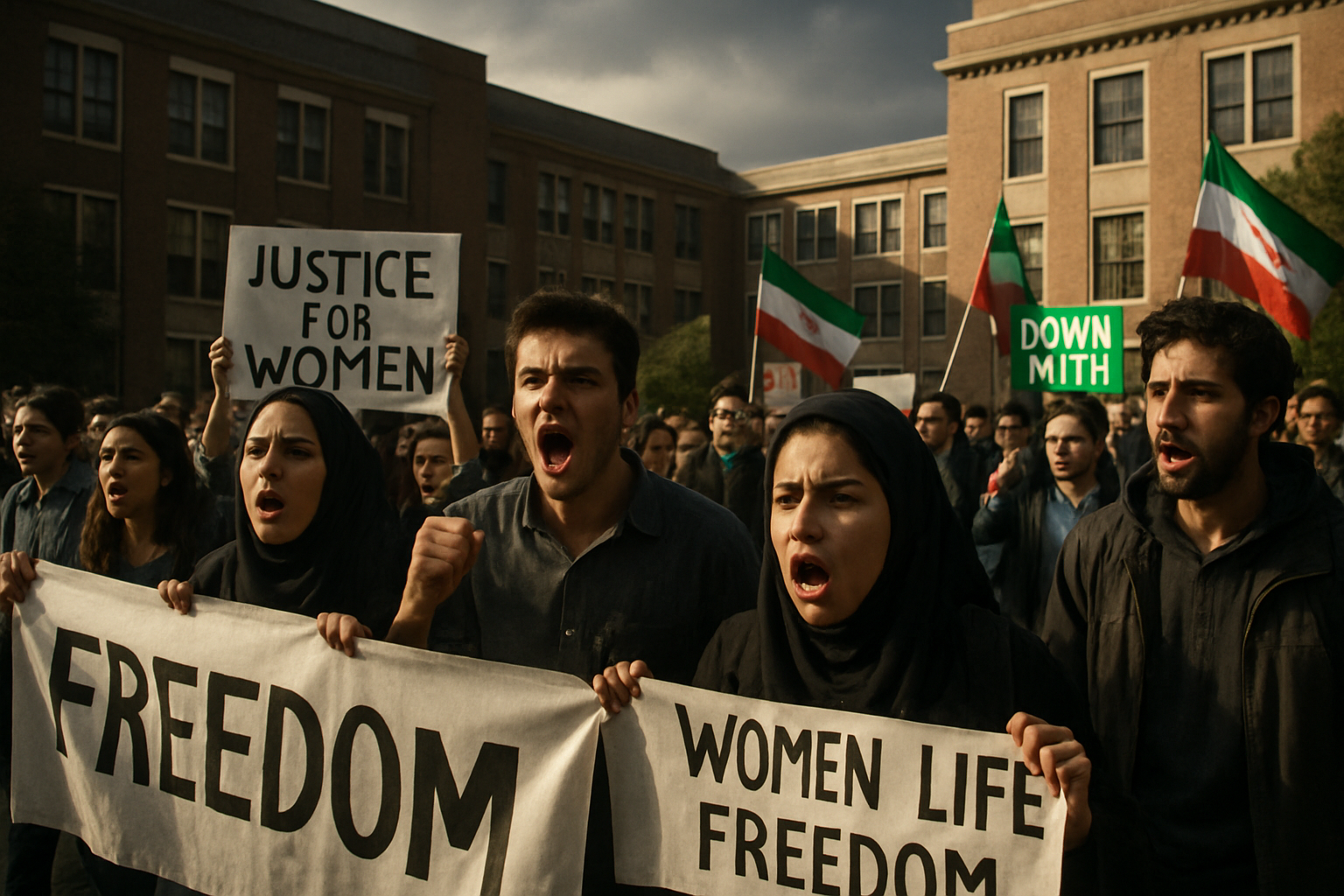
University students across Iran organized significant anti-government protests on February 21, 2026, marking the beginning of the new semester with chants of "Death to Khamenei" and confrontations with pro-government forces, according to multiple international media reports and social media footage.
The demonstrations occurred at several major universities in Tehran and Mashhad, including the prestigious Sharif University of Technology, where students were filmed criticizing Iran's leadership and calling for fundamental political change. The protests come amid ongoing nuclear negotiations between Iran and the United States, highlighting the domestic pressure facing Iran's government.
Confrontations with Pro-Government Forces
According to reports from local media and social media posts, students clashed with pro-government groups and Basij militia forces at multiple campuses. Videos circulating on social media platforms showed intense confrontations, with students chanting anti-regime slogans while facing organized counter-demonstrations.
The head of Sharif University of Technology reportedly called for "criminals" to be "dealt with" after Basij officers clashed with students who greeted them with chants of "death to Khamenei," according to The Times of Israel. This harsh response from university administration demonstrates the pressure academic institutions face to suppress dissent.
"Students in many universities in Iran organized protests today to mark the beginning of the new semester, clashing in some cases with pro-government groups."
— Agence France-Presse Report
Historical Context of Student Resistance
These latest protests continue a pattern of student activism that has been a cornerstone of Iran's opposition movement. Since the nationwide protests that began in 2022, Iranian authorities have arrested over 42,000 demonstrators, including many students and young people who formed the backbone of the resistance movement.
The student protests occur against the backdrop of Iran's broader political and economic crisis. The Islamic Republic has faced sustained domestic pressure while simultaneously engaging in high-stakes nuclear negotiations with the United States, creating a complex political environment where authorities are particularly sensitive to displays of dissent.
University Campuses as Sites of Resistance
Iranian universities have historically served as centers of political activism and resistance to authoritarian rule. The current wave of protests demonstrates that despite severe government crackdowns, including mass arrests and harsh prison sentences, student movements continue to challenge the Islamic Republic's authority.
French media outlet France 24 reported that Iranian students chanted anti-government slogans at rallies commemorating "the thousands killed during last month's demonstrations," indicating the protests were both forward-looking political actions and memorial events for previous victims of state violence.
The protests at multiple universities suggest a coordinated effort by student activists to use the symbolic moment of the new semester's beginning to make political statements. This timing demonstrates strategic planning by opposition groups who view educational institutions as crucial battlegrounds for political change.
Government Response and Escalation
The Iranian government's response has been characteristically harsh, with university administrators calling for punitive measures against student protesters. The involvement of Basij forces—volunteer militia units that serve as the regime's enforcers on university campuses—indicates the government views these protests as serious security threats.
Republican media in Italy reported that the protests included "processions and demonstrations with the resumption of face-to-face lessons in universities," suggesting the demonstrations were substantial enough to disrupt normal academic activities and draw significant attention from both domestic and international observers.
The confrontational response from both university leadership and security forces reflects the Islamic Republic's zero-tolerance approach to campus dissent, particularly during a period when Iran faces intense international pressure over its nuclear program and human rights record.
International Context and Implications
These student protests occur during a critical period in Iran's international relations. President Masoud Pezeshkian stated that Iran "will not bow" to pressure from world powers amid ongoing nuclear talks with the United States, according to France 24. This defiant stance comes as domestic protests continue to challenge the regime's legitimacy from within.
The timing of the student demonstrations—coinciding with nuclear negotiations—presents the Iranian government with a complex challenge: projecting strength internationally while managing domestic dissent. The protests serve to remind the international community that significant portions of Iran's population, particularly young people and students, remain opposed to the current government.
The involvement of pro-government counter-demonstrators suggests these campus confrontations were not spontaneous but involved organized efforts by both opposition and government-aligned groups. This pattern indicates the protests represent broader political struggles rather than isolated student grievances.
Implications for Iran's Future
The persistence of student protests, despite severe government crackdowns and the arrest of over 42,000 people since 2022, demonstrates the enduring nature of Iran's domestic political crisis. Universities remain flashpoints for political expression, even as the government has implemented increasingly harsh measures to suppress dissent.
The confrontations between students and Basij forces highlight the militarization of Iran's educational institutions, where academic spaces have become battlegrounds between opposing political visions. This dynamic suggests that Iran's internal tensions will continue to manifest in educational settings, potentially disrupting normal academic life and creating ongoing instability.
As Iran navigates complex international negotiations while facing domestic unrest, these student protests serve as a reminder that the country's political challenges extend far beyond international diplomacy to fundamental questions about governance, human rights, and the relationship between the state and its citizens.