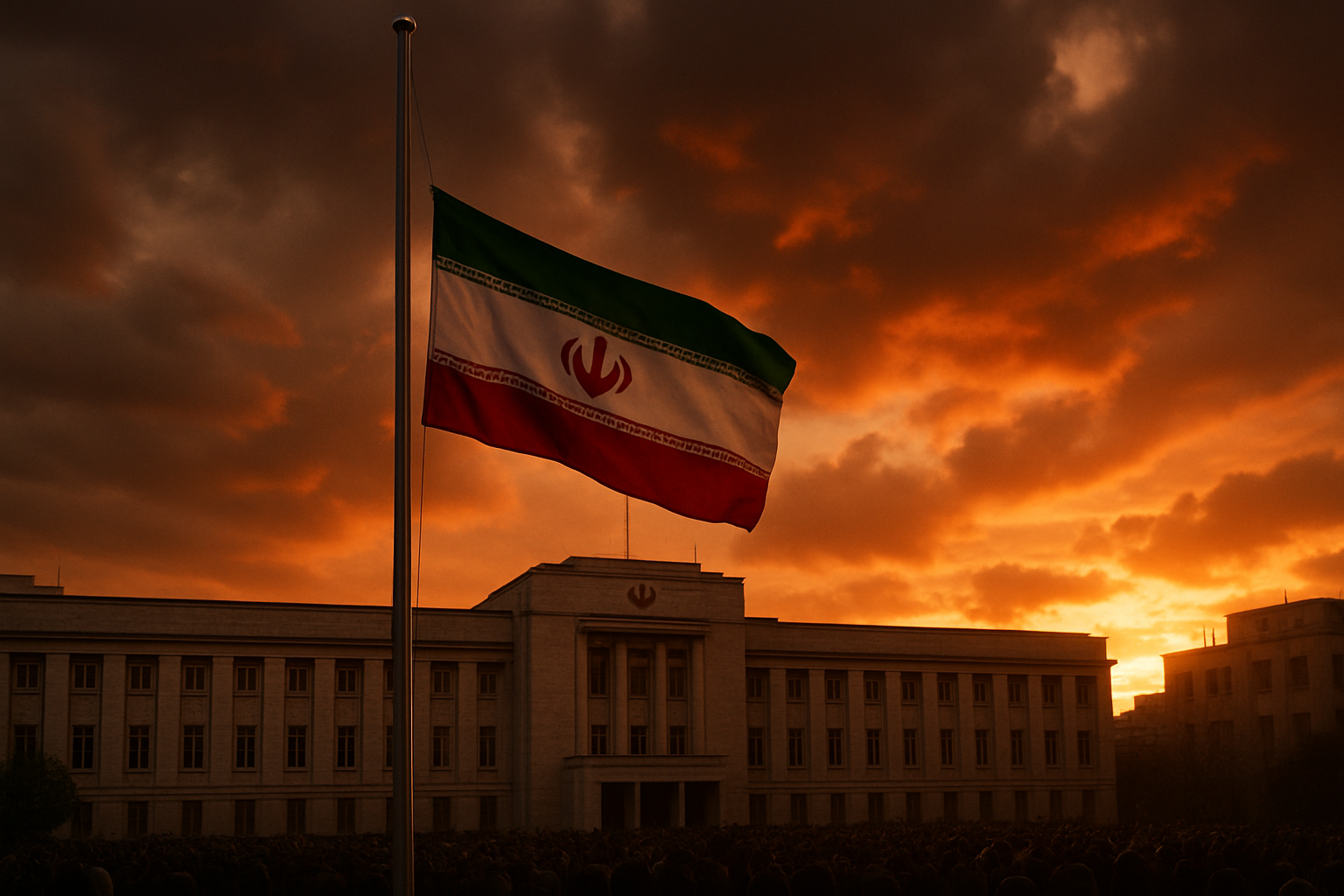
Iran's Supreme Leader Ayatollah Ali Khamenei has been officially confirmed dead following an Israeli airstrike, according to multiple Iranian state media sources, creating an unprecedented succession crisis as his son Mojtaba Khamenei is reportedly being chosen as the new leader.
Iranian state media outlets, including Fars News Agency, Mehr News, and Press TV, confirmed the 86-year-old Supreme Leader's death after initially denying earlier reports. The confirmation comes amid what sources describe as the most dangerous international crisis since the Cold War, with Iran launching massive retaliatory strikes across the region.
Succession Process Activated
According to Iran International, citing sources familiar with the decision, Iran's Assembly of Experts has selected Mojtaba Khamenei, the deceased leader's son, as the new Supreme Leader of the Islamic Republic. The selection was reportedly made under pressure from the Islamic Revolutionary Guard Corps (IRGC).
The Iranian constitution requires a three-member transitional council during leadership transitions, consisting of the President, judiciary head, and a Guardian Council representative. However, the wartime conditions and reported IRGC pressure appear to have accelerated the succession process.
"The Assembly of Experts has made its decision under extraordinary circumstances," reported Iran International.
— Iran International
Military Escalation and Global Impact
The assassination has triggered what Iran calls "Operation True Promise 4," a massive retaliatory campaign targeting Israeli and allied positions across the Middle East. The escalation has resulted in the closure of multiple airports and airspace restrictions affecting international travel.
According to various international sources, over 18,000 flights have been canceled worldwide, with major airports including Dubai International completely shutting down due to missile damage. The crisis has caused oil prices to surge as Iran threatens to close the Strait of Hormuz, through which 40% of global oil transit passes.
Regional Casualties
The Iranian retaliation has caused casualties across the Gulf region:
- UAE: One civilian killed in Abu Dhabi from missile debris
- Kuwait: 32 foreign nationals injured in airport drone strikes
- Qatar: Eight injured from fragments despite successful missile interceptions
- Bahrain: US Fifth Fleet headquarters targeted
International Response and Diplomatic Fallout
The crisis has prompted emergency sessions at the UN Security Council, with Secretary-General António Guterres describing the situation as a "serious threat to international peace and security." European nations have activated unprecedented evacuation protocols for their citizens across the Middle East.
China issued its strongest condemnation in years, calling the assassination a "serious violation of Iran's sovereignty and security." Russia warned against regime change efforts, while the EU has struggled to present a unified response.
Multiple countries have begun evacuating their citizens from the region, with Cyprus activating its national ESTIA evacuation plan for the first time. Sweden and Serbia have ordered immediate evacuations of their nationals from Iran, citing "extremely uncertain" security conditions.
Nuclear Program Implications
The assassination comes at a critical moment for Iran's nuclear program. Despite recent diplomatic progress in Geneva talks that achieved what was described as "broad agreement on guiding principles," the fundamental disagreements over Iran's ballistic missile program and regional proxy activities remained unresolved.
Iran continues to enrich uranium at 60% purity, approaching the 90% threshold needed for weapons-grade material. Intelligence assessments suggest Iran possesses sufficient enriched uranium for multiple nuclear weapons if weaponized.
Economic and Energy Crisis
The global economic impact has been immediate and severe. Oil prices have surged over 10% to above $80 per barrel, while natural gas prices have increased by 24% in Europe and 78% in the United States. Major shipping companies including Maersk and MSC have suspended operations in the Persian Gulf, leaving over 150 tankers anchored with billions in stranded cargo.
Stock markets worldwide have experienced significant volatility, with Pakistan's KSE-100 falling nearly 9% and Dow futures dropping by 400-570 points in early trading.
Mojtaba Khamenei: The Successor
Mojtaba Khamenei, aged 56, has been described as an "invisible soldier" who built his career in the shadows, unlike many Iranian politicians who seek the public spotlight. He is believed to have graduated from the IRGC school and special services, and is thought to have led the "power bloc" since the mid-2000s, helping his father control the military and security apparatus.
His reported selection signals a continuation of hardline policies and potential increased military influence in Iranian governance, according to CIA assessments cited in various sources.
Historical Context and Global Implications
Ali Khamenei had served as Iran's Supreme Leader since 1989, following the death of the Islamic Republic's founder, Ayatollah Ruhollah Khomeini. Under his leadership, Iran developed its nuclear program, expanded its influence across the Middle East through proxy forces, and engaged in decades of confrontation with the United States and Israel.
The current crisis occurs against the backdrop of the New START treaty's expiration in February 2026, leaving the world without major nuclear arms control agreements between superpowers for the first time in over 50 years.
Future Implications
This crisis represents what experts describe as a "template-setting moment" for 21st-century international relations, demonstrating the rapid breakdown from diplomatic engagement to military confrontation in the multipolar era. The success or failure of containing this escalation could provide a framework for future nuclear crises or accelerate military solutions to international disputes.
The stakes include regional war prevention, global energy security, nuclear governance credibility, and the enforcement of international law principles that have governed the post-World War II order.
As the situation continues to unfold, the international community faces its greatest test of multilateral cooperation and crisis management in the modern era, with decisions made in the coming days and weeks likely to reverberate through international relations for decades to come.