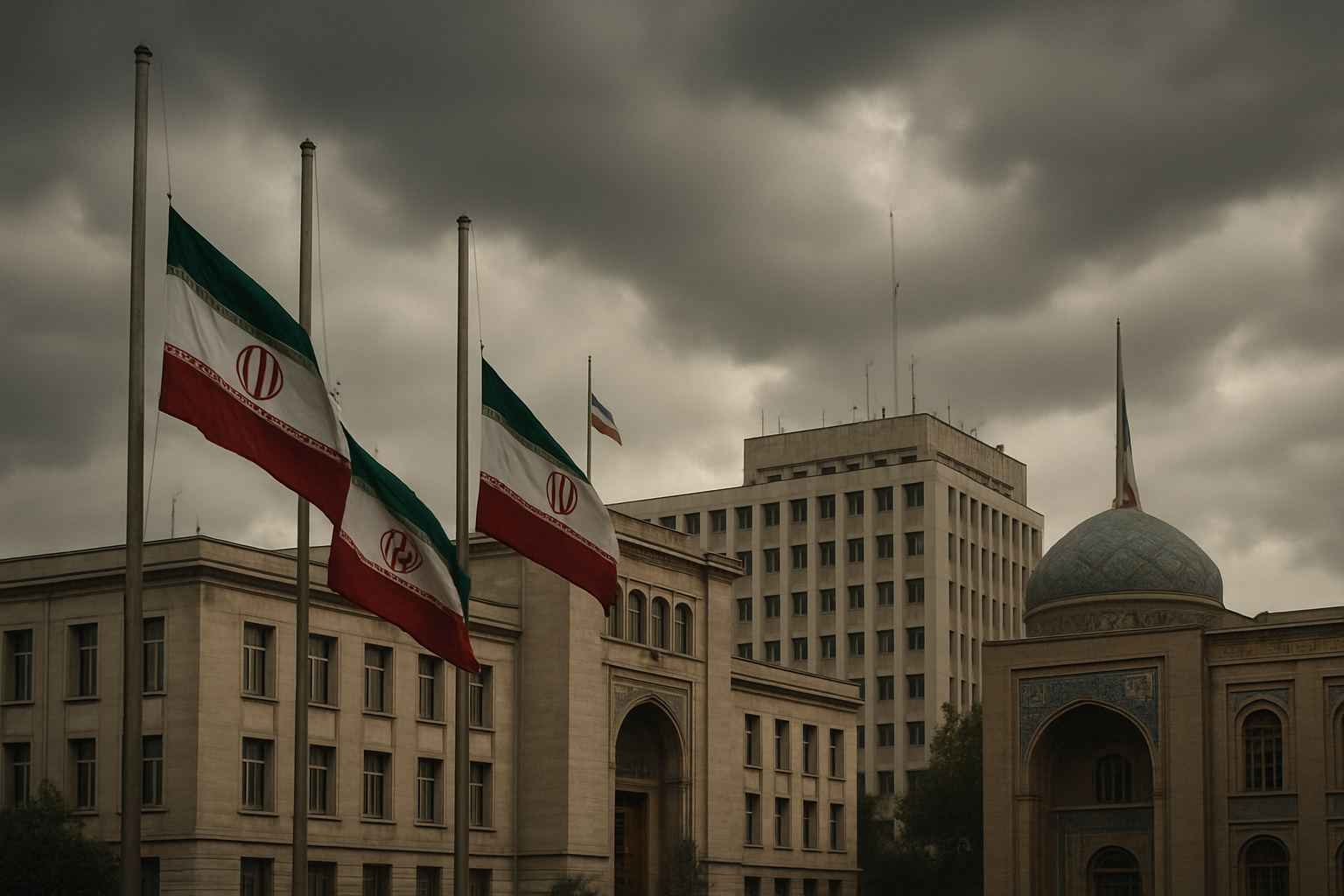
Iran's Supreme Leader Ayatollah Ali Khamenei has died following coordinated airstrikes, with his son Mojtaba Khamenei emerging as the leading candidate to succeed him as the Islamic Republic faces its most serious crisis since the 1979 revolution.
Multiple international sources, including reports from Afghanistan and European media outlets, confirm that Iran's funeral arrangements for the 86-year-old leader have been postponed as the country grapples with ongoing military operations and succession planning. The postponement comes amid what Iranian officials describe as "unprecedented circumstances" following weekend strikes that reportedly killed Khamenei and several high-ranking officials.
Mojtaba Khamenei Positioned as Successor
The most significant development in the succession crisis is the emergence of Mojtaba Khamenei, the Supreme Leader's 56-year-old son, as the frontrunner to inherit his father's position. According to sources cited by Philippine and European news outlets, Mojtaba is "alive and favored to emerge as his father's successor," despite the chaotic circumstances surrounding the transition.
German media reports suggest that Iran is "close to naming a successor," with Mojtaba's name circulating prominently among decision-makers. The cleric, who unlike his father lacks recognized jurisprudential credentials or electoral mandate, maintains close ties with the hardline Revolutionary Guard Corps, positioning him as a potential bridge between religious and military authority.
"Everything about this nomination is speculation, but the son is set as the favorite."
— France 24 Analysis
Unprecedented Hereditary Succession
If confirmed, Mojtaba's ascension would represent the first hereditary succession in the Islamic Republic's 47-year history, fundamentally altering the theocratic system that has governed Iran since 1979. Spanish media characterizes him as lacking traditional clerical qualifications but possessing "close ties with the hardline Revolutionary Guard."
The succession process is reportedly taking place under extraordinary pressure from the Revolutionary Guards, according to international intelligence sources. This military influence marks a significant departure from the traditional clerical-dominated selection process managed by the Assembly of Experts.
Funeral Arrangements Postponed
Iranian state media has announced the postponement of Khamenei's state funeral, originally scheduled for March 4th. Sources cited by Saudi and Italian media indicate that authorities are citing "security concerns" and the need to accommodate "unprecedented attendance" as reasons for the delay.
The body is expected to be buried in the holy city of Mashhad, according to Iran's Fars News Agency. Officials had initially planned a farewell ceremony at Tehran's Imam Khomeini Prayer Hall, with the public permitted to pay respects over three days. However, the deteriorating security situation has complicated these arrangements.
Regional Crisis Deepens
The succession crisis unfolds against the backdrop of the most dangerous Middle Eastern escalation in decades. The coordinated strikes that reportedly killed Khamenei have triggered massive Iranian retaliation across the region, creating a global aviation crisis with over 18,000 flights cancelled worldwide.
Multiple Gulf states have been affected by the escalation, with civilian casualties reported in the UAE, Kuwait, and Qatar. Dubai International Airport, the world's busiest, remains shut down due to missile damage, while oil prices have surged on concerns about the Strait of Hormuz, through which 40% of global oil transit passes.
International Implications
The crisis represents a template-setting moment for 21st-century international relations, occurring amid the broader collapse of nuclear governance structures. The New START treaty between the US and Russia expired in February 2026, leaving the world without major power nuclear constraints for the first time in over 50 years.
European nations have activated unprecedented evacuation protocols, with Cyprus implementing its ESTIA plan for the first time. Multiple countries have closed their airspace simultaneously, creating the most extensive aviation disruption since the COVID-19 pandemic.
Nuclear Program Continuity
The succession crisis raises critical questions about Iran's nuclear program, which under Khamenei had advanced to 60% uranium enrichment approaching weapons-grade levels. The program's future direction under potential new leadership remains uncertain, though hardline military influence suggests continuity rather than moderation.
Global Response
The United Nations Security Council has convened emergency sessions, with Secretary-General António Guterres describing the situation as a "serious threat to international peace and security." Multiple nations have condemned the escalation while expressing concerns about regional stability.
China has issued its strongest condemnation in years, calling the situation a "serious violation of sovereignty," while Russia has warned against external regime change efforts. European leaders are struggling to present a unified response to what many describe as the most dangerous international crisis since the Cold War.
Domestic Challenges
The new leadership, whenever confirmed, will inherit significant domestic challenges. Iran has arrested over 42,000 people since the 2022 protests, and the economy remains under severe international sanctions. The legitimacy questions surrounding a hereditary succession add another layer of complexity to governance challenges.
Despite the military crisis, some reports indicate spontaneous celebrations in parts of Tehran, suggesting that Khamenei's death may be welcomed by segments of the population who viewed his rule as oppressive. However, the Revolutionary Guards maintain control over major population centers.
Looking Forward
The coming days will be crucial in determining whether the Middle East faces prolonged warfare or eventual diplomatic resolution. The succession process in Iran, combined with ongoing regional tensions, creates unprecedented uncertainty for global energy markets, international security, and nuclear governance.
Mojtaba Khamenei's potential rise to supreme leadership would represent not just a generational change but a fundamental shift toward military-influenced governance in Iran. This transition occurs at perhaps the most dangerous moment for regional and global stability since the end of the Cold War, with implications that will reverberate far beyond Iran's borders.
The international community faces critical decisions about recognition, engagement, and crisis management as the Islamic Republic potentially enters a new era under dramatically changed circumstances.