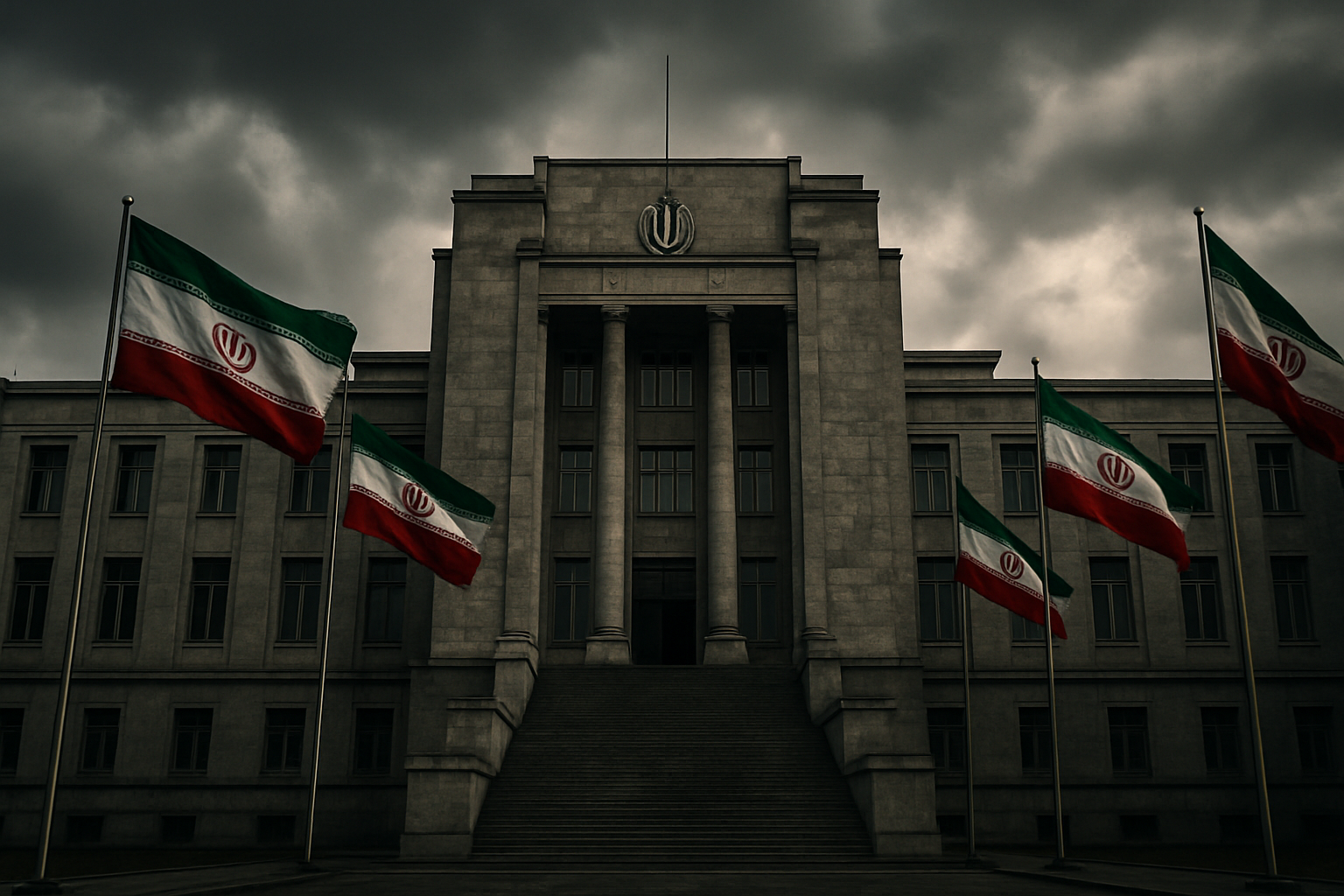
Iran's new Supreme Leader Ayatollah Mojtaba Khamenei issued his first public statement since assuming power, delivering a defiant message that vows revenge for Iranian martyrs and threatens to maintain the closure of the Strait of Hormuz, the critical waterway carrying 40% of the world's oil transit.
The statement, read by a news presenter on Iranian state television Thursday, marked Khamenei's first public remarks since his unprecedented appointment following his father Ali Khamenei's death on March 1, 2026. In a clear signal that Iran will not moderate its confrontational stance, the new leader declared that "the lever of blocking the Strait of Hormuz must continue to be used" while demanding neighboring countries close all US military bases on their territory.
"I assure everyone that we will not neglect avenging the blood of your martyrs," Khamenei declared in the statement, broadcast across Iranian state media networks. "The popular demand is to continue our effective defence and make the enemy regret!"
Hereditary Succession Amid Crisis
Mojtaba Khamenei's rise to Supreme Leader represents an unprecedented moment in the Islamic Republic's 47-year history—the first hereditary succession in a system traditionally based on clerical scholarship and religious credentials. Known within Iran's security apparatus as the "invisible soldier," the 56-year-old built his career through the Revolutionary Guards rather than traditional religious institutions, signaling a fundamental shift from clerical to military-influenced governance.
The succession occurred during the most dangerous Middle Eastern crisis since the Cold War, with Iran locked in an escalating conflict following Operation Epic Fury, the largest coordinated US-Israeli military campaign since the 2003 Iraq invasion. The Assembly of Experts, under extraordinary pressure from the Revolutionary Guards, selected Mojtaba despite lacking the traditional qualifications that characterized previous Supreme Leaders.
"Iran's neighbors must close all U.S. bases on their territory, as Tehran will continue its attacks against them if they don't comply."
— Ayatollah Mojtaba Khamenei, Iran's Supreme Leader
Global Energy Security Threat
The new Supreme Leader's statement carries immediate implications for global energy markets. Oil prices have already surged past $100 per barrel following Iran's closure of the Strait of Hormuz, with the waterway's blockade affecting approximately 40% of global oil transit. Over 150 tankers worth billions in cargo remain stranded in the Persian Gulf as major shipping companies Maersk and MSC have suspended operations in the region.
European households face the prospect of £160 annual energy increases, while natural gas prices have spiked 24% in Europe and 78% in the United States. The crisis has also forced Qatar to halt LNG production, affecting approximately 20% of global liquefied natural gas exports and threatening European energy supplies already strained by geopolitical tensions.
The International Energy Agency has released 400 million barrels from strategic reserves—the largest such release in the agency's history—in an attempt to stabilize global oil markets. However, energy analysts warn that the situation could deteriorate further if Iran follows through on threats to target additional energy infrastructure across the region.
Revolutionary Guards Consolidate Power
Intelligence assessments from multiple Western agencies suggest that the Revolutionary Guards played a decisive role in Mojtaba Khamenei's selection, marking a historic shift in Iran's power structure. Unlike his father, who rose through traditional clerical ranks, the new Supreme Leader's background in Iran's security apparatus indicates a more militarized approach to governance and foreign policy.
This transformation has significant implications for Iran's nuclear program, which the new leader has inherited in an advanced state. Iran continues enriching uranium at 60% purity with over 400 kilograms of weapons-grade material—sufficient for multiple nuclear weapons if further processed. The collapse of nuclear diplomacy, despite recent breakthroughs in Geneva talks, has eliminated peaceful resolution prospects under the current crisis.
International Response and Escalation
The statement comes as the crisis has expanded beyond the Middle East, with Iranian drones striking RAF Akrotiri in Cyprus—the first attack on European territory since World War II. This unprecedented escalation prompted a naval coalition response from European powers, with HMS Dragon, Spanish frigates, and vessels from Italy, France, the Netherlands, and Greece deploying to protect European interests.
US President Donald Trump has demanded Iran's "unconditional surrender" and claims the right to personally choose Iran's next Supreme Leader, calling Mojtaba Khamenei a "lightweight" in the most direct assertion of American control over Iranian affairs since 1979. This explicit regime change policy has effectively eliminated diplomatic solution possibilities, ensuring continued military confrontation.
The conflict has already resulted in significant casualties across the region. The UAE reported one civilian killed in Abu Dhabi with Dubai International Airport completely shut down, Kuwait has seen 32 foreign nationals injured in airport drone strikes, and Qatar intercepted 65 missiles and 12 drones while reporting eight injuries. Israel continues to face systematic Iranian targeting under Tehran's "no red lines remain" policy.
Domestic Challenges and Legitimacy Questions
Despite projecting strength internationally, the new Supreme Leader faces significant domestic challenges. Iran has witnessed over 42,000 arrests since the 2022 protest movement, and reports of spontaneous celebrations in Tehran following his father's death—with residents chanting "tyrant no more"—suggest considerable internal opposition to the regime.
The hereditary nature of his succession has drawn criticism from constitutional experts who argue it contradicts the Islamic Republic's founding principles. Critics have described the transition as transforming Iran from a theocracy to a "clerical monarchy," undermining the religious legitimacy that has traditionally underpinned the Supreme Leader's authority.
The new leader acknowledged personal losses in his statement, confirming that his wife, sister, and other family members were killed in the strikes that targeted his father. This personal dimension adds complexity to the succession at a time when Iran faces its most vulnerable period since the 1979 revolution.
Global Economic Disruption
The crisis has triggered the most severe disruption to global supply chains since COVID-19, with over 18,000 flights cancelled worldwide as eight Middle Eastern countries maintain simultaneous airspace closures. Dubai International Airport, the world's busiest, remains shuttered from missile damage, while major carriers including Emirates, Air France-KLM, and Wizz Air have suspended operations indefinitely.
Stock markets have crashed globally, with Pakistan's KSE-100 index recording its largest single-day decline in history at -8.97%. The disruption has exposed fundamental vulnerabilities in global manufacturing networks dependent on Gulf logistics, affecting automotive, electronics, and textile industries worldwide. Companies have postponed major financial activities, including PayPal's $1.1 billion IPO, reflecting broader market uncertainty.
Template-Setting Crisis
UN Secretary-General António Guterres has described the situation as the "greatest test of multilateral cooperation and crisis management in the modern era." The rapid transition from promising diplomatic breakthrough to military confrontation demonstrates what experts call "multipolar era crisis management fragility"—the difficulty of containing conflicts in today's complex international system.
The crisis occurs against the backdrop of broader nuclear governance breakdown, with the New START treaty between the US and Russia having expired in February 2026—the first time in over 50 years without nuclear constraints between the superpowers. China's nuclear expansion and what Guterres calls "the highest nuclear risks in decades" make Iran's nuclear program particularly concerning.
Congressional scrutiny in the United States has intensified, with bipartisan lawmakers demanding answers about strategy, costs, and the potential deployment of ground troops. Senator Richard Blumenthal expressed being "more concerned than ever" about American boots on the ground, while the conflict's unprecedented unpopularity—with only 25% American support for the strikes—creates domestic political pressure on the administration.
Regional Coalition Under Strain
The crisis has severely tested an unprecedented regional coalition that had emerged to support diplomatic solutions. Saudi Arabia, the UAE, Qatar, and Egypt had achieved rare consensus in backing negotiations, but Iranian retaliation targeting their territories has strained these relationships to the breaking point.
Egyptian President Abdel Fattah el-Sisi condemned attacks on "sisterly Arab countries" and warned of "comprehensive chaos" if the situation continues to escalate. Saudi Arabia has intercepted 21 drones and multiple missiles targeting oil facilities, while Kuwait has been forced to relocate some airline operations to Saudi Arabia due to security concerns.
The targeting of Gulf allies represents a significant strategic shift for Iran, which had previously sought to maintain relationships with neighboring countries while confronting the US and Israel. The new Supreme Leader's explicit threat to continue attacks against neighbors hosting US bases suggests a more aggressive regional posture under military-influenced leadership.
Looking Ahead
Mojtaba Khamenei's first statement as Supreme Leader sends a clear message that Iran will not moderate its confrontational approach despite facing the most severe military pressure since the Islamic Republic's founding. The combination of personal losses, institutional military influence, and the unprecedented nature of the crisis suggests the conflict may intensify further.
The statement's timing, delivered as international evacuations reach their largest scale since the Arab Spring with Australia reporting 115,000 nationals trapped and Germany evacuating 30,000 tourists, underscores the global stakes involved. The European Union's activation of the ESTIA evacuation protocol for Cyprus—the first such implementation in the bloc's history—reflects the serious security implications.
Intelligence agencies suggest that the new Supreme Leader's background in Iran's security apparatus makes him less likely to pursue diplomatic solutions than his predecessors. Combined with Trump's explicit regime change demands and "unconditional surrender" ultimatums, the prospects for negotiated resolution appear increasingly remote.
As the crisis enters its second week, the international community faces what may be the most consequential test of 21st-century conflict resolution. The outcome will likely establish precedents for how territorial disputes, nuclear crises, and regime change policies are handled in an increasingly multipolar world order, with implications extending far beyond the Middle East's boundaries.