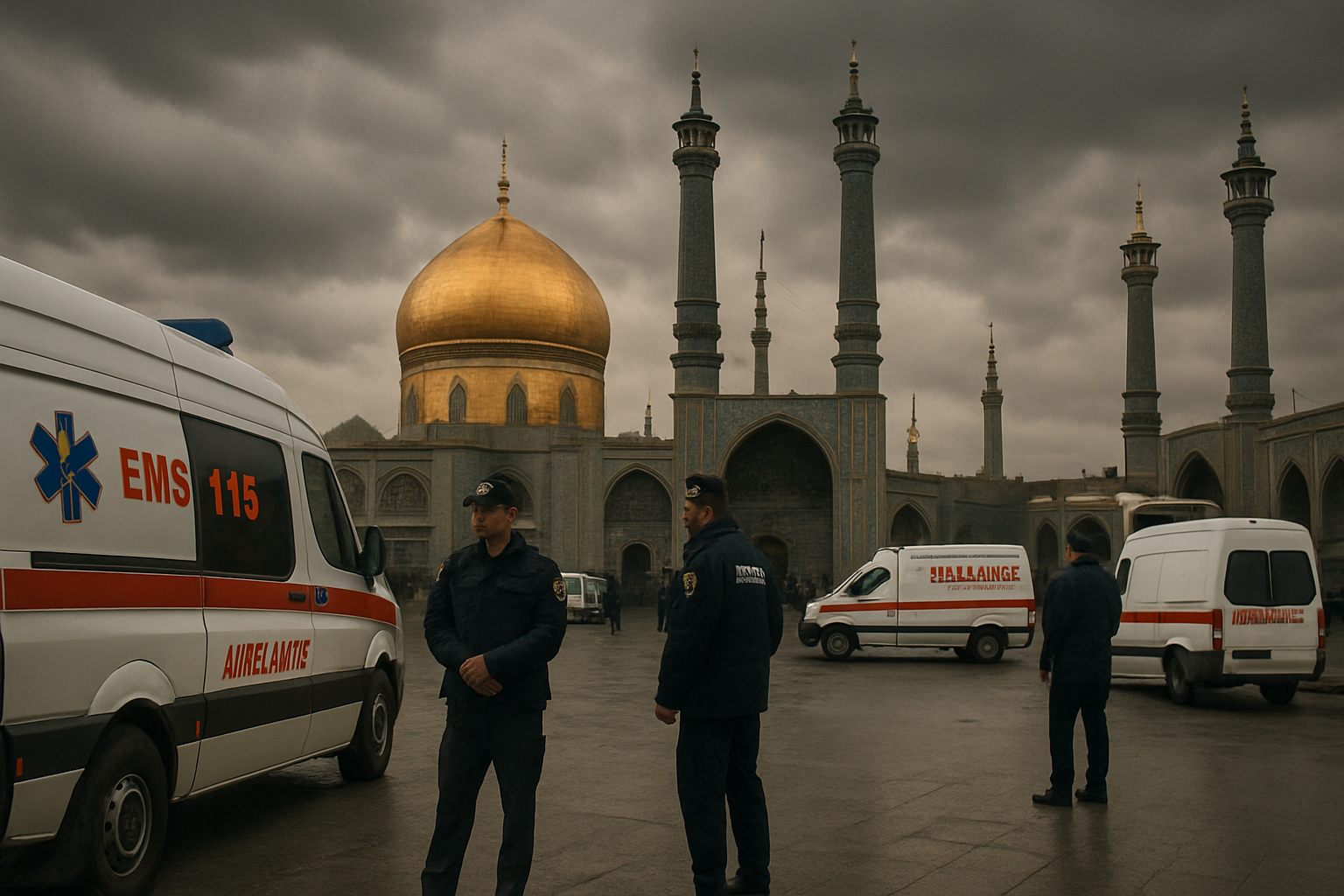
Iran's Supreme Leader Mojtaba Khamenei is unconscious and receiving critical medical treatment in the holy city of Qom, according to a diplomatic memo based on American and Israeli intelligence shared with Gulf allies, marking a potentially significant development in Iranian leadership dynamics.
The confidential intelligence assessment, cited by The Times, reveals for the first time the specific location where Iran's hereditary Supreme Leader is reportedly incapacitated. Qom, situated 87 miles south of Tehran, holds profound significance as one of the most sacred cities in Shia Islam and represents a strategic choice for such sensitive medical care.
Critical Medical Condition Confirmed
Multiple international sources confirm that Mojtaba Khamenei's condition is so severe that he is unable to participate in any decision-making processes, according to the intelligence evaluation. This development comes at a crucial time for Iranian governance, as the Islamic Republic continues to navigate complex regional and international challenges.
The diplomatic memo indicates that Western intelligence agencies have been monitoring the situation closely, with particular attention to the implications for Iranian policy continuity and regional stability. Sources suggest that the medical crisis may have been ongoing for several days, though the exact timeline remains classified.
Historical Context of Hereditary Succession
Mojtaba Khamenei's elevation to Supreme Leader marked an unprecedented moment in Iranian political history. Following his father Ali Khamenei's death in March 2026, he became the first hereditary Supreme Leader in the Islamic Republic's 47-year existence, representing a fundamental shift from clerical scholarship-based selection to military-influenced succession.
"This succession broke with every constitutional tradition of the Islamic Republic, where leadership was based on religious credentials rather than family lineage."
— Regional Intelligence Expert
Known throughout his career as the "invisible soldier," Mojtaba built his influence through the Islamic Revolutionary Guard Corps (IRGC) rather than traditional clerical channels. His appointment consolidated unprecedented Revolutionary Guards control over Iranian governance during the most critical period in the nation's modern history.
Regional and International Implications
The timing of this medical crisis carries significant implications for Middle Eastern geopolitics. Iran has been central to regional power dynamics, and any leadership uncertainty could affect ongoing diplomatic initiatives and security arrangements across the region.
Intelligence assessments suggest that the Revolutionary Guards, who played a decisive role in Mojtaba Khamenei's original selection, maintain operational control over state functions during this crisis. This military influence represents a continuation of the governance shift that began with his succession.
Qom's Strategic Significance
The choice of Qom for medical treatment reflects both security considerations and religious symbolism. Home to the Fatima Masumeh shrine and the largest Shia seminary in the world, the city offers both spiritual significance and relative isolation for sensitive operations.
Local sources indicate increased security presence around medical facilities in the city, though Iranian authorities have maintained official silence regarding the Supreme Leader's condition. The city's religious infrastructure provides additional layers of protection and discretion for high-level medical care.
Government Continuity Mechanisms
Iran's constitutional framework includes provisions for leadership transitions, with established councils and procedures designed to maintain governance continuity. However, the current situation tests these mechanisms under conditions not previously encountered in the Islamic Republic's history.
The Assembly of Experts, which selected Mojtaba Khamenei, retains constitutional authority over supreme leadership matters. However, the unprecedented nature of hereditary succession creates ambiguity about succession protocols should the current crisis require additional leadership decisions.
International Monitoring and Response
Western intelligence agencies continue monitoring the situation through multiple channels, with particular attention to potential impacts on nuclear negotiations, regional proxy relationships, and domestic Iranian stability. The assessment shared with Gulf allies indicates coordinated international observation of developments.
Regional powers are reportedly engaging in quiet diplomatic consultations regarding potential scenarios and their implications for ongoing security arrangements. The situation has prompted increased intelligence sharing among allied nations concerned about Middle Eastern stability.
Historical Precedents and Analysis
The current crisis echoes previous moments of leadership uncertainty in authoritarian systems, where medical emergencies create both immediate governance challenges and longer-term succession questions. Iran's unique theocratic-military hybrid system adds additional complexity to traditional succession patterns.
Previous leadership transitions in the Islamic Republic occurred through more predictable clerical processes, making the current hereditary model's crisis management untested. The Revolutionary Guards' prominent role represents a significant departure from historical precedents.
Domestic and International Considerations
Within Iran, the leadership crisis occurs against the backdrop of ongoing economic challenges and social tensions that have characterized recent years. The military-influenced governance structure faces tests of legitimacy and effectiveness under current conditions.
Internationally, the situation affects multiple diplomatic initiatives and security arrangements where Iranian leadership continuity plays a crucial role. Allied nations are monitoring developments while maintaining existing policy frameworks pending clarification of leadership status.
Looking Forward
As intelligence agencies continue monitoring the situation in Qom, the international community faces questions about Iranian policy continuity and regional stability. The unprecedented nature of hereditary succession under medical crisis conditions creates uncertainty about both immediate and longer-term implications.
The Revolutionary Guards' role in maintaining governance continuity during this crisis may establish new precedents for Iranian political structure. Their influence, consolidated during Mojtaba Khamenei's selection, now faces its most significant operational test.
The coming days will likely prove crucial in determining both the immediate medical situation and its broader implications for Iranian leadership, regional relations, and international diplomatic initiatives where Iran plays a central role.