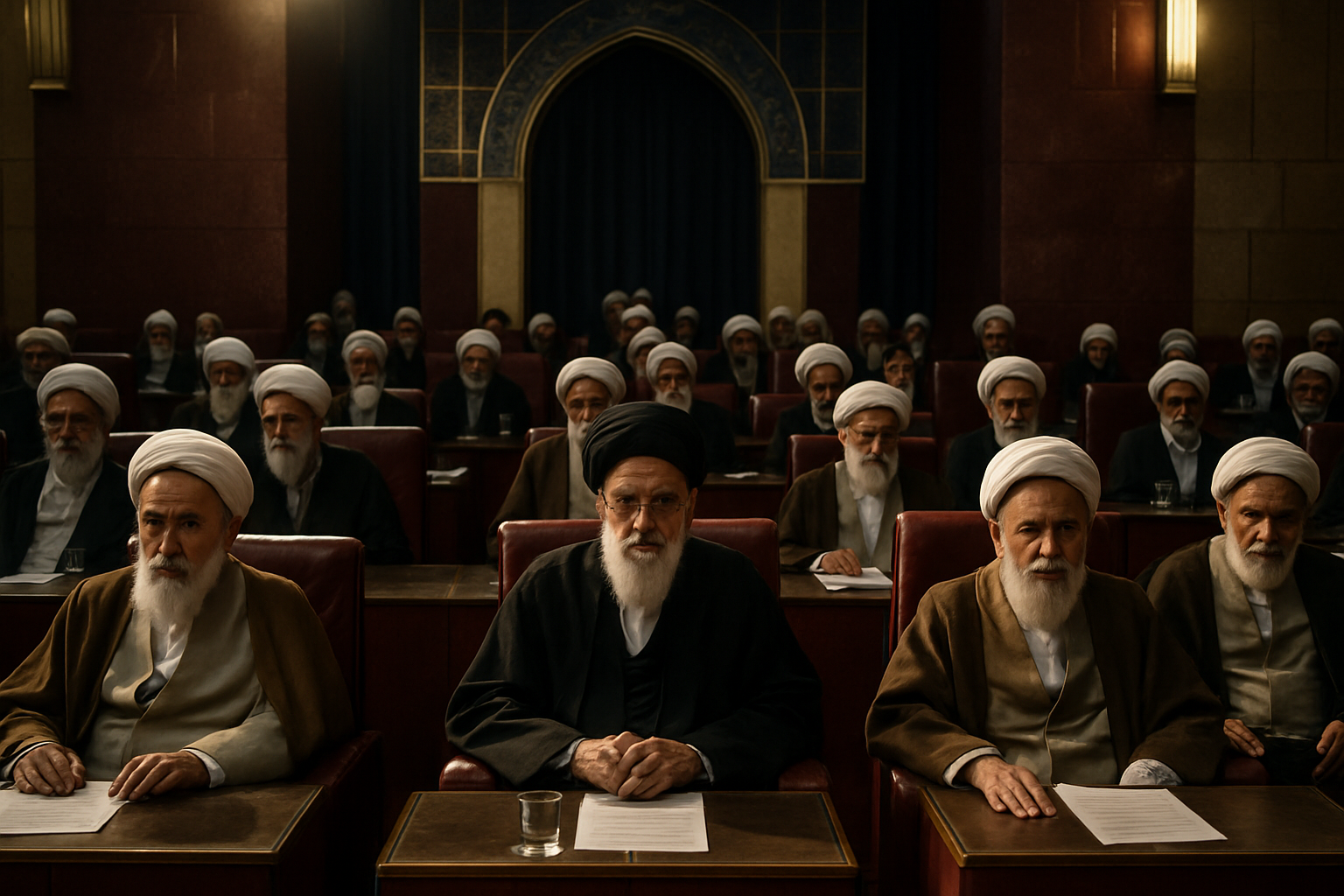
Iran's Assembly of Experts has achieved a majority consensus on selecting the Islamic Republic's next Supreme Leader, according to a senior member of the clerical body, marking a crucial development in the succession crisis following the death of Ayatollah Ali Khamenei in early March.
Ayatollah Mohammadmehdi Mirbaqeri, a member of the 88-strong Assembly of Experts, announced on Sunday that the body responsible for choosing Iran's next Supreme Leader has "more or less reached a majority consensus," though he acknowledged that "some obstacles" still need to be resolved regarding the procedural aspects of the selection.
The announcement comes amid unprecedented circumstances, as Iran operates under a transitional three-member council following Khamenei's confirmed death on March 1, 2026, during the US-Israeli "Operation Epic Fury" strikes. The succession process is unfolding during active military operations and what experts describe as the most dangerous Middle Eastern crisis since the Cold War.
Procedural Challenges During Wartime
The Assembly faces unusual procedural complications due to the ongoing security situation. Another Assembly member, Ayatollah Mohsen Heidari Alekasir, stated in a video released by Nournews that an in-person meeting for the final vote "is not possible under current conditions," suggesting the selection process may deviate from traditional protocols.
Iranian media reports indicate disagreement among Assembly members over whether their final decision must follow an in-person meeting or can be issued without adhering to this constitutional formality. This debate reflects the extraordinary circumstances under which the succession is taking place.
A senior cleric had indicated on Saturday that Assembly members would convene "within one day" to make their selection, but the logistics of gathering during active conflict operations have proven challenging.
Historical Context of the Succession Crisis
The succession crisis began with the death of Ali Khamenei, who had served as Supreme Leader since 1989, transforming Iran into a regional anti-US power during his 37-year rule. His death marked the end of an era and created immediate constitutional protocols requiring the formation of a transitional council.
"The candidate has been picked based on the late Supreme Leader's guidance and the Assembly's careful deliberations."
— Ayatollah Mohsen Heidari Alekasir, Assembly of Experts Member
The transitional council, consisting of President Masoud Pezeshkian, judiciary head Gholamhossein Mohseni Ejei, and a Guardian Council representative, has been managing Iran's governance during this critical period. The Assembly of Experts, composed of senior clerics elected by popular vote, holds the constitutional authority to select the Supreme Leader.
Intelligence assessments suggest that a Revolutionary Guards-affiliated figure is likely to emerge as the successor, indicating a potential shift from traditional clerical governance to increased military influence in Iran's leadership structure.
Regional and International Implications
The succession process occurs against the backdrop of massive regional upheaval. Iran's retaliatory campaign "Operation True Promise 4" has caused casualties across multiple Gulf states, while global aviation faces unprecedented disruption with over 18,000 flights cancelled worldwide.
The crisis has strained the unprecedented regional coalition of Saudi Arabia, UAE, Qatar, and Egypt that had been supporting diplomatic solutions to Middle Eastern tensions. Iranian attacks on these territories have tested their consensus, with Egyptian President Sisi condemning attacks on "sisterly Arab countries."
Energy markets remain volatile with oil prices surging past $80 per barrel as Iran has declared the Strait of Hormuz, through which 40% of global oil transits, "unsafe for shipping." The succession outcome could significantly influence Iran's future approach to regional conflicts and international relations.
Nuclear Program Continuity Questions
The new Supreme Leader will inherit Iran's advanced nuclear program, which continues enriching uranium at 60% purity with over 400 kilograms of material sufficient for multiple weapons if weaponized. The succession comes after the complete collapse of nuclear diplomacy despite recent Geneva talks achieving the most progress since the 2018 JCPOA withdrawal.
The fundamental disagreement between Iran's nuclear-only position versus US comprehensive demands including missiles, proxies, and human rights issues remains unresolved. The next leader's approach to these negotiations could determine whether diplomatic solutions remain viable or military confrontation becomes the primary template for 21st-century nuclear crises.
Domestic Challenges for New Leadership
The incoming Supreme Leader will face significant domestic challenges, including managing over 42,000 arrests since the 2022 protests, severe economic sanctions, and legitimacy questions if the succession appears to favor military over clerical authority. Reports of spontaneous celebrations in Tehran following Khamenei's death suggest mixed public reactions to the transition.
The hereditary nature of succession discussions, particularly regarding Mojtaba Khamenei, Ali Khamenei's son, has raised questions about the Islamic Republic's founding principles. Such a development would represent the first hereditary succession in the theocracy's 47-year history.
Template-Setting Moment for International Relations
The Iranian succession crisis represents what UN Secretary-General António Guterres has called the "greatest test of multilateral cooperation and crisis management in the modern era." The rapid transition from diplomatic engagement to military confrontation demonstrates the fragility of crisis management in the current multipolar international system.
Success in containing the broader conflict could provide a framework for managing future nuclear crises through diplomatic means. However, failure could accelerate military solutions as the preferred approach to international disputes, potentially encouraging nuclear proliferation globally and undermining diplomatic credibility worldwide.
Looking Ahead
As the Assembly of Experts works to finalize their selection amid ongoing military operations, the choice of Iran's next Supreme Leader will have profound implications extending far beyond the Islamic Republic's borders. The decision will influence regional stability, global energy security, nuclear governance credibility, and international law enforcement mechanisms for decades to come.
The consensus reached by the Assembly represents a critical step toward resolving the succession crisis, but the broader implications of this transition continue to reverberate through international relations, energy markets, and diplomatic precedents that will shape 21st-century conflict resolution approaches.
The coming days will determine whether this historic leadership transition can contribute to de-escalating the current crisis or whether it will mark the beginning of a new chapter in Middle Eastern geopolitics with global ramifications.