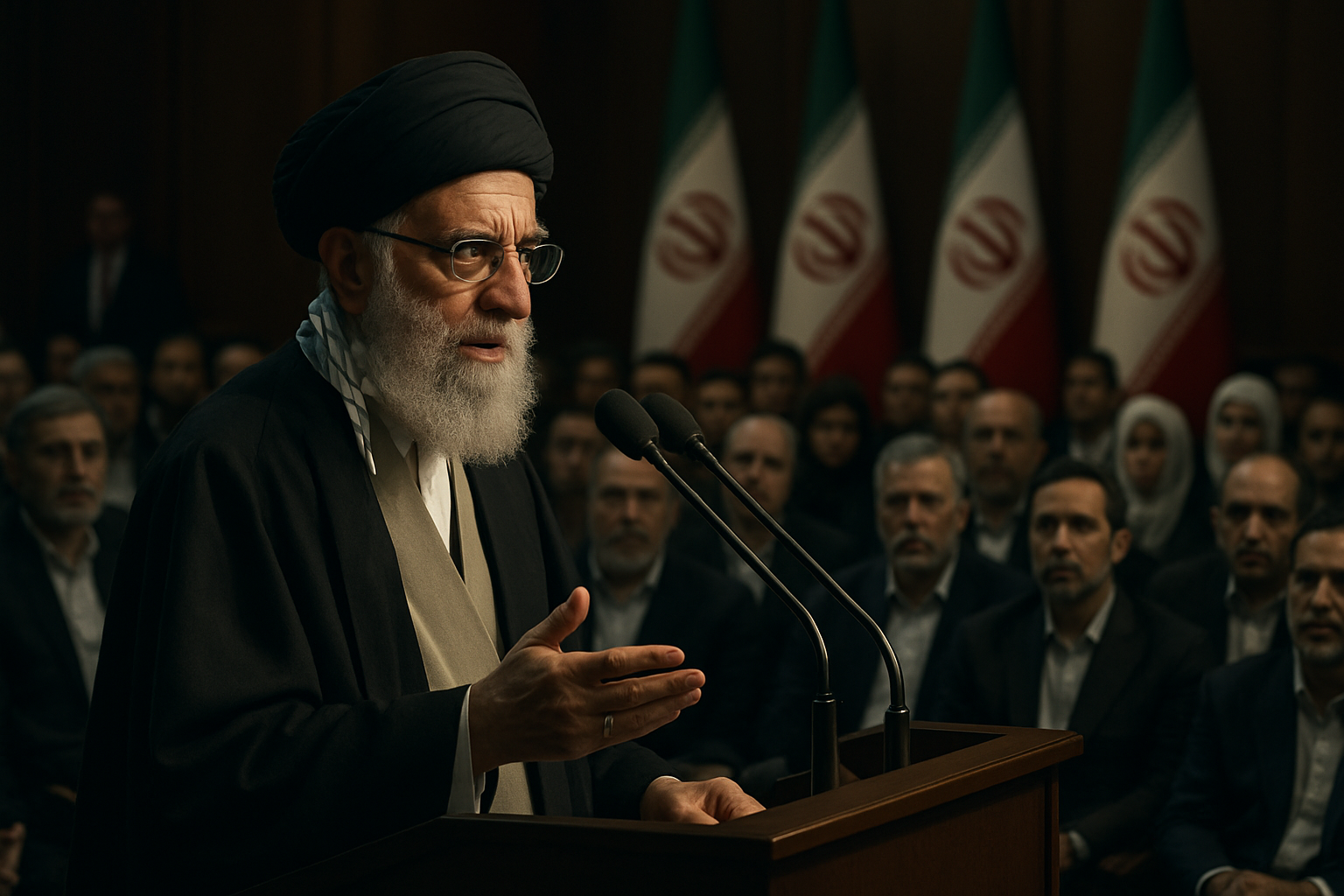
Iran's Supreme Leader Ayatollah Ali Khamenei delivered his most explicit warning to date, declaring that any United States attack on Iranian territory would trigger a devastating "regional war" across the Middle East, as tensions between Washington and Tehran reach dangerous new heights.
Speaking to Iranian citizens on Sunday, the 86-year-old Khamenei issued the stark threat against the backdrop of increased U.S. military presence in the region, including the deployment of the aircraft carrier USS Abraham Lincoln and associated warships to the Arabian Sea. According to multiple Iranian state media sources, including the semi-official Tasnim news agency, Khamenei's remarks represent the most direct threat he has made as diplomatic tensions continue to escalate.
"The Americans must know that if they start a war, this time it will be a regional war," Khamenei was quoted as saying during the public address. The Supreme Leader emphasized Iran's defensive posture while making clear the country's readiness to respond forcefully to any aggression.
Trump's Military Buildup and Iranian Response
The warning comes as President Donald Trump has repeatedly threatened military intervention against Iran, particularly in response to Tehran's bloody crackdown on recent nationwide protests. Trump has maintained a significant naval presence in the Middle East, with the USS Abraham Lincoln carrier strike group conducting operations in the Arabian Sea as a show of force.
Despite the mounting military pressure, Khamenei sought to project confidence, dismissing the American naval deployment as ineffective intimidation. "Trump regularly says that he brought ships... The Iranian nation shall not be scared by these things, the Iranian people will not be stirred by these threats," the Supreme Leader declared.
The Iranian leader was careful to frame his country's position as defensive rather than aggressive. "We are not the initiators and do not want to attack any country, but the Iranian nation will strike a strong blow against anyone who attacks and harasses them," he stated, according to Cypriot media reports.
"Iran will not start any war, nor does it want to attack any country, but if anyone attacks Iran, it will face a strong response."
— Ayatollah Ali Khamenei, Iran's Supreme Leader
IRGC Spokesperson Adds to Tensions
The Supreme Leader's threats were echoed by senior military officials, with Islamic Revolutionary Guard Corps (IRGC) spokesperson Second Brigadier General Ali Mohammad Naeeni accusing the United States of waging psychological warfare against Iran. Naeeni claimed that American officials have been "left confused and frustrated" following what he described as defeats in previous confrontations.
"White House officials have been left confused and frustrated in the face of Iran's resistance to the armed sedition and the 12-day war. After the swift and decisive defeat of the US plot in Iran, they have been desperately seeking to stoke tensions and inject false fear into Iranian society," Naeeni said, according to the IRGC's official news website, Sepah News.
The IRGC spokesperson emphasized that Iran's armed forces have "action plans for any hostile scenario," suggesting detailed military preparations for potential conflict with the United States or its regional allies.
Strategic Implications and Regional Concerns
Iran's threats of regional warfare carry significant implications given the country's extensive network of proxy forces and allies throughout the Middle East. Tehran maintains influence through various groups including Hezbollah in Lebanon, Houthi rebels in Yemen, and various militia groups in Iraq and Syria. Any escalation could potentially draw these actors into a broader conflict.
The warnings also coincide with Iran's announcement of naval exercises featuring live-fire drills in the strategically crucial Strait of Hormuz, through which approximately one-fifth of global oil trade passes. These maneuvers are scheduled to begin Sunday and continue for two days, further heightening tensions in the critical waterway.
Regional powers are closely monitoring the situation, with concerns that any military confrontation could destabilize the entire Middle East. The presence of significant U.S. military assets in the region, combined with Iran's threats of asymmetric warfare capabilities, creates a volatile situation that could escalate rapidly.
Diplomatic Signals Amid Military Posturing
Despite the harsh rhetoric, there are some indications that both sides may be leaving room for diplomatic engagement. President Trump stated yesterday that Iran is "talking seriously" with Washington, though he provided no specific details about the nature of these communications.
"Iran is talking to us and we'll see if we can do something," Trump told Fox News, while simultaneously emphasizing America's military readiness. "The United States has many warships deployed in the Middle East," he added, maintaining the pressure even as he hinted at potential dialogue.
Iranian officials have similarly indicated a willingness to engage in negotiations, with Tehran stating it is ready for "fair" talks that respect Iran's sovereignty and regional interests. However, the conditions for such negotiations remain unclear, and the current military buildup suggests both sides are preparing for potential conflict while keeping diplomatic options available.
International Ramifications
The escalating tensions between Iran and the United States are being closely watched by international partners and adversaries alike. European allies have expressed concern about the potential for military conflict in a region already dealing with multiple ongoing conflicts and humanitarian crises.
The situation is further complicated by Iran's growing ties with Russia and China, as evidenced by recent announcements of expanded trade relationships. Iran and Russia have set a target to double their trade volume to $10 billion within two years, according to officials from the Iran-Russia Joint Chamber of Commerce, reflecting Tehran's efforts to reduce dependence on Western-dominated financial systems.
Meanwhile, Iran has also declared European armies as "terrorist groups" in retaliation for the European Union's designation of Iran's Revolutionary Guard Corps as a terrorist organization, adding another layer of complexity to international relations as the crisis unfolds.
Military Capabilities and Regional Balance
Iran's threats are backed by significant military capabilities developed over decades of international sanctions and isolation. The country has invested heavily in asymmetric warfare capabilities, including ballistic missiles, naval mines, and drone technology, designed to counter superior conventional forces.
The Islamic Revolutionary Guard Corps, which Khamenei referenced in his warnings, operates independently from Iran's regular military and controls various elite units including the Quds Force, responsible for external operations. This organization has been accused by Western governments of orchestrating crackdowns on recent protest movements that left thousands dead, according to international reports.
As both nations continue their military posturing, the international community watches nervously for any spark that could ignite a broader Middle Eastern conflict, with potentially catastrophic consequences for global energy markets and regional stability.