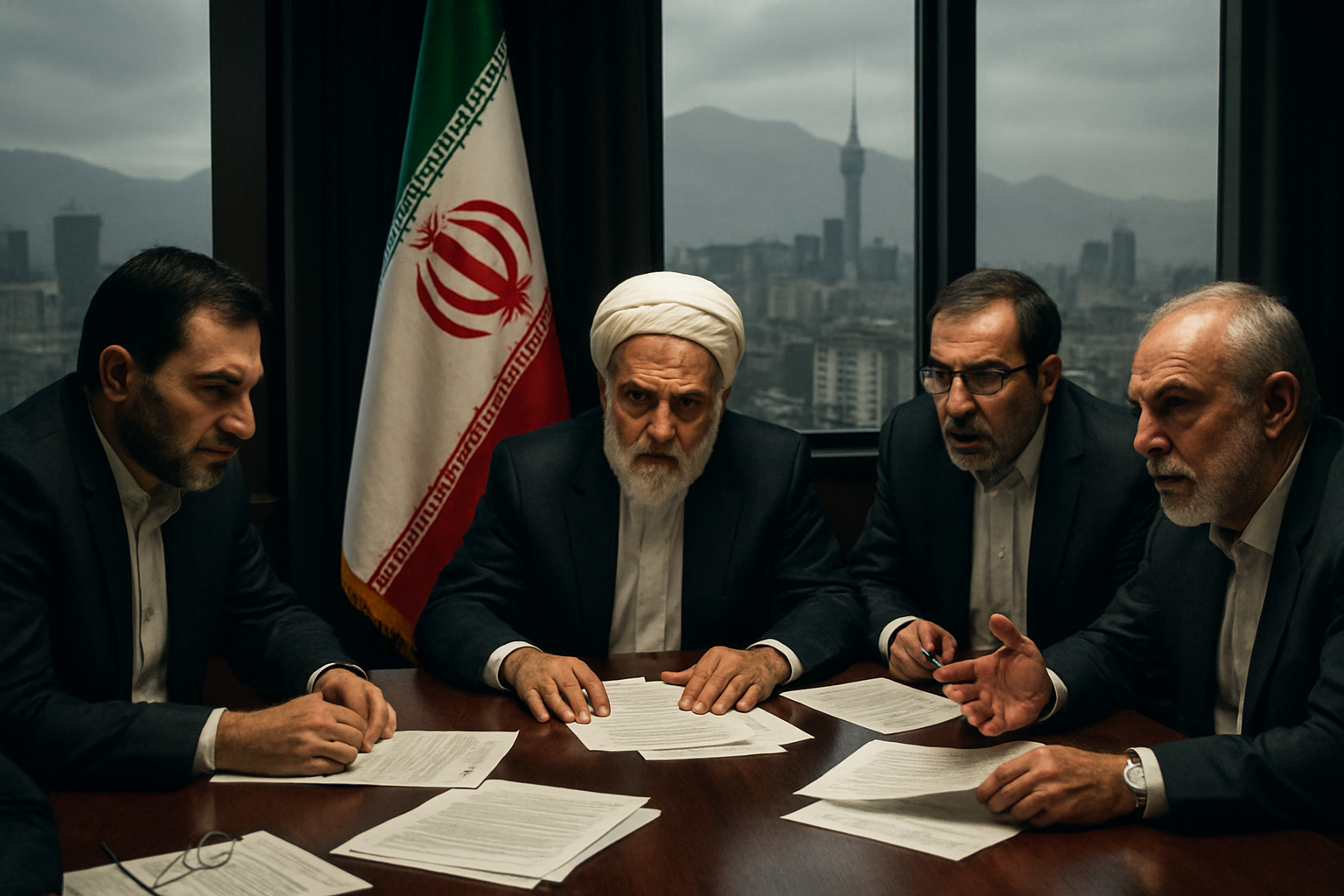
Iran is threatening to withdraw from the historic ceasefire agreement reached just days ago, citing continued Israeli attacks on Lebanon despite the Pakistan-mediated truce that ended the most dangerous crisis since the Cold War.
The threat, communicated through multiple diplomatic channels and reported across international media, comes less than 48 hours after the dramatic Strait of Hormuz reopening that crashed global oil prices by nearly 20% and restored hope for regional stability. Iranian officials are warning of "consequences" if Israeli strikes on Lebanese territory continue, potentially resuming the naval mining operations that previously blocked 40% of global oil transit.
Breaking Point: Lebanon as the Trigger
According to sources from Bosnia and Herzegovina's N1 info, Iran launched "brutal air strikes" hitting over 60 locations across Lebanon, including Beirut, causing massive casualties. The scale of destruction has prompted Iranian leadership to reconsider their commitment to the two-week ceasefire framework negotiated through Pakistani Prime Minister Shehbaz Sharif and Field Marshal Asim Munir.
Iranian media reports suggest that Tehran's patience has reached its limit following what they describe as Israeli violations of the ceasefire understanding. The Islamic Republic's Supreme National Security Council, which previously declared the ceasefire a "historic victory," is now weighing whether Israel's actions constitute a fundamental breach of the agreement.
"Israel must stop in Lebanon, otherwise there will be consequences."
— Iranian Ambassador to the UN
Economic Weapon Returns: Strait of Hormuz Threat
Perhaps most alarmingly, Iranian sources are indicating a potential return to the naval mining operations that previously closed the critical 21-mile Strait of Hormuz waterway. Persian Gulf media reports suggest Iran has begun implementing a ship vetting system, with some vessels already paying transit fees of up to $2 million per passage.
The Iranian Revolutionary Guard's previous deployment of 2,000-6,000 naval mines had effectively closed the strait, causing oil prices to surge past $119 per barrel before the ceasefire breakthrough. The economic implications of renewed closures would be catastrophic, potentially triggering another global energy crisis just as markets were beginning to recover.
Major shipping companies Maersk and MSC, which had just announced plans to resume Persian Gulf operations, are reportedly reassessing their positions. The strait serves as the world's most critical energy chokepoint, handling approximately 20% of global petroleum liquids and a third of global LNG trade.
Fragile Diplomatic Framework Under Strain
The Pakistan-mediated "Islamabad Accord" framework had been hailed as a diplomatic triumph, demonstrating that innovative middle-power mediation could resolve even the most dangerous international crises. However, the rapid deterioration in Lebanon appears to be testing the agreement's fundamental assumptions.
Iran's 10-point proposal, which Trump had accepted as a "workable basis" for negotiations, specifically addressed regional conflicts alongside nuclear issues and sanctions relief. The continued violence in Lebanon directly undermines one of the core pillars of this framework, threatening to unravel the entire diplomatic architecture.
Sources close to the Iranian Foreign Ministry suggest that Abbas Araghchi, who had confirmed the Strait of Hormuz reopening for "safe passage," is facing intense pressure from hardliners who view continued Israeli actions as proof that diplomatic engagement is futile.
International Community Scrambles for Response
The international community is watching with growing alarm as the carefully constructed ceasefire appears to unravel. European officials, who had been celebrating the end of the aviation crisis that cancelled over 18,000 flights worldwide, are now preparing contingency plans for renewed disruptions.
The crisis has particular resonance for European partners, given that Iranian drones had previously struck RAF Akrotiri in Cyprus – the first attack on European territory since World War II. The unprecedented naval coalition response involving HMS Dragon and vessels from Spain, Italy, France, the Netherlands, and Greece demonstrated how quickly regional conflicts can escalate to involve European security directly.
Oil Markets Brace for Volatility
Global energy markets, which had just begun celebrating the dramatic price declines following the ceasefire, are now facing renewed uncertainty. Oil prices, which had crashed from crisis peaks of $119.50 Brent crude to below $100 overnight, are showing early signs of volatility as traders price in the possibility of renewed Iranian action.
The International Energy Agency's record-breaking release of 400 million barrels from strategic reserves – the largest intervention in the agency's 50-year history – had been successful in stabilizing markets. However, this success could be quickly reversed if Iran follows through on its threats.
Consumer relief that had begun across the globe, from Bangladesh reconsidering fuel rationing affecting 170 million people to European households anticipating electricity cost reductions, now hangs in the balance.
Regional Coalition Under Pressure
The fragile regional coalition of Saudi Arabia, UAE, Qatar, and Egypt, which had maintained unprecedented unity despite Iranian attacks during the crisis, faces renewed strain. Egyptian President Sisi's previous warnings about "comprehensive chaos" spreading across the region appear increasingly prescient.
The coalition had weathered direct Iranian attacks – including one civilian killed in Abu Dhabi, 32 injured in Kuwait, and 8 wounded in Qatar despite successful Patriot interceptions – while maintaining diplomatic support for the peace process. However, renewed Iranian aggression could force these nations to reconsider their positions.
Nuclear Diplomacy Implications
The potential ceasefire collapse has serious implications for nuclear diplomacy. The current crisis had emerged from the complete breakdown of Geneva talks despite achieving "broad agreement on guiding principles" – the most significant progress since the JCPOA collapse in 2018.
Iran continues to maintain uranium enrichment at 60% purity with over 400kg of weapons-grade material, approaching the 90% threshold required for nuclear weapons. The ceasefire had created a diplomatic window for addressing these concerns, but renewed military confrontation could eliminate any remaining possibilities for negotiated solutions.
The expiration of the New START treaty in February 2026 – creating the first 50+ year period without US-Russia nuclear constraints – adds another layer of complexity to an already dangerous nuclear governance crisis.
Template-Setting Moment for 21st Century Crisis Management
As UN Secretary-General António Guterres had noted during the height of the crisis, this represents "the greatest test of multilateral cooperation and crisis management in the modern era." The potential collapse of the Pakistan-mediated solution would have profound implications for how future international crises are resolved.
The success of innovative middle-power mediation had provided a template for 21st-century conflict resolution in an increasingly multipolar world. The failure of this framework would likely accelerate preferences for military over diplomatic solutions, with implications extending decades into the future.
Congressional and Public Opinion Factors
In the United States, the potential return to crisis conditions faces significant domestic opposition. Congressional leaders like Senator Blumenthal had expressed being "more concerned than ever" about ground troop deployments, while public support for military operations had reached historically low levels at just 25%.
Operation Epic Fury's costs had exceeded $11.3 billion in just the first week, with Pentagon operations originally planned through September – far beyond the initial 4-6 week timeline. Renewed military engagement would face intense scrutiny from lawmakers already demanding answers about strategy, costs, and objectives.
Looking Ahead: Critical 48-Hour Window
With Iranian officials indicating that decisions about ceasefire withdrawal could come within the next 48 hours, the international community faces a critical moment. The carefully constructed diplomatic framework that had averted global catastrophe now hangs by a thread, dependent on developments in Lebanon that remain largely outside the control of the primary negotiating parties.
The stakes could not be higher: a return to the crisis conditions of March-April 2026 would not only trigger renewed economic disruption but would also fundamentally undermine confidence in diplomatic solutions to international conflicts. The next few hours may determine whether innovative diplomacy or military confrontation becomes the template for 21st-century crisis resolution.
As markets brace for potential volatility and governments prepare contingency plans, the world watches to see whether the most dangerous crisis since the Cold War will truly end in lasting peace or merely represent a temporary pause in a broader confrontation that could reshape the international order for decades to come.