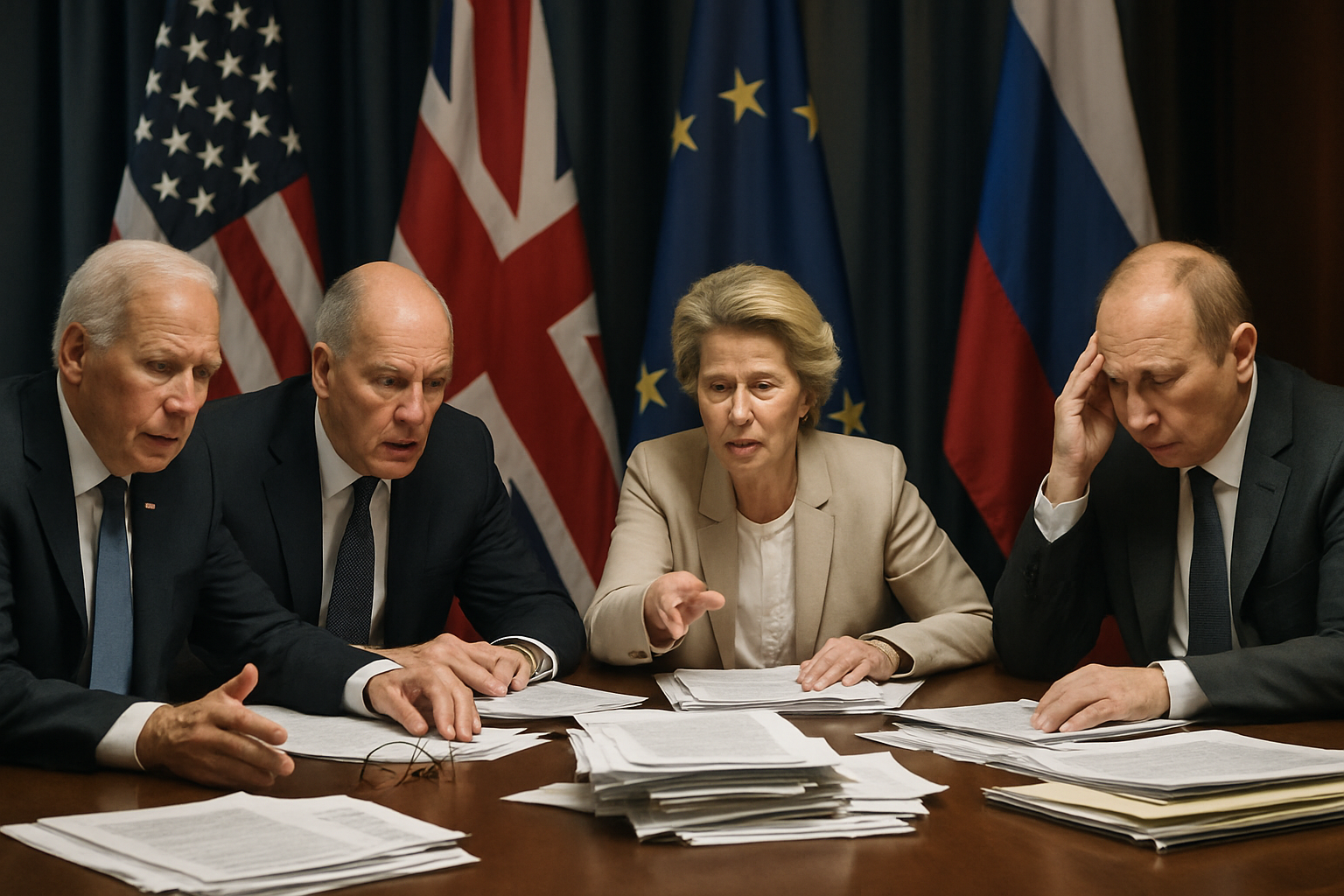
President Donald Trump has sent a comprehensive 15-point peace plan to Iran as the devastating month-long war enters a potentially pivotal diplomatic phase, with Pakistan formally offering to host peace negotiations between the warring nations.
The surprise diplomatic initiative comes as the conflict has created unprecedented global disruption, with over 18,000 flights cancelled worldwide, oil prices surging past $100 per barrel, and the Strait of Hormuz - carrying 40% of the world's oil - effectively closed by Iranian mining operations.
Pakistan Steps Forward as Mediator
Prime Minister Shehbaz Sharif made the formal offer Tuesday, stating Pakistan "stands ready and honoured to be the host to facilitate meaningful and conclusive talks for a comprehensive settlement of the ongoing conflict." The announcement follows weeks of intensive diplomatic groundwork, with sources indicating Washington specifically approached Islamabad to host the negotiations.
The Pakistani initiative represents a significant development in the crisis, as traditional mediators like Qatar and Switzerland have struggled to bridge the gap between the two sides during nearly a month of military escalation that began February 28.
"Subject to concurrence by the US and Iran, Pakistan stands ready and honoured to be the host to facilitate meaningful and conclusive talks for a comprehensive settlement of the ongoing conflict."
— Prime Minister Shehbaz Sharif, Pakistan
Trump's 15-Point Framework
According to multiple diplomatic sources, the American peace proposal addresses key issues including Iran's nuclear program, ballistic missile capabilities, regional proxy relationships, and the reopening of the Strait of Hormuz. The plan represents a potential shift from Trump's earlier demands for Iran's "unconditional surrender."
Iran has officially received the proposal, according to Iranian sources, though Tehran's response remains guarded. The Islamic Republic continues to insist that any negotiations must exclude what it calls its "red lines" - ballistic missiles and regional proxy relationships.
This diplomatic opening contrasts sharply with the devastating military conflict that has raged since the death of Supreme Leader Ali Khamenei on March 1, killed in the massive US-Israeli "Operation Epic Fury" strikes.
Global Crisis Reaches Critical Point
The war has created the most dangerous international crisis since the Cold War, with global implications extending far beyond the Middle East:
- Aviation Paralysis: Eight Middle Eastern countries have closed their airspace simultaneously, creating an "aviation black hole" that has severed critical Asia-Europe corridors
- Energy Crisis: Oil prices have surged to $100+ per barrel, with Iran deploying thousands of naval mines in the Strait of Hormuz
- Supply Chain Disruption: Over 150 tankers worth billions are stranded in the Persian Gulf, with major shipping companies Maersk and MSC suspending operations
- Humanitarian Impact: Iran's Red Crescent reports over 787 civilian casualties, while international evacuations rival those seen during the Arab Spring
Iran's Strategic Position
Despite intense bombardment, Iran has maintained systematic retaliation through "Operation True Promise 4," with Revolutionary Guards declaring "no red lines remain." Iranian attacks have targeted US bases across the region and struck as far as Cyprus - marking the first attack on European territory since World War II.
The succession of Mojtaba Khamenei as Supreme Leader - the first hereditary succession in the Islamic Republic's 47-year history - has consolidated hardline military control under Revolutionary Guards influence, potentially complicating diplomatic efforts.
Iran's Foreign Ministry spokesman confirmed that messages from the US have been "received and responded to," suggesting active backchannel communications despite public hostility.
Regional and International Response
The conflict has severely strained traditional Middle Eastern alliances, with the Saudi-UAE-Qatar-Egypt coalition that initially supported diplomacy now facing direct Iranian attacks on their territories. Egyptian President Sisi warned of "comprehensive chaos" spreading across the region.
European allies have largely rejected US requests for military support, with Germany leading resistance to American naval coalition demands. The unprecedented refusal represents the most comprehensive rejection of American military leadership since the Iraq War.
Congressional opposition in Washington continues mounting, with only 25% of Americans supporting the conflict - "almost unprecedented" unpopularity for early-stage military operations. Senator Richard Blumenthal expressed being "more concerned than ever" about potential ground troop deployment.

Nuclear Dimension
The crisis emerged from the complete collapse of Geneva nuclear negotiations, despite achieving "broad agreement on guiding principles" - the most significant progress since the JCPOA collapse in 2018. Iran continues enriching uranium at 60% purity with over 400kg of material approaching weapons-grade levels.
The nuclear governance implications extend globally, as the crisis occurs amid the New START treaty expiration - the first time in over 50 years without US-Russia nuclear constraints. UN Secretary-General António Guterres has called nuclear risks "the highest in decades."
Economic and Strategic Stakes
Operation Epic Fury has cost an estimated $27 billion, running at over $1 billion daily - making it one of the most expensive military operations since 2003. The economic disruption extends globally, with Pakistan's stock exchange suffering its largest single-day decline in history (-8.97%) and supply chains across automotive, electronics, and textiles severely impacted.
The conflict's expansion beyond traditional Middle Eastern boundaries - including the sinking of an Iranian frigate by a US submarine off Sri Lanka, the first such incident since World War II - demonstrates the global scope of the crisis.
Path Forward
The success or failure of the Pakistani mediation initiative could determine whether the crisis provides a template for future nuclear dispute resolution or accelerates military solutions globally. Intelligence sources suggest both Steve Witkoff and potentially Jared Kushner could lead US engagement, though Iran has expressed preference for negotiations with Vice President JD Vance rather than Trump's Middle East team.
Qatar and Turkey have expressed strong support for swift diplomatic efforts to end the war, while Germany's president has controversially called the US-Israeli military action "a violation of international law."
"This is the greatest test of multilateral cooperation and crisis management in the modern era."
— UN Secretary-General António Guterres
Global Implications
The crisis represents a watershed moment for 21st-century international relations, testing regional war prevention, global energy security, nuclear governance credibility, and post-World War II order principles simultaneously. The rapid transition from diplomatic breakthrough to military confrontation demonstrates the fragility of crisis management in the multipolar era.
As the 48-hour window approaches for potential breakthrough or further escalation, the international community watches to see whether innovative diplomatic solutions can bridge decades-old disagreements or whether the precedent will favor military solutions in future territorial and nuclear disputes worldwide.
The Pakistan talks proposal represents potentially the last major diplomatic opening before the conflict enters an even more dangerous phase, with implications extending far beyond the Middle East to affect global governance mechanisms, energy architecture, and international stability for decades to come.