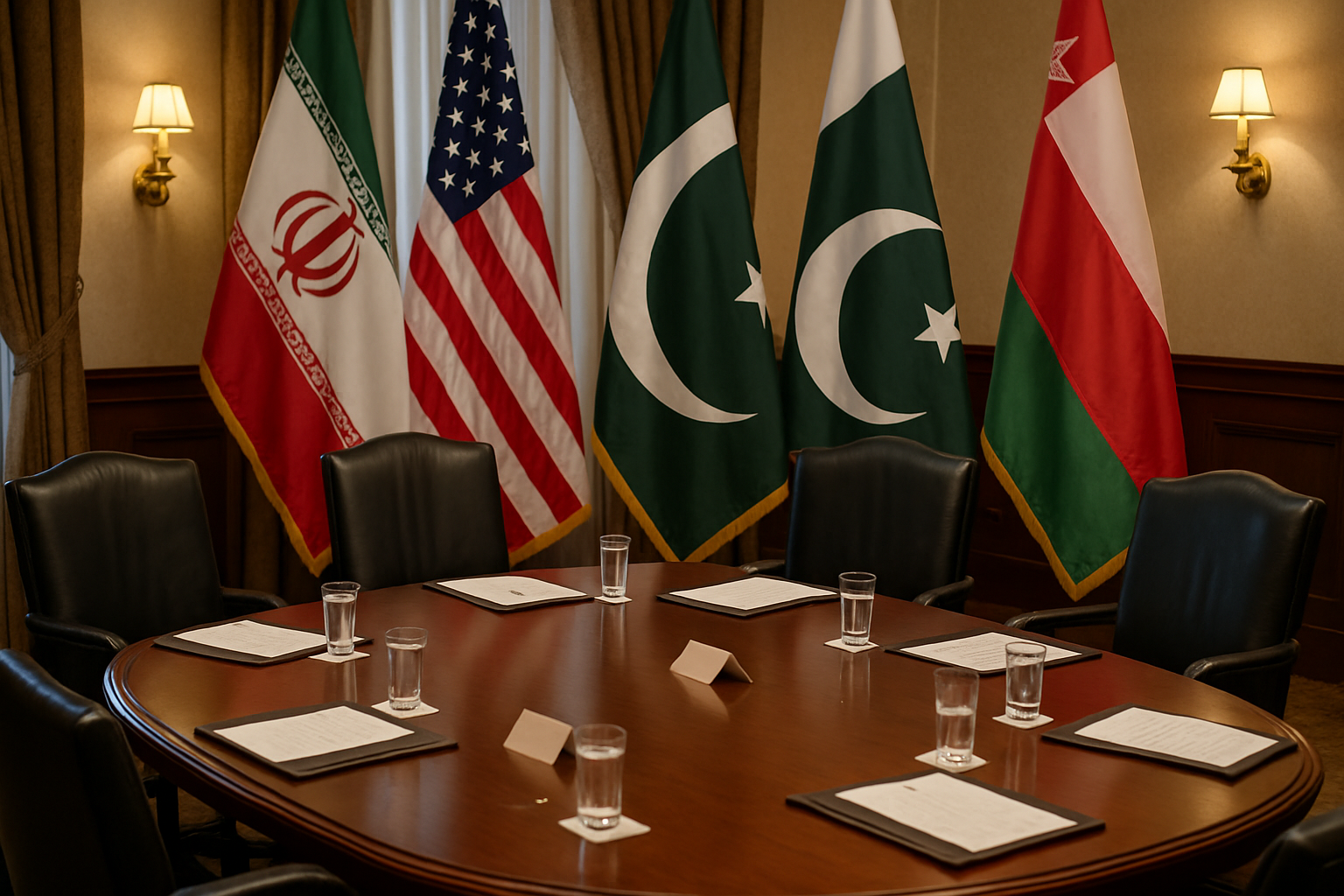
Diplomatic efforts to resolve the Iran-US crisis have stalled dramatically as Iranian Foreign Minister Abbas Araghchi returns to Pakistan after meetings in Oman, while US Secretary of State Marco Rubio deliberately avoided attending crucial talks in Islamabad, according to multiple international reports.
The breakdown in diplomatic momentum threatens to unravel the historic "Islamabad Accord" framework that successfully prevented global catastrophe just weeks ago when Pakistan's mediation brought the world back from the brink of a devastating conflict that had reached unprecedented crisis levels.
Rubio's Absence Signals US Caution
According to the Financial Times, Secretary Rubio may have deliberately chosen not to travel to Pakistan for the negotiations, signaling growing caution within the Trump administration. This decision comes despite previous commitments to pursue diplomatic solutions through regional mediation channels that had proven successful in earlier rounds.
The absence of America's top diplomat represents a significant shift from the administration's earlier engagement strategy, when Vice President JD Vance and other senior officials had participated directly in Pakistan-mediated talks. Trump administration officials had previously described negotiations as progressing "very well" despite ongoing pressure tactics from both sides.
US sources cited in reports suggest the decision reflects concerns about Iran's continued uranium enrichment at 60% purity levels, maintaining approximately 400kg of weapons-grade material sufficient for multiple nuclear weapons if weaponized. Iran's Foreign Minister has consistently declared that Tehran will "never abandon enrichment even if war imposed," creating a fundamental sticking point in negotiations.
Iran's Regional Diplomatic Tour
Meanwhile, Araghchi has embarked on an intensive diplomatic tour spanning Pakistan, Oman, and Russia, as Iranian state media reports indicate Tehran's commitment to reviving stalled negotiations through regional intermediaries. The Foreign Minister is expected to return to Pakistan after completing his visit to Oman, according to Islamic Republic News Agency reports.
His meetings with Omani Sultan Haitham bin Tariq Al Said have focused on mediation efforts to end tensions between Iran and the United States, with Oman playing a crucial diplomatic role by hosting previous rounds of talks and facilitating dialogue when direct communication channels have proven difficult.
"Iran demands the US lift blockade before allowing normal commercial transit, with armed forces maintaining waterway under military supervision until full freedom of movement is restored."
— Iranian Revolutionary Guard officials
The Stakes of the Strait of Hormuz
Central to the current deadlock is Iran's continued control over the Strait of Hormuz, the critical waterway through which 40% of global oil transit flows. Iran's Revolutionary Guard has implemented a cryptocurrency payment system requiring $1 per barrel for oil tankers, while maintaining military coordination for vessel passage during the current ceasefire period.
The 21-mile chokepoint remains under strict Iranian management and control, with officials citing continued US violations and "piracy" through the naval blockade of Iranian ports as justification for maintaining restrictions. This has created a dangerous economic standoff affecting global energy markets and shipping industries worldwide.
Naval Incidents Complicate Diplomacy
Recent naval incidents have further complicated diplomatic efforts, including IRGC gunboats firing on merchant vessels attempting transit without radio warning approximately 20 nautical miles northeast of Oman, as confirmed by UK Maritime Trade Operations. These incidents underscore the fragile nature of current arrangements and the potential for rapid escalation.
Nuclear Diplomacy at a Crossroads
The diplomatic stalemate centers on Iran's nuclear program, where fundamental disagreements persist despite previous framework breakthroughs. US demands for Iran to suspend 60% uranium enrichment and abandon its weapons-grade stockpile remain unmet, while Iran maintains its enrichment capabilities as an "inalienable right" under international law.
These nuclear tensions unfold against the backdrop of the New START treaty expiration in February 2026, marking the first time in over 50 years without US-Russia nuclear constraints. UN Secretary-General António Guterres has characterized the nuclear risks as the "highest in decades," making successful resolution of the Iran crisis a template-setting precedent for 21st-century nuclear diplomacy.
Regional Coalition Under Pressure
The unprecedented regional coalition of Saudi Arabia, UAE, Qatar, and Egypt that had backed diplomatic solutions faces increasing strain following Iran's "Operation True Promise 4" retaliation operations. These attacks resulted in casualties across Gulf territories, including one death in the UAE's Abu Dhabi, 32 injured in Kuwait, and 8 wounded in Qatar during intercept operations.
Egyptian President Sisi's warnings of "comprehensive chaos" affecting "sisterly countries" have proven prophetic as diplomatic challenges mount. However, the coalition has remarkably maintained its consensus supporting negotiated solutions despite direct attacks on member territories, demonstrating unprecedented regional unity for diplomatic rather than military responses.
Pakistan's Historic Mediation Role
Pakistan's emergence as a crucial mediator represents a significant innovation in middle-power diplomacy. Prime Minister Shehbaz Sharif and Field Marshal Asim Munir's "message relay system" successfully achieved a breakthrough ceasefire just 88 minutes before Trump's "whole civilization will die tonight" deadline on April 8, 2026.
This achievement, which resulted in a 20% crash in oil prices from $119.50 to $100 per barrel Brent crude and ended an aviation crisis affecting over 18,000 flights, has been recognized by China and Germany as a positive development in international crisis management.
"Pakistan has been facilitating talks. The United States shared 15 points, being deliberated by Iran."
— Pakistani Foreign Minister Ishaq Dar
Congressional and International Pressure
The diplomatic challenges occur amid unprecedented congressional opposition to continued military operations, with American support for "Operation Epic Fury" reaching historic lows of 25%. Senator Blumenthal has expressed concerns about potential ground troop deployments, while the operation's costs reached $11.3 billion in its first week alone.
NATO allies have maintained largely skeptical positions, with UK Prime Minister Starmer declaring Britain "will not be dragged into Iran war," and France and Germany emphasizing diplomatic approaches over military solutions. This represents one of the most significant rejections of American military leadership since the 2003 Iraq War.
Economic and Humanitarian Implications
The ongoing crisis continues to affect global markets and civilian populations. Oil prices have surged above $100 per barrel for the second time in 2026, with over 150 tankers stranded carrying billions of dollars in cargo as major shipping companies Maersk and MSC have suspended Persian Gulf operations indefinitely.
The humanitarian toll includes over 787 Iranian civilian casualties according to the Iranian Red Crescent, including a Pentagon-acknowledged elementary school strike that killed 165-185 students due to "outdated targeting data," prompting war crimes investigations. International evacuations have reached Arab Spring-scale proportions, with Australia reporting 115,000 trapped citizens and Germany evacuating 30,000.
Looking Ahead: A Critical Diplomatic Window
As Iran's Foreign Minister prepares to return to Pakistan following his Oman consultations, the international community faces a critical juncture in determining whether innovative diplomatic solutions can bridge decades-old disagreements between the US and Iran, or whether the world will return to the most dangerous international crisis since the Cold War's end.
The success or failure of Pakistan's historic mediation achievement will establish crucial precedents for diplomatic versus military solutions in 21st-century international relations. With stakes affecting territorial sovereignty enforcement, energy security paradigms, nuclear governance credibility, and international law enforcement mechanisms, the coming days will determine whether diplomatic innovation can prevent a return to maximum international crisis with global implications extending far beyond current events.
The template-setting significance of these negotiations cannot be overstated, as they represent what UN Secretary-General Guterres has called "the greatest test of multilateral cooperation in the modern era." The outcome will influence international approaches to crisis resolution for decades to come, determining whether diplomatic creativity can triumph over military escalation in an increasingly volatile and interconnected world.